
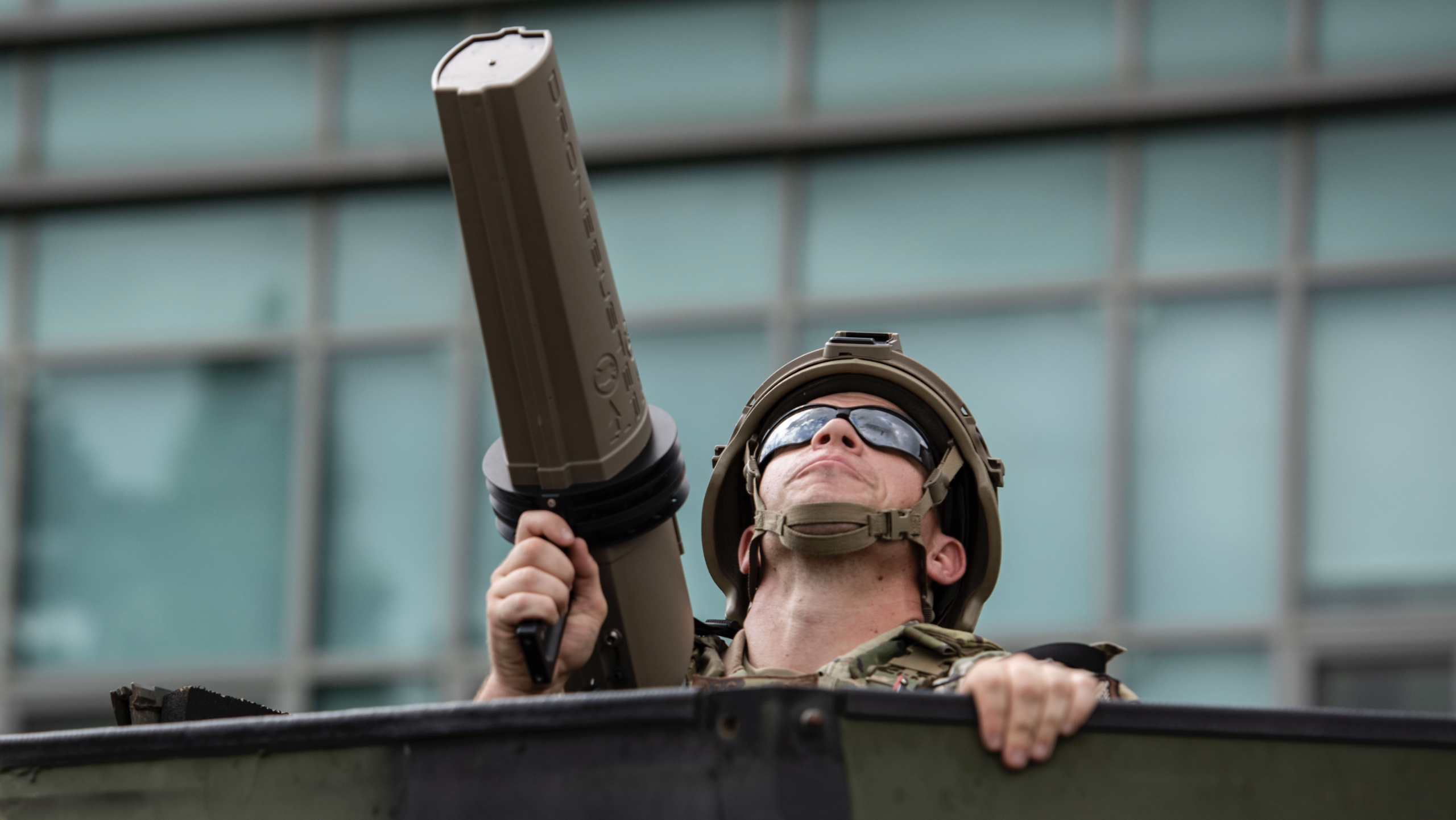
Germany has taken a significant step in its effort to harden critical infrastructure against hostile drones, opening its first joint drone defence centre in Berlin that brings together state and federal capabilities under one roof. The new hub is designed to plug gaps in surveillance and response that have become increasingly visible as unmanned aircraft move from novelty to frontline tool in espionage, sabotage and hybrid warfare.
The centre, known by the acronym GDAZ, will operate around the clock, fusing information and expertise from federal and state police agencies as well as the German armed forces. Interior Minister Alexander Dobrindt said the goal is to boost both speed and accuracy in identifying suspicious activity and deciding how to respond.
From fragmented authorities to a joint hub
Until now, responsibility for drone detection and countermeasures in Germany has been spread across a patchwork of institutions, each with different mandates and capabilities. That fragmentation made it harder to share real-time situational awareness or coordinate responses when multiple sites were at risk.
By colocating key players in the Berlin centre, authorities are trying to ensure that radar data, intelligence feeds and on-the-ground reporting are assessed together rather than in silos. The aim is not to centralise legal authority – each participating body retains its own decision-making powers – but to make sure those decisions are informed by a common operational picture.
Dobrindt framed the GDAZ as a direct answer to the rise of “hybrid threats” that blur the lines between military and civilian domains. Small drones can be used to probe the defences of power plants, rail hubs, government buildings or military installations without ever crossing the threshold into open conflict. They can disrupt airspace, threaten sensitive sites or simply test how quickly a country reacts.
A response to suspicious drone activity across Europe
The timing of the centre’s launch reflects mounting unease over suspected Russian-linked drone activity across Europe. In recent months, unmanned aircraft believed to be operated or directed from Russia have been spotted near critical infrastructure and in restricted airspace, forcing some countries to scramble NATO jets and halt operations at airports.
Moscow has rejected suggestions that it is behind these incursions, but for European governments the pattern looks increasingly like a campaign of pressure and probing designed to stay below the threshold of direct confrontation. The appearance of drones near military training areas, ports and energy assets has reinforced the sense that physical and digital security can no longer be treated as separate domains.
Germany’s new centre is intended to address exactly that grey zone. By pooling data on flight paths, signatures and incident reports, security agencies hope to spot trends sooner and attribute responsibility more effectively. That, in turn, can inform both immediate tactical responses — such as jamming or intercepting a drone — and longer-term policy choices.
Building a playbook for the hybrid era
The creation of GDAZ is not a magic shield against hostile drones, but it is a tangible recognition that traditional boundaries between domestic security, defence and intelligence are eroding. The fact that federal and state police now sit alongside the Bundeswehr in a dedicated drone defence hub signals a willingness to rethink how Germany organises for an era in which low-cost unmanned systems can threaten high-value targets.
By design, each institution participating in the centre retains its legal remit and chain of command. What changes is the speed at which information flows, the quality of shared analysis and the ability to coordinate a response when seconds matter. In a landscape where drones can be used for anything from overhead photography to sabotage, that kind of integrated approach may end up being as important as any single new sensor or countermeasure.
For Berlin, the launch of the joint drone defence centre is likely to be just one step in a broader recalibration of domestic security posture. But it marks a clear acknowledgment that the threat is no longer theoretical – and that defending against it requires treating the airspace above critical infrastructure as carefully as the walls and fences on the ground.


