
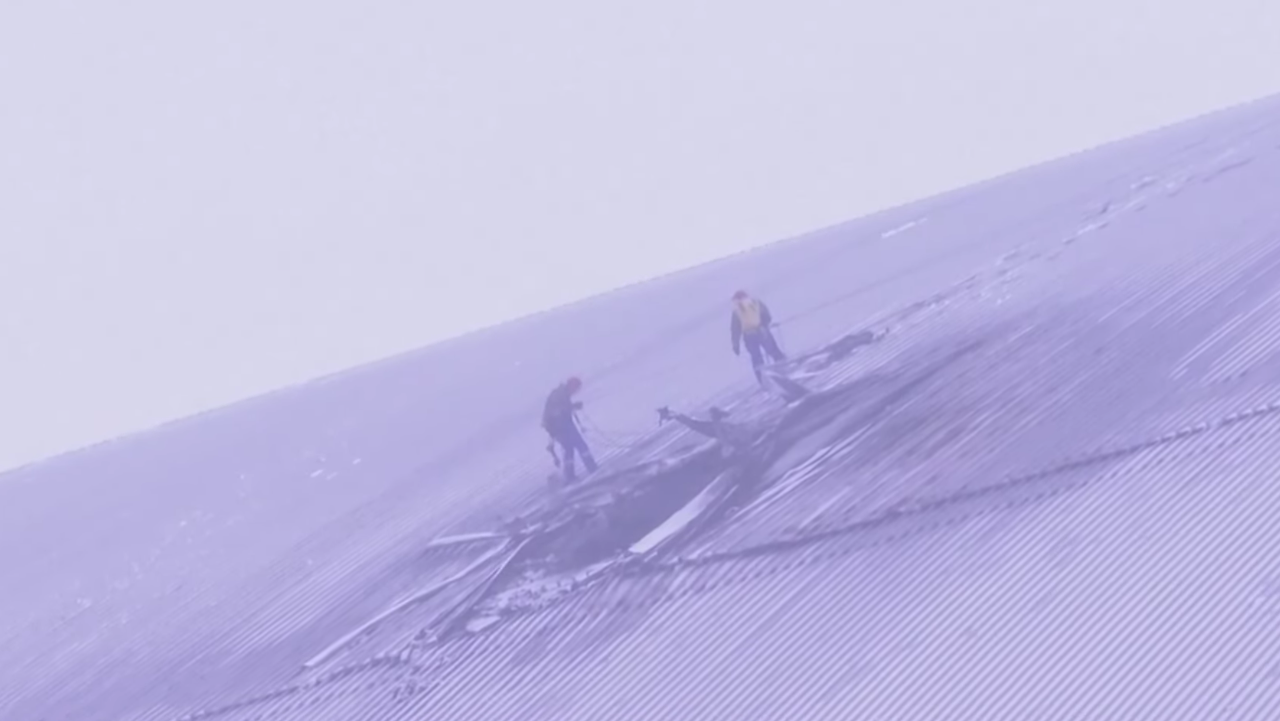
A drone strike on February 14, 2025 has damaged the protective shield at the Chernobyl nuclear disaster site, rendering it unable to perform its main safety function, according to the International Atomic Energy Agency.
The Strike
The IAEA team at Chernobyl heard an explosion at around 1:50 AM local time coming from the New Safe Confinement, the massive structure built to contain radioactive material from the 1986 disaster. Photos showed flames from the impact point near the top of the structure.
Ukrainian President Volodymyr Zelenskyy accused Russia of carrying out the attack, calling the damage “significant.” The Kremlin denied that Russia had attacked the plant.
Emergency crews extinguished the fire within minutes, but the damage was severe enough to compromise the structure’s protective capability.
The Damage
The strike pierced a 15 square meter hole in the external cladding at about 87 meters high, with damage to both the outer and inner shell of the structure. Wider damage affected about 200 square meters.
The IAEA said the New Safe Confinement has “lost its primary safety functions, including the confinement capability”after being severely damaged. Fires in the insulation between the structure’s layers smoldered for two weeks before being fully extinguished.
Radiation Levels Remain Normal
Despite the damage, radiation levels inside and outside the structure remain normal and stable. The IAEA confirmed there was no indication of a breach in the NSC’s inner containment.
No casualties were reported from the incident.
What Is the New Safe Confinement?
The New Safe Confinement is a massive arch-shaped steel structure, 257 meters wide, 110 meters high, and weighing over 36,000 tons. It was built between 2010 and 2019 at a cost of €2.1 billion, funded by contributions from more than 45 donor countries.
The structure was designed to last 100 years and enable cleanup operations at the site of the worst nuclear accident in history. It covers the ruined Reactor No. 4, which exploded on April 26, 1986, spreading radioactivity across Ukraine, Belarus, Russia and beyond.
Repairs Underway
Limited temporary repairs have been carried out on the roof, but comprehensive restoration remains essential to prevent further degradation and ensure long-term nuclear safety, according to IAEA Director General Rafael Mariano Grossi.
Ukrainian engineers and construction workers are carrying out temporary repairs to prevent water ingress and assess the structure’s integrity. More than 400 people have been working in shifts since the damage occurred.
Grossi added that there had been no permanent damage to the NSC’s load-bearing structures or monitoring systems.
Historical Context
Russian forces seized the Chernobyl plant in the early days of their February 2022 invasion, overrunning the site and holding staff hostage. They left the plant and handed back control to Ukrainian personnel just over a month later.
More than 30 people were killed in the 1986 disaster, with many others suffering symptoms from radiation exposure since. Birth defects and cancer rates among residents in the area exposed to radiation remain high.


