
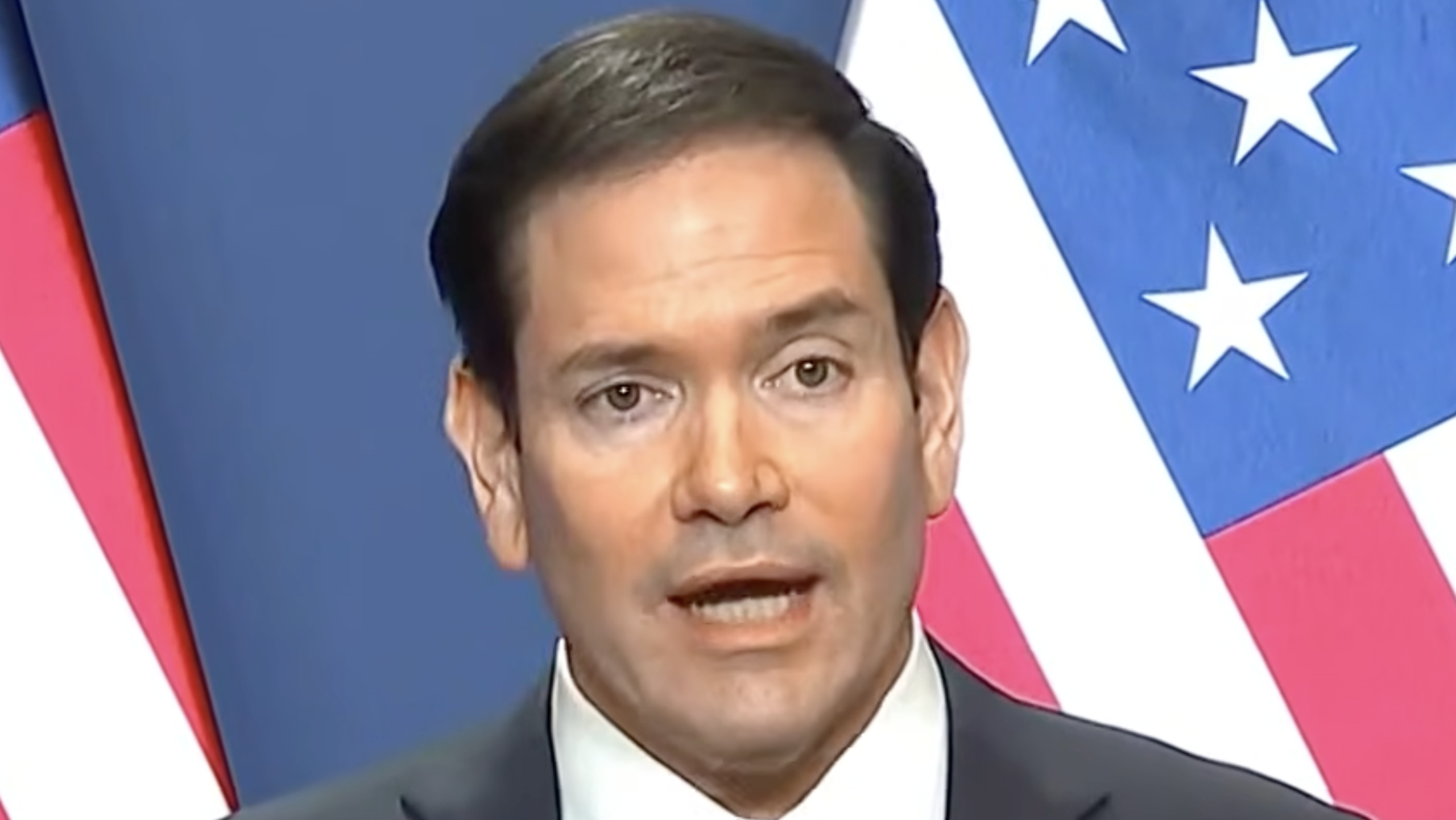
Secretary of State Marco Rubio said that the United States will revoke visas for foreign visitors whose presence is deemed a threat to U.S. foreign policy or national security, pushing back on recent federal court rulings that have blocked deportation efforts involving international students.
Speaking in Budapest, Rubio addressed a question that referenced a high-profile immigration case involving a university student.
SECRETARY RUBIO: If I identify a visitor in our country whose presence poses a threat to our foreign policy and national security, we're going to take their visa away.
— Department of State (@StateDept) February 16, 2026
🔥🔥🔥 pic.twitter.com/z342wCA86e
“My job at the State Department is this—if we identify someone who is a visitor to the United States and we believe their presence poses a threat to our foreign policy or national security, we will take away their visa. We’ve done that in many cases,” Rubio said.
He emphasized that a visa does not confer a constitutional right. “A visa is not a right. There is no constitutional right to a visa. A visa is permission to enter our country as a visitor,” Rubio said, adding that students, tourists and journalists who engage in activities deemed contrary to U.S. national interests risk losing their authorization to remain in the country. “If we had known beforehand, we probably would not have issued it.”
pic.twitter.com/GDr5Biv5vA
— And We Know©🇺🇸 (@andweknow) February 16, 2026
🇺🇸 JUST IN: Marco Rubio makes it clear
“No one is entitled to a visa.”
If a visitor enters the United States and acts against our national interest, that visa can be revoked
A visa is a privilege
Not a right
His remarks come amid ongoing legal battles over the Trump administration’s efforts to revoke visas and detain foreign students accused of supporting Hamas, which the United States designates as a terrorist organization. In March 2025, Rümeysa Öztürk, a Turkish PhD student on a valid F-1 visa, was detained outside her home in Somerville, Massachusetts, after her visa was revoked. The State Department said at the time that her actions “may undermine U.S. foreign policy by creating a hostile environment for Jewish students and indicating support for a designated terrorist organization,” including co-authoring a campus newspaper op-ed critical of her university’s response to the war in Gaza.
The footage helps put things in perspective.
— Billy Binion (@billybinion) February 10, 2026
The government sent agents in plainclothes to arrest Rumeysa Ozturk. We were told she was a national security threat. And then the feds could not produce any evidence of that. Her offense was writing an op-ed. pic.twitter.com/VrN95Xirkc
Video of Öztürk’s arrest, which showed officers surrounding her near her home, drew national attention. Her attorneys said she was targeted for constitutionally protected speech and described her detention conditions as severe, including multiple asthma attacks without adequate medical care.
A U.S. immigration judge later ruled there were no grounds to deport her. Her immigration attorney, Mahsa Khanbabai, called the decision “a powerful affirmation of fairness and the rule of law,” adding that immigration enforcement “must always be guided by justice.” In May, U.S. District Judge William K. Sessions III ordered her release, warning that continued detention could chill the speech of non-citizens nationwide. In December, a federal judge ruled that Öztürk could resume research and teaching while contesting the consequences of her visa revocation.
The administration has defended its actions as lawful exercises of executive authority over immigration and foreign policy. A State Department spokesperson said the United States is “under no obligation to allow foreign aliens to come to our country, commit acts of anti-American, pro-terrorist, and antisemitic hate, or incite violence,” and pledged to continue revoking visas of individuals deemed to pose risks.
Rubio’s comments in Budapest underscored that position, framing visa revocation as a matter of executive discretion tied directly to national security and foreign policy determinations. While courts continue to weigh the constitutional limits of those actions, the administration has maintained that decisions about who may enter or remain in the country ultimately fall within the executive branch’s authority.


