
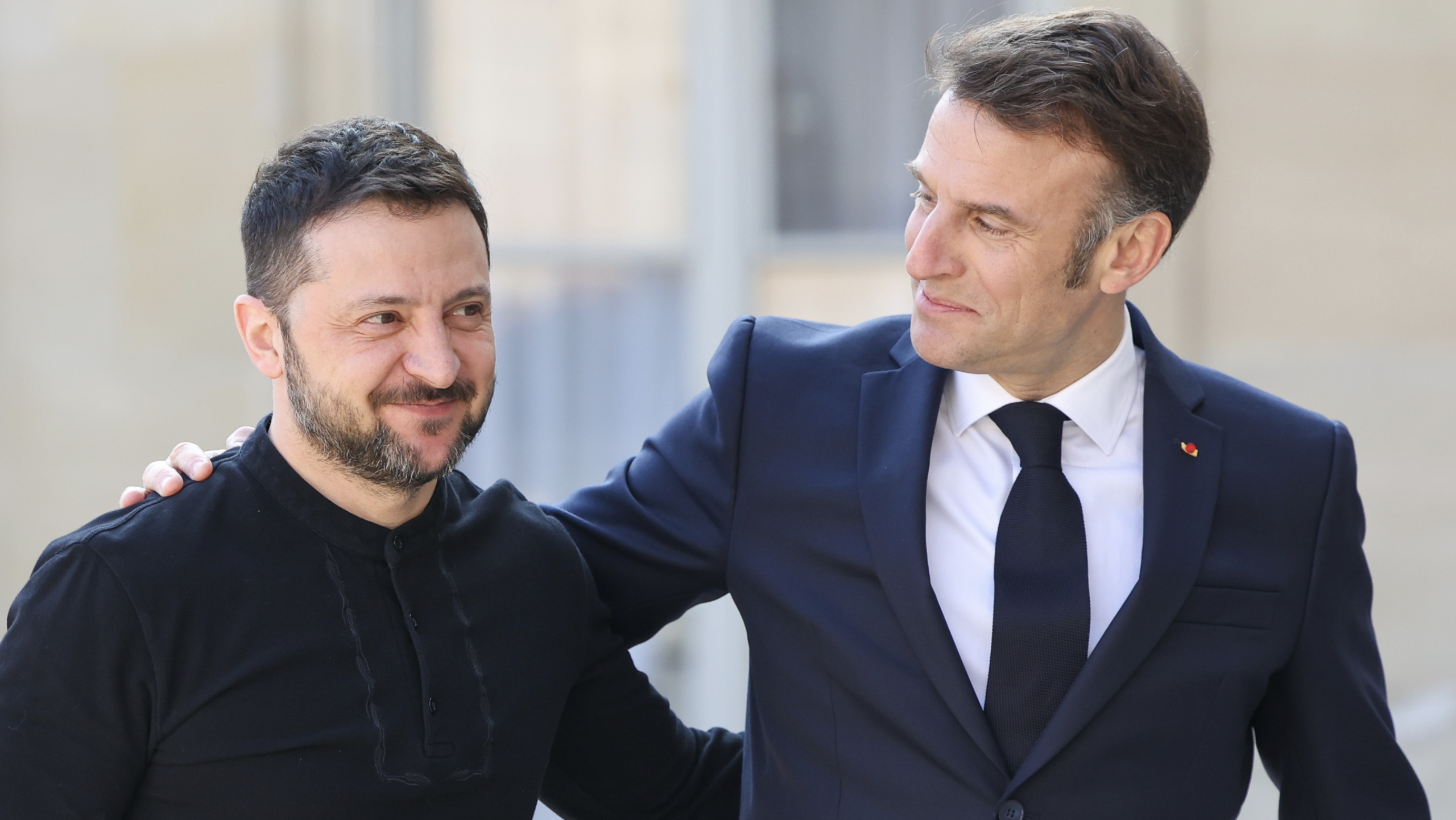
French President Emmanuel Macron has outlined a potential deployment of up to 6,000 French troops to Ukraine following a peace agreement, emphasizing their role in supporting Ukrainian forces away from combat zones. This plan was shared during a confidential meeting at the Élysée Palace, amid broader international efforts to provide security guarantees for Ukraine in the event of a ceasefire with Russia.
Confidential Meeting at the Élysée Palace
On January 8, a closed-door session took place at the Élysée Palace, bringing together key French officials, including ministers, military leaders, heads of parliamentary chambers, and party faction leaders. During the meeting, President Macron disclosed sensitive details about France’s intended contributions to Ukraine’s security guarantees. He clarified that the deployed forces would not engage in frontline operations.
Chief of the Defense Staff Fabien Mandon elaborated that these troops would function as “forces to support the Ukrainian army,” rather than serving in deterrence or stabilization roles. Macron further specified that foreign troops would be positioned “far from the front line” and tasked with escorting and training Ukrainian units.
Mathilde Panot, leader of the left-wing party La France Insoumise, revealed that France could commit up to 6,000 soldiers under this initiative. She also expressed skepticism about relying on U.S. assurances, stating, “There is no reason to trust Donald Trump.”
Opposition and Parliamentary Debate
Opposition voices raised concerns about the deployment’s framework. Groups such as La France Insoumise, the Communists, and the right-wing National Rally argued that any troop deployment should require a United Nations mandate. In contrast, some right-wing representatives suggested that an official request from Kyiv might suffice without an international mandate.
French Defense Minister Sébastien Lecornu announced that dedicated parliamentary debates on the matter would occur within the next two to three weeks, allowing for further scrutiny and discussion.
The Élysée meeting followed talks held in Paris on January 6, involving Ukraine, the United States, and members of the Coalition of the Willing. These discussions focused on establishing binding commitments from Ukraine’s allies to respond to any future Russian aggression. Such measures are outlined in a draft Paris agreement on security guarantees for Ukraine.
Participants from Ukraine and the U.S. also coordinated on steps to implement and monitor a potential ceasefire, though ultimate progress hinges on Russia’s willingness to comply, which remains unconfirmed.
International Allies’ Positions
Several nations have signaled their readiness to contribute to Ukraine’s post-conflict security. France and Germany have consistently indicated interest in deploying troops after a ceasefire, though Germany has committed to supporting a ceasefire without specifying troop contributions.
Belgium has offered to provide aviation and naval support once the war concludes. Canada has indicated it might deploy troops, starting with training programs for Ukrainian personnel. Lithuania’s Defense Minister Robertas Kaunas stated that his country could send several hundred troops upon achieving peace.
For the first time, Spanish Prime Minister Pedro Sánchez has opened the door to Spanish involvement in a peacekeeping mission in Ukraine post-ceasefire. Romania, while declining to send troops, has pledged to enhance Black Sea security as part of the guarantees.


