
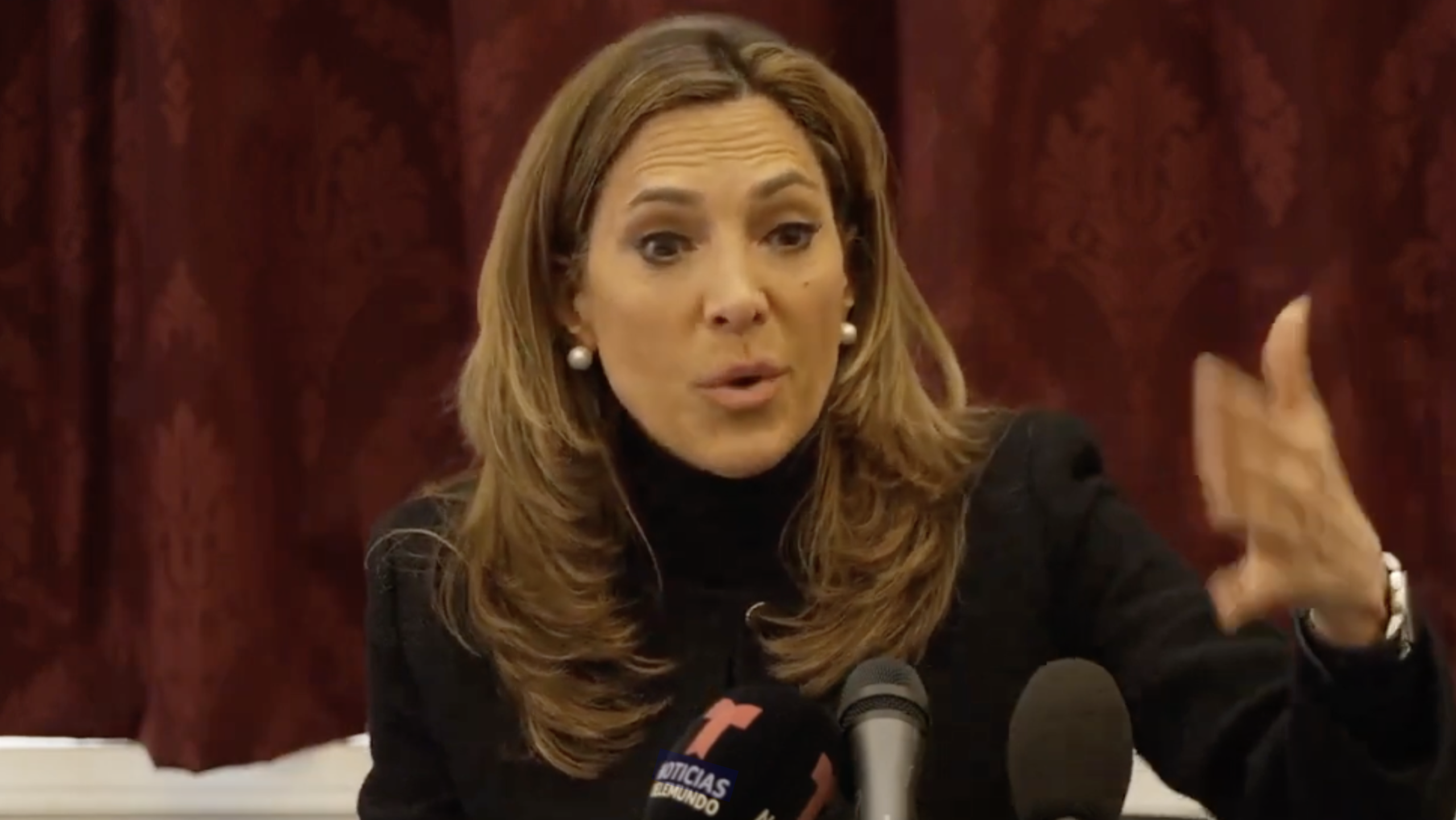
“Don’t touch the nannies or the gardeners or the ones who are picking up the jalapeño peppers or the oranges or the berries or the ones in the dairy houses,” Rep. Maria Elvira Salazar (R-FL) said Thursday, urging federal immigration authorities to avoid targeting long-settled undocumented workers who fill key roles in U.S. agriculture and service industries.
Salazar made the remarks during a press conference addressing the DIGNITY Act, legislation she has co-sponsored as Congress debates immigration enforcement following renewed scrutiny of Immigration and Customs Enforcement (ICE) operations.
Asked about President Donald Trump’s comments in an NBC News interview suggesting immigration enforcement may require a “softer touch,” Salazar said Trump understood the economic role of immigrant labor because of his background in construction and hospitality.
“He understands that those hands are needed,” Salazar said. “He understands that there is a group of people who indeed are undocumented, but who have been here for a long time, ten, twenty, thirty years, who do have American children, who are part of society, who have not committed a crime.”
"Don't touch the nannies or the gardeners or the ones who are picking up the jalapeño peppers…," Rep. Maria Salazar said, urging federal immigration authorities to avoid targeting long-settled undocumented workers who fill key roles in U.S. agriculture and service industries. pic.twitter.com/j4l8qeSYOU
— American Gazzete (@AmericanGazzete) February 6, 2026
Salazar drew a distinction between undocumented immigrants with long-standing community ties and criminal offenders, saying enforcement should focus on violent gangs and serious offenders.
“I don’t want to have anything to do with MS-13 or with the rapists. You kick them all out,” she said. “But don’t touch the nannies or the gardeners or the ones who are picking up the jalapeño peppers or the oranges or the berries or the ones in the dairy houses.”
She argued that those workers contribute directly to keeping food prices lower and supporting American households.
“Those people are helping us eat better, cheaper homes, cheaper vegetables, and better fruits,” Salazar said. “Those are the ones that we are trying to give a dignified status.”
Salazar emphasized that the proposal does not offer a direct path to U.S. citizenship, saying her approach seeks to balance labor needs with border security.
“I’m not talking about path to citizenship,” she said. “I am sure that we’re very close to a solution, and that solution goes through President Trump.”
The comments come amid renewed debate over how aggressively ICE should pursue deportations as immigration remains a central political issue heading into the 2026 election cycle.
Salazar’s remarks were tied to her support for the DIGNITY Act, legislation aimed at creating a legal status for certain undocumented immigrants while strengthening border enforcement and workplace compliance.
The bill, formally titled the DIGNITY Act of 2025, would establish a temporary legal status known as “Dignity status” for undocumented immigrants who meet eligibility requirements, including passing background checks, paying restitution, and maintaining employment.
Under the proposal, individuals granted Dignity status would be allowed to work legally in the United States but would not be eligible for federal means-tested benefits and would not receive automatic permanent residency or citizenship.
The legislation also includes provisions to expand border infrastructure, increase funding for immigration courts, and mandate the use of employment verification systems to prevent unauthorized hiring.
Supporters of the bill say it offers a middle-ground solution by combining tougher enforcement with legal protections for longtime residents without criminal records. Critics argue it could encourage future illegal immigration or weaken deterrence.
Salazar said the measure reflects economic realities in agriculture, construction, and domestic labor, where employers rely heavily on immigrant workers.
“Those people are part of our society,” she said. “They are helping us live better.”


