
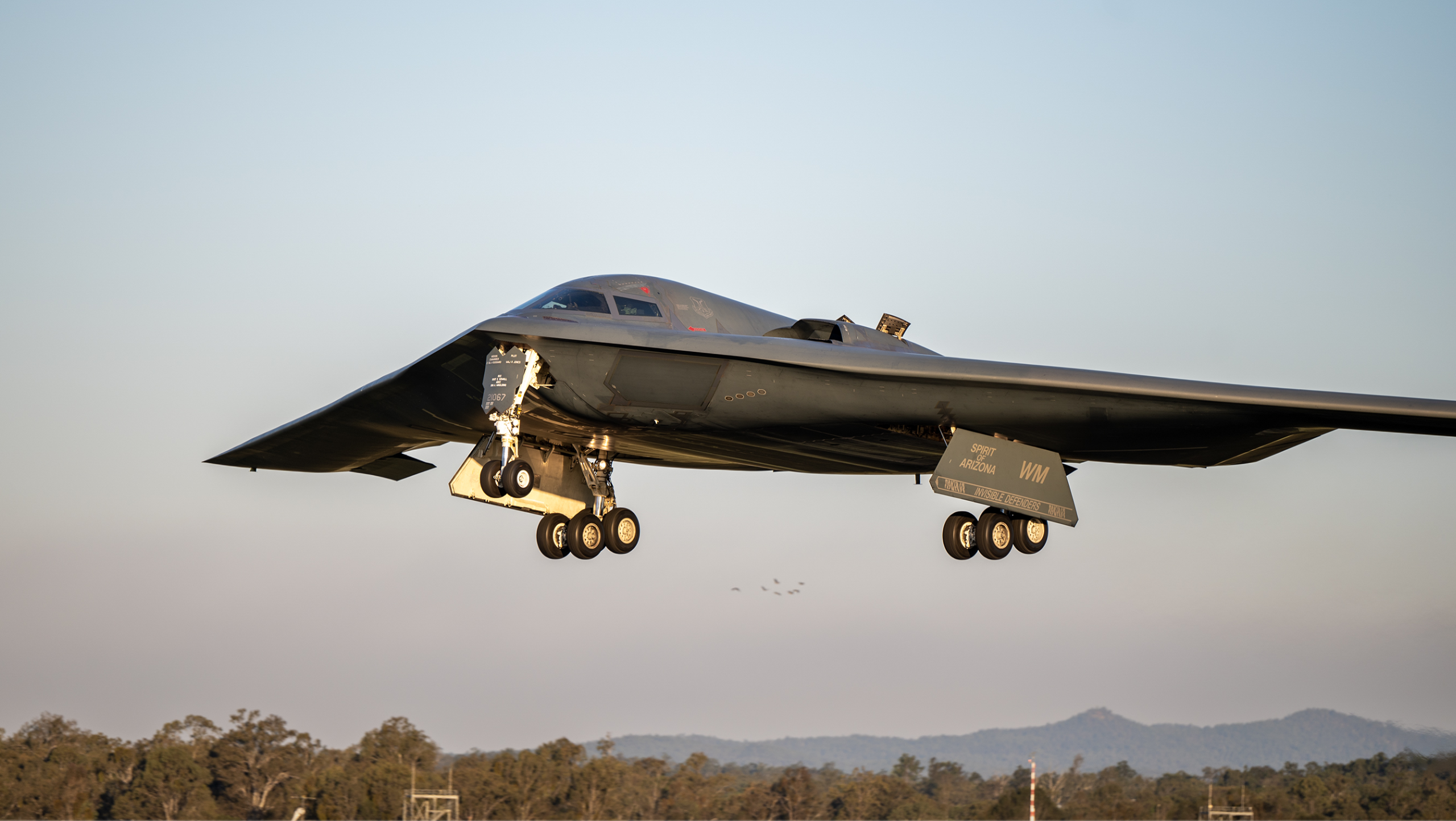
The B-2 Spirit is a strategic stealth bomber designed and manufactured by Northrop Grumman that revolutionized modern aerial warfare. This flying wing aircraft represents the pinnacle of low-observable technology, combining advanced materials science, aerodynamic innovation, and sophisticated electronic systems into a single platform capable of penetrating the world’s most heavily defended airspace.
Design and Development
The B-2 program began in the late 1970s as a classified project to develop a strategic bomber capable of evading Soviet air defenses. Northrop Grumman designed the aircraft from scratch, creating entirely new tools, composite materials, special test equipment, and 3-D modeling systems specifically for this project. The flying wing configuration eliminates traditional fuselage and tail structures, with the entire airframe integrated into a seamless wing shape measuring 172 feet from tip to tip.
The aircraft’s distinctive angular design serves a critical purpose beyond aesthetics. Every surface, edge, and contour is precisely calculated to deflect radar waves away from their source rather than reflecting them back. The B-2’s skin incorporates radar-absorbent materials that further reduce its electromagnetic signature, while its composite construction minimizes weight without sacrificing structural integrity.
Technical Specifications
The B-2 measures 69 feet in length with a wingspan of 172 feet and stands 17 feet tall. Four General Electric F118-GE-100 turbofan engines, each producing 17,300 pounds of thrust, are buried deep within the wing structure. This engine placement conceals the highly radar-reflective fan and turbine blades while also reducing the aircraft’s infrared signature through specialized exhaust venting systems.
The bomber achieves high subsonic speeds and can operate at altitudes up to 50,000 feet. With an unrefueled range of 6,000 nautical miles, the B-2 can strike targets anywhere on Earth when supported by aerial refueling, extending its operational range to 10,000 nautical miles or more. The aircraft carries a maximum payload exceeding 40,000 pounds in two internal weapons bays, maintaining its stealth profile while accommodating everything from conventional precision-guided munitions to nuclear weapons.
The B-2’s maximum gross takeoff weight reaches 336,500 pounds. Despite this substantial mass, the aircraft requires a crew of only two: a pilot and mission commander. Advanced automation systems manage flight controls, navigation, weapons delivery, and defensive countermeasures, allowing this small crew to execute complex missions over extended periods.
Operational Capabilities and Mission Profile

The B-2 entered operational service on January 1, 1997, and immediately established itself as the premier long-range strike platform in the US Air Force inventory. The aircraft combines three critical capabilities that no other bomber possesses simultaneously: stealth technology, intercontinental range, and heavy payload capacity.
During Operation Allied Force in 1999, the B-2 demonstrated its strategic value in its combat debut. Two B-2 bombers flew 31-hour missions from Whiteman Air Force Base in Missouri to Kosovo, attacked multiple targets, and returned directly to base. Despite flying less than 1 percent of total missions, B-2s destroyed 33 percent of all targets during the first eight weeks of the conflict.
The bomber has participated in first-night operations in every major US conflict since its introduction, including Serbia, Afghanistan, Iraq, and Libya. During Operation Enduring Freedom, the B-2 set endurance records with missions exceeding 44 hours of continuous flight. The Spirit of America and other B-2s spent more than 30 hours simply reaching target areas before conducting strikes and returning to base.
Most recently, seven B-2 bombers executed Operation Midnight Hammer, a 37-hour mission to strike the Fordow nuclear enrichment facility in Iran. The bombers departed from Whiteman Air Force Base, flew 18 hours across the globe with multiple aerial refuelings, delivered their ordnance, and returned to Missouri. This marked the longest B-2 combat mission since the initial Afghanistan strikes following September 11, 2001.
Crew Accommodations for Extended Missions
Ultra-long-duration missions require careful consideration of crew physiological needs. Behind the pilot and mission commander seats, the B-2 provides a small compartment containing essential amenities. This area includes a chemical toilet, microwave oven, and space for Styrofoam coolers where crews pack their own food and beverages. The compartment allows just enough room for an average-size person to lie down, enabling the two crew members to alternate between active duty at the controls and rest periods during missions lasting 30 to 44 hours.
Pilots trained for B-2 operations have brought various sleeping accommodations aboard, including cots and full camping pads, to maximize comfort during rest periods. During Operation Midnight Hammer, the two-person crews operated in near-complete radio silence, taking turns sleeping while maintaining constant vigilance over their aircraft and mission objectives.
These accommodations, while spartan compared to commercial aviation, provide the minimum necessary support for crew alertness and effectiveness. The coolers typically contain pre-packaged meals, snacks, and beverages that can be heated in the microwave. This self-sufficiency allows B-2 crews to maintain operational capability throughout missions that would be physiologically impossible without basic food, rest, and sanitation facilities.
Fleet Status and Cost
The B-2 Spirit carries the distinction of being the most expensive military aircraft ever built, with each unit costing approximately $2 billion. The Air Force originally planned to acquire 133 aircraft, but the end of the Cold War and budget constraints reduced this to just 21 production aircraft manufactured between 1989 and 2000.
Today, the US Air Force operates 20 B-2 bombers. One aircraft was lost in a 2008 crash on Guam when moisture contamination affected air data sensors, causing the aircraft to pitch up excessively during takeoff. The remaining 20 aircraft are all based at Whiteman Air Force Base in Missouri, where specialized maintenance facilities and trained personnel support the fleet’s unique requirements.
Despite their age, these aircraft remain fully operational and continue receiving upgrades to maintain technological superiority. Ongoing modernization programs improve the B-2’s ability to process and disseminate battlefield information, recognize targets, and integrate with joint force operations worldwide. The bomber remains a cornerstone of America’s strategic deterrent and will continue serving until the B-21 Raider reaches full operational capability in the coming decades.


