
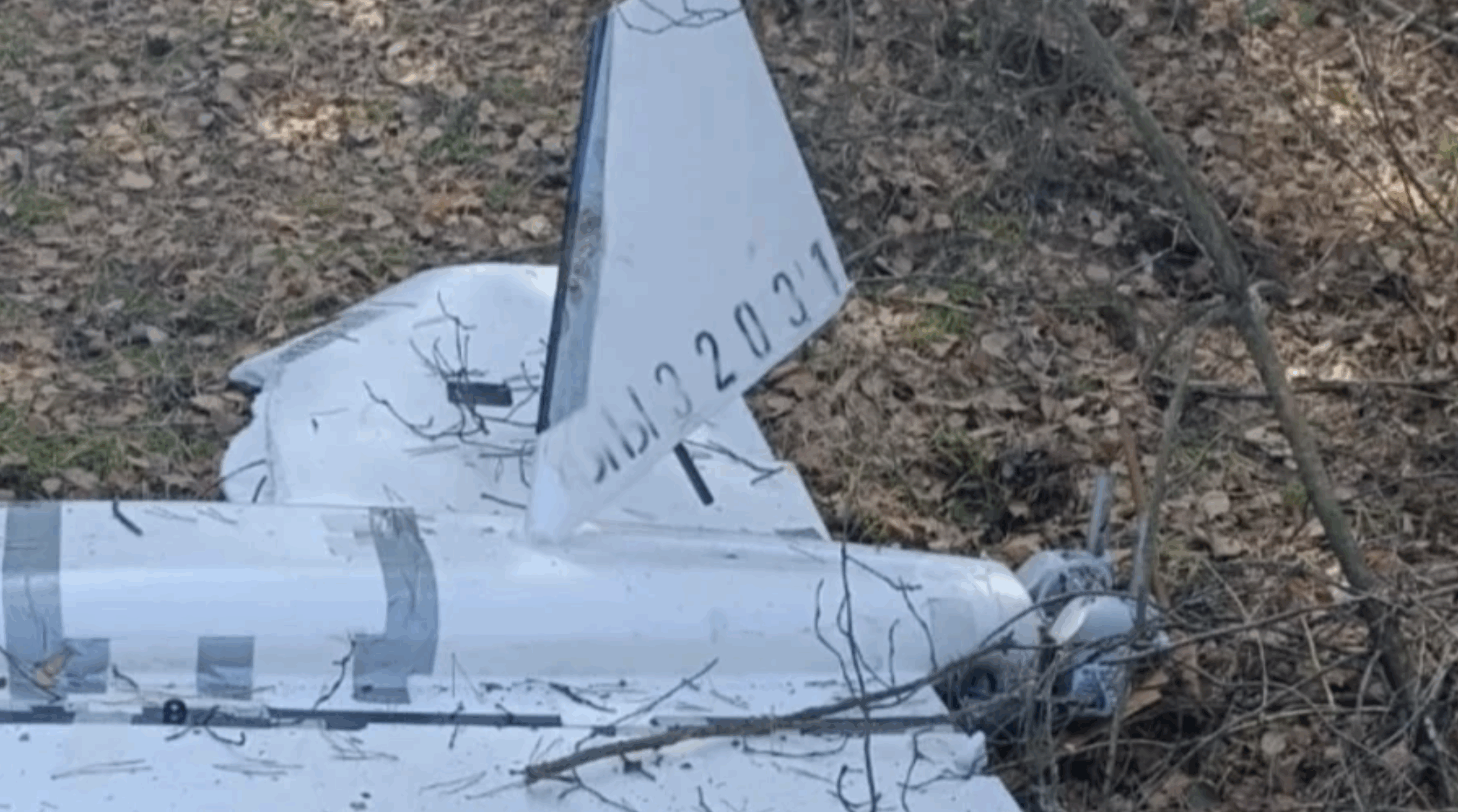
A man walking through a forest near the village of Żelizna in Poland’s Lublin Voivodeship discovered parts of what appeared to be a drone around 1 p.m. on December 14. He reported the debris to police, prompting a response from multiple security agencies.
What Was Found
Police recovered the crashed drone-like object along with its Styrofoam casing and engine at the scene, according to news agency PAP. Local Chief Inspector Anna Kamola told Polsat News that these drone elements were discovered deep in the forest, far from any buildings. She noted it certainly wasn’t a drone that could have been used for smuggling purposes.
The area is now being guarded by officers from the district police headquarters in Radzyń Podlaski. By late Sunday afternoon, Major Damian Stanula, spokesman for the Military Police in Lublin, confirmed that his agency had taken over the case. The district prosecutor’s office in Radzyń Podlaski and the military police in Biała Podlaska were also notified.
Connection to September Incursion
The debris likely belongs to one of the unmanned aerial vehicles that violated Polish airspace on the night of September 9-10. That incursion saw more than 20 Russian drones enter Polish skies and, by extension, NATO territory. Initial reports counted 19 unmanned aerial vehicles, later revised to 21.
TVP Info reported the flying object is likely a Gerbera drone, a cheap decoy version of an Iranian Shahed-136 manufactured in Russia. This has not yet been officially confirmed. These drones are often made of foam and plywood and are largely used in Ukraine as decoys rather than weapons.
September Incident Details
During the September incursion, NATO allies scrambled jets and shot down up to four of the drones. The drones were not armed with warheads. In the following weeks, debris was found in several voivodeships, with at least nine discovered in Lublin province, which borders Ukraine and Belarus. Drones were also reported in other regions further west.
A missile fired by the Polish Air Force intended to shoot down one of the drones fell on a house, though no injuries were reported.
Polish Prime Minister Donald Tusk stated that none of the drones that had fallen on Polish territory were equipped with warheads. However, Lieutenant General Maciej Klisz noted the threat had been more serious than initially assessed.
Diplomatic Response
On September 10, Poland asked NATO to invoke Article 4 of the North Atlantic Treaty, which allows any member state to request consultations when it believes its territorial integrity, political independence, or security is threatened. Consultations were held the same day.
On September 18, Ukraine and Poland agreed to establish a joint unmanned aerial systems task force comprising representatives from both countries’ armed forces to address the ongoing threat from drone incursions.


