
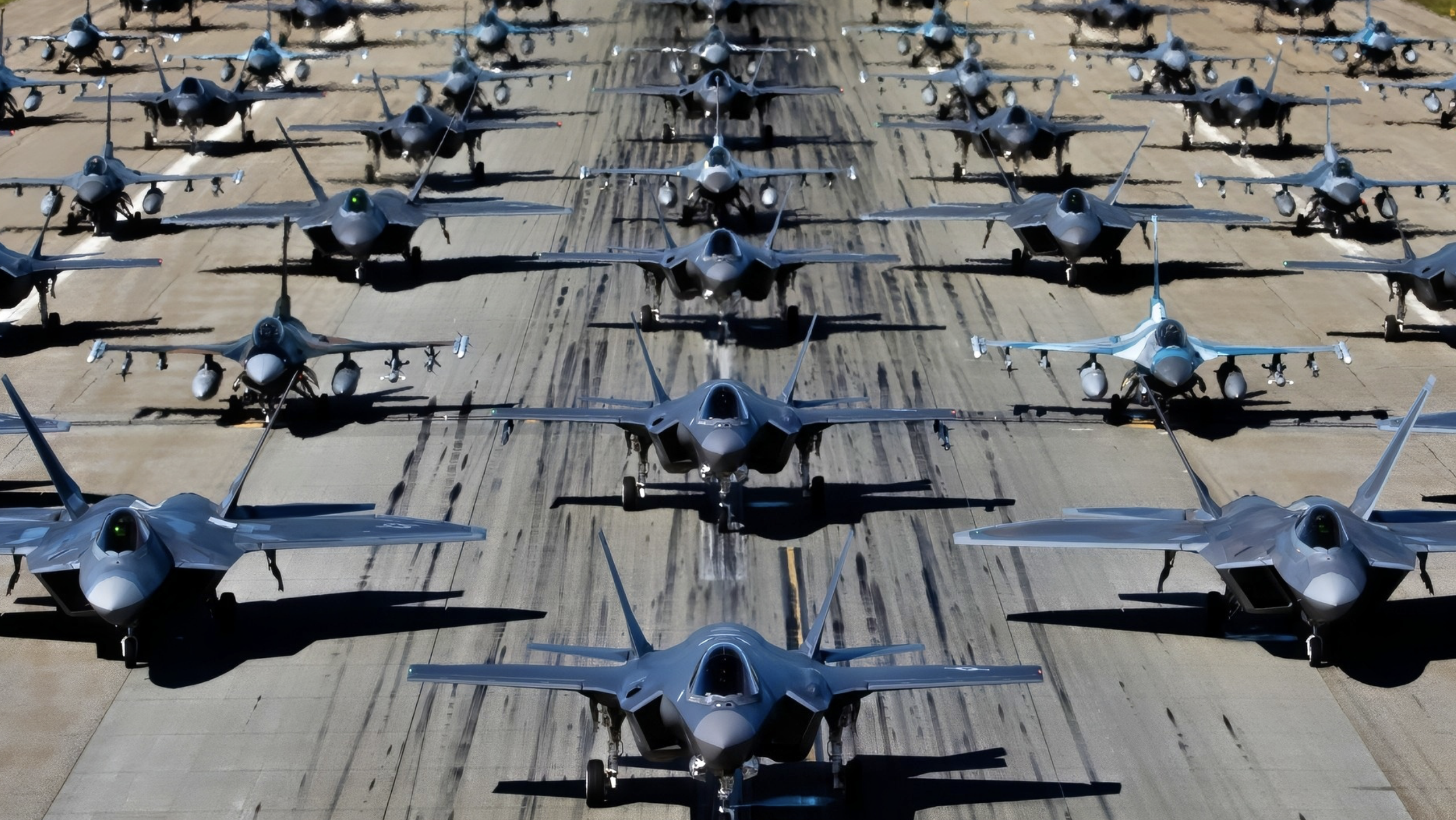
The U.S. Air Force has officially authorized a $240.9 million contract for the second production lot of the Joint Strike Missile (JSM), a move designed to close a critical capability gap in the F-35A Lightning II’s internal weapons carriage. Awarded to Norway-based Kongsberg Defence & Aerospace, this “Lot Two” procurement provides the fifth-generation fighter with a long-range, stealthy standoff weapon capable of neutralizing both maritime and land-based targets without compromising the aircraft’s radar cross-section. By integrating the JSM within the aircraft’s internal bay, the Air Force ensures that its primary stealth platform can strike high-value assets from distances exceeding 500 kilometers while remaining undetected by advanced integrated air defense systems (IADS).
Specifications
The contract represents a firm-fixed-price, sole-source agreement, underscoring the JSM’s unique position as the only cruise missile currently optimized for the F-35A’s internal dimensions. The following data points outline the scope and technical specifications of the acquisition:
- Total Contract Value: $240.9 million.
- Fiscal Allocation: Funding is bifurcated across two fiscal cycles, with approximately $138 million sourced from the 2024 procurement budget and $103 million from 2025 funds.
- Performance Range: Greater than 500 kilometers (approx. 310 miles), depending on launch altitude and profile.
- Guidance Systems: Employs a sophisticated suite including Inertial Navigation Systems (INS), Global Positioning System (GPS), and an imaging-infrared (IIR) seeker for autonomous target recognition.
- Production Timeline: Manufacturing will occur in Norway, with a projected completion date of November 2028.
- Logistical Scope: The deal encompasses the missiles, specialized transport containers, test equipment, and comprehensive support hardware.
Operational testing of the JSM with U.S. F-35A squadrons is slated to commence in 2025, following successful integration milestones achieved by international partners.
Strategic Realignment
The acquisition of the JSM signals a broader tactical shift within the Department of Defense toward long-range precision fires. Historically, the F-35A’s primary limitation in “Day One” of a conflict has been its internal payload capacity; carrying larger, traditional standoff missiles externally increases the aircraft’s radar signature, effectively nullifying its stealth advantages. The JSM’s compact, aerodynamic design allows it to be housed internally, preserving the airframe’s low-observable characteristics while providing the “reach” necessary to operate outside the “bubbles” of sophisticated enemy anti-access/area-denial (A2/AD) zones.
This procurement is particularly relevant to the Indo-Pacific theater. As the U.S. Indo-Pacific Command monitors escalating maritime tensions in the South China Sea, the JSM provides a sea-skimming, autonomous anti-ship capability that is difficult for modern destroyers to intercept. Furthermore, the weapon’s development by an allied nation facilitates seamless interoperability; nations such as Japan and Finland have already committed to the JSM, creating a standardized long-range strike ecosystem across the global F-35 user base.
Security Synthesis
While the $240.9 million contract is relatively modest compared to major platform acquisitions, its strategic weight is considerable. Military analysts suggest this investment is a direct response to the compressing security timelines in both Europe and Asia. NATO Secretary General Mark Rutte recently underscored the urgency of the current security climate, suggesting that the risk of direct confrontation with Russia could intensify before the end of the decade.
The integration of the JSM into the U.S. inventory provides a versatile deterrent against diverse threats. Its ability to fly low-altitude, terrain-following profiles allows it to bypass ground-based radar, making it an ideal tool for “first-look, first-shot” scenarios. However, the 2028 completion date for this lot suggests a persistent challenge in industrial capacity and the speed of replenishing high-end munitions stocks. As the U.S. and its allies transition toward the 2030s, the efficacy of the F-35 fleet will increasingly depend on the availability of such specialized, “stealth-compatible” ordnance to maintain a technological edge over near-peer adversaries.


