
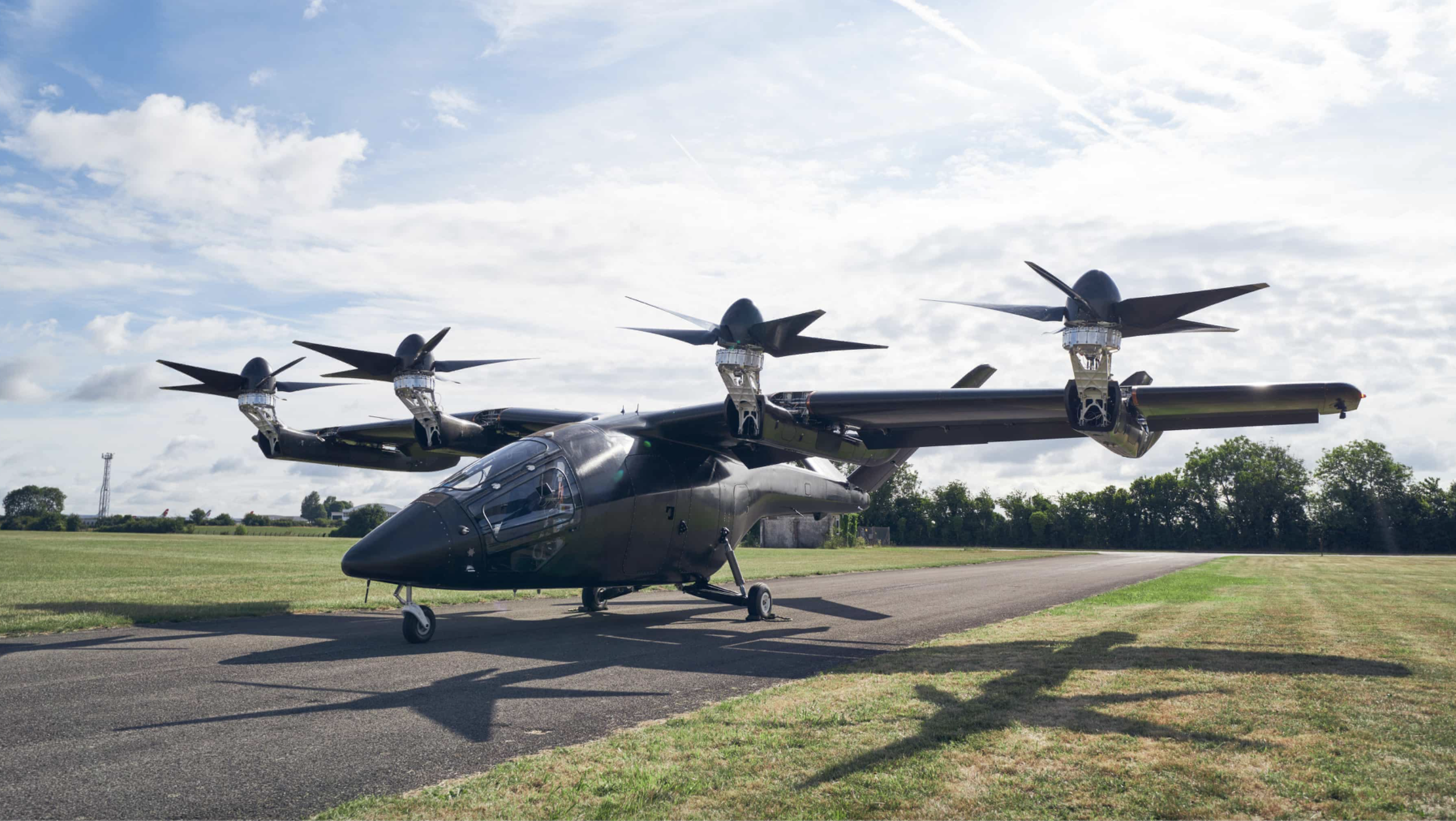
British electric aircraft developer Vertical Aerospace has redesigned its flying taxi to include a protective barrier between pilots and passengers, responding to airline customer demands for security measures against potential in-flight threats.
The Bristol-based company introduced the physical screen in its Valo aircraft, unveiled last week at London’s Canary Wharf, after customers including American Airlines and Japan Airlines raised concerns about pilots sitting just feet from passengers in the compact cabin.
“The feedback was that pilots will insist on feeling safe from passengers,” Vertical Aerospace Chairman Domhnal Slatterysaid. “They’re not going to fly something where they might be at risk from someone in the back.”
COMPETITIVE ADVANTAGE CLAIMED
Slattery said the security feature could give Vertical an edge over U.S. rivals Joby Aviation and Archer Aviation in the race to bring electric vertical takeoff and landing (eVTOL) aircraft to market, particularly if cockpit barriers become a regulatory requirement.
“You might have a guy on board who has had a bottle of wine and wants to do something stupid like play with the switches, or a bad actor who wants to do something,” Slattery said. “So we now have a physical screen between where the pilot sits and where the passengers sit. In simple terms, the passengers cannot touch the pilot during a flight.”
The Vertical chairman claimed competitors’ smaller cabin designs would struggle to accommodate such barriers. “Not only can passengers touch the pilot in our competitors’ aircraft, but one of them is so small that your feet are almost under his seat,” he said.
VALO SPECIFICATIONS
The Valo, which replaces Vertical’s VX4 prototype, will carry up to six passengers and cruise for up to 100 miles at 150 mph. The aircraft is targeted for regulatory approval and service entry in the second half of 2028.
The redesign includes expanded seating capacity and larger cargo space compared to the prototype, changes requested by airline customers who have placed the bulk of eVTOL orders for airport shuttle services between city centers and major airports.
Slattery dismissed earlier deployment timelines announced by Joby and Archer for operations in the United Arab Emirates, characterizing them as “certification tourism” that would not facilitate approval by Western regulators.
Flying taxis combine electric motors and batteries with multiple propellers to enable vertical takeoffs and landings in urban areas, though all manufacturers face significant regulatory hurdles before commercial operations can begin.


