
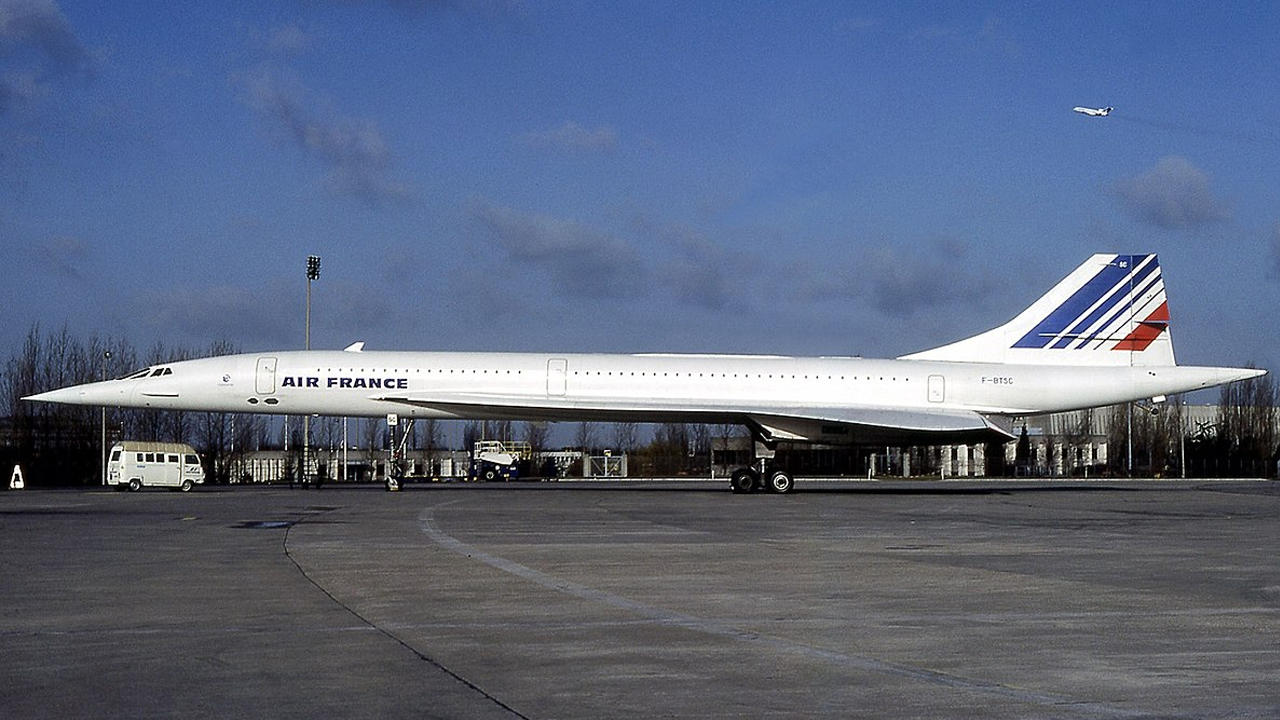
The Concorde flew at twice the speed of sound and crossed the Atlantic in under three hours. It was retired in October 2003 after 27 years of service. Since then, no commercial supersonic passenger aircraft has operated—until now. Several companies are racing to bring supersonic travel back.
Why Concorde Was Retired
[The Concorde’s retirement came down to economics and a fatal crash](https://www.britannica.com/question/Why-was-the-Concorde-retired#:~:text=The Concorde\’s retirement was due,prohibitively high for many consumers.). The aircraft was extremely expensive to operate, consuming massive amounts of fuel compared to conventional jets.
In 2000, Air France Flight 4590 crashed shortly after takeoff, killing all 109 people on board and 4 on the ground. This was the only fatal crash in Concorde’s history, but it severely damaged public confidence in the aircraft.
The crash, combined with a downturn in air travel following the September 11, 2001 attacks, made Concorde financially unsustainable. Passenger numbers dropped and maintenance costs continued to rise.
By 2003, both British Airways and Air France decided to retire their fleets. Airbus, which held the airworthiness certificate, was unwilling to continue supporting the aging aircraft. The costs of an enhanced maintenance program could not be justified against falling revenue.
Boom Supersonic
Boom Supersonic is developing the Overture, a supersonic airliner designed to carry 64-80 passengers at Mach 1.7. The company aims for commercial flights by 2029.
United Airlines has ordered 15 aircraft with 35 options, and American Airlines has committed to 20 with 40 options. The Denver-based company hopes to make supersonic travel more accessible and sustainable than Concorde.
In 2024, Boom’s XB-1 demonstrator aircraft broke the sound barrier, marking a major milestone. The company is now building its Superfactory in Greensboro, North Carolina, where Overture will be manufactured.
Hermeus
Hermeus is taking a different approach with hypersonic speeds of Mach 5. Founded in 2018, the company is initially targeting the defense and intelligence sector rather than commercial aviation.
The company’s Chimera engine could make it capable of flying from London to New York in 90 minutes—more than twice as fast as Boom’s aircraft. Hermeus has a contract with the US Air Force and plans to develop its passenger aircraft, the Halcyon, after proving the technology in military applications.
Spike Aerospace
Spike Aerospace is developing the S-512 business jet, designed for 12-18 passengers at speeds of Mach 1.6. The company targets the business aviation market rather than commercial airlines.
The S-512 would fly from London to New York in 3.3 hours, putting it roughly on par with Boom’s aircraft. Spike claims the jet will use quiet supersonic technology to reduce noise.
NASA and Lockheed Martin
NASA unveiled its X-59 demonstrator in January 2024, designed in partnership with Lockheed Martin. The aircraft is engineered to produce a barely audible “sonic thump” rather than a loud sonic boom.
The X-59 project aims to help regulators develop new rules that could allow supersonic flight over land, which has been banned in the United States since 1973. This could open up domestic supersonic routes, not just transatlantic flights.
The Challenges Ahead
Supersonic aircraft face significant hurdles beyond just technology. Fuel efficiency, noise regulations, and economic viability remain major challenges.
Concorde tickets cost 30 times more than economy fares and required the flight to be half full just to break even. Modern supersonic aircraft will need to be more efficient and affordable to succeed where Concorde ultimately failed.
Environmental concerns about aviation emissions add another layer of complexity. Any new supersonic aircraft will need to prove it can operate sustainably in an era of increasing climate awareness.
Whether supersonic travel returns depends on these companies solving the problems that grounded Concorde—and doing it in a way that makes business sense in today’s aviation market.


