
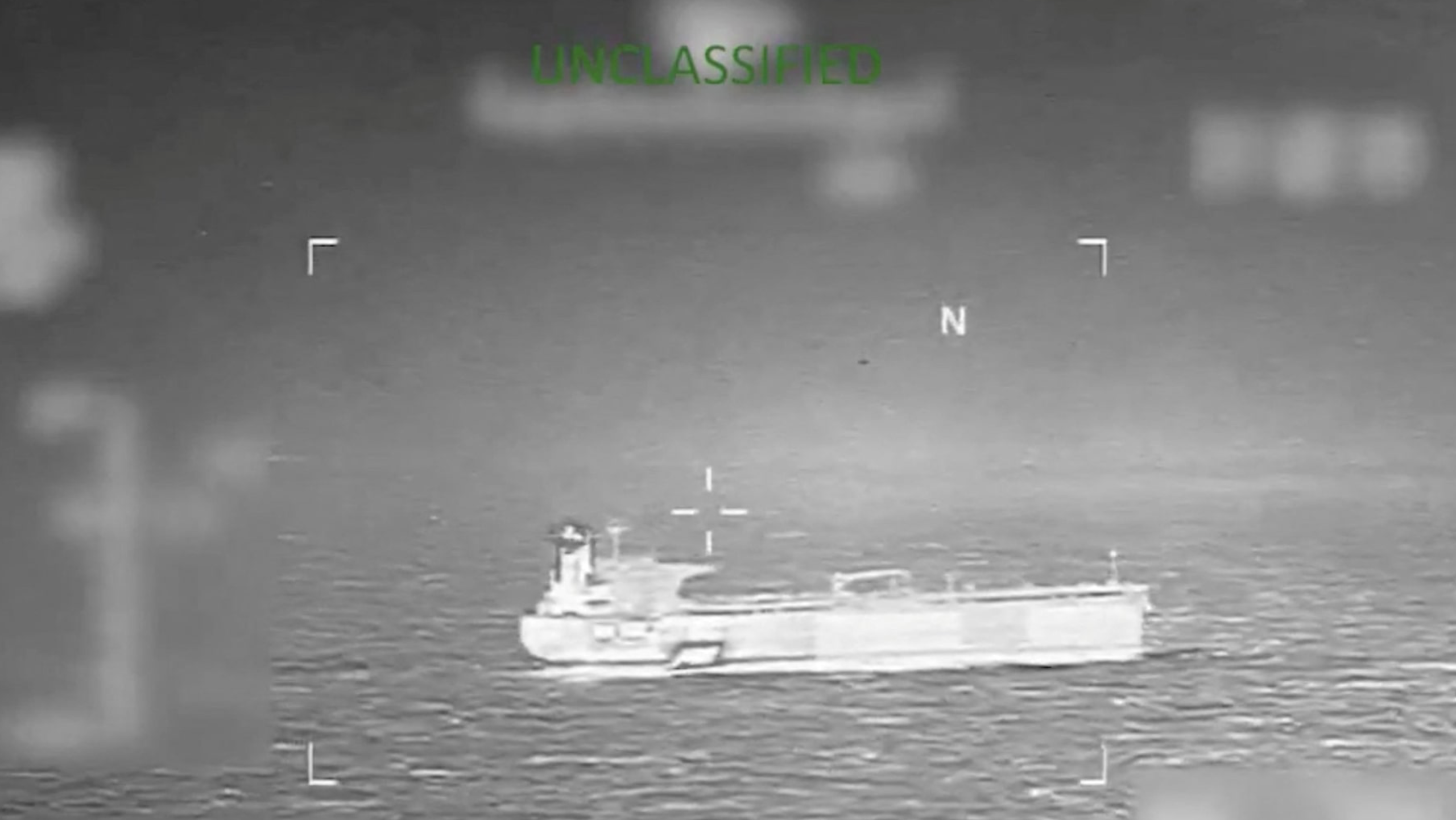
U.S. forces conducted a pre‑dawn maritime interdiction operation Thursday, seizing the Motor Tanker Veronica in the Caribbean as part of a broader campaign to enforce sanctions and disrupt illicit oil shipments, the U.S. Southern Command said in an official release. Department of Homeland Security Secretary Kristi Noem described the action as another successful enforcement under President Donald Trump’s sanctions regime.
In the operation, Marines and sailors from Joint Task Force Southern Spear — launched from the aircraft carrier USS Gerald R. Ford — apprehended the vessel “without incident,” Southern Command said. The action was carried out in partnership with the U.S. Coast Guard, the Department of Homeland Security and the Justice Department under what U.S. officials call Operation Southern Spear.
Noem echoed that description in her own post, saying a Coast Guard tactical team conducted the boarding early Thursday morning and that the Veronica had previously passed through Venezuelan waters while operating in defiance of the administration’s “established quarantine of sanctioned vessels in the Caribbean.” She characterized the execution as “flawlessly executed … in accordance with international law” and stressed that U.S. forces have demonstrated there is “no outrunning or escaping American justice.”
The seizure marks the sixth tanker intercepted in recent weeks as part of U.S. efforts to enforce sanctions targeting Venezuela’s oil sector and related trans‑shipment networks. Independent reports confirm the operation fits into a broader U.S. initiative directed at a so‑called “ghost fleet” of vessels that move sanctioned crude in defiance of U.S. economic restrictions.
Southern Command’s official announcement said the Veronica was the “latest tanker operating in defiance of President Trump’s established quarantine of sanctioned vessels in the Caribbean, proving the effectiveness of Operation Southern Spear yet again.” The statement underscored that the U.S. Navy’s Amphibious Ready Group, including ships such as USS Iwo Jima, USS San Antonio and USS Fort Lauderdale, provides sustained support for these maritime interdiction missions.
Noem framed the interdiction as part of a coordinated interagency strategy. “Our heroic Coast Guard men and women once again ensured a flawlessly executed operation,” she said, adding that America’s maritime forces remain ready “to apply the full force of [their] unique authorities and specialized capabilities against this threat anywhere, anytime.”
The broader campaign has significantly raised the profile of U.S. engagements in the Caribbean. According to reporting from multiple outlets, these interdictions come amid expanded U.S. pressure on Venezuela’s oil infrastructure and sanctions enforcement following the U.S. capture of Venezuelan President Nicolás Maduro and subsequent moves by the Trump administration to control and redistribute Venezuelan oil assets.
Thursday’s seizure unfolded without reported resistance or injuries, and the operation continues a pattern of pre‑dawn boarding actions conducted under the Southern Command’s direction. U.S. officials have not released detailed information about the tanker’s ownership or cargo, but media reports cite its ties to sanctioned oil networks linked with Venezuela and other restricted entities.
The enforcement campaign reflects an increasingly assertive posture by the U.S. military and interagency partners in the Western Hemisphere, blending naval power, law enforcement assets and sanctions compliance operations to counter what officials describe as illicit activity that undermines regional security.


