
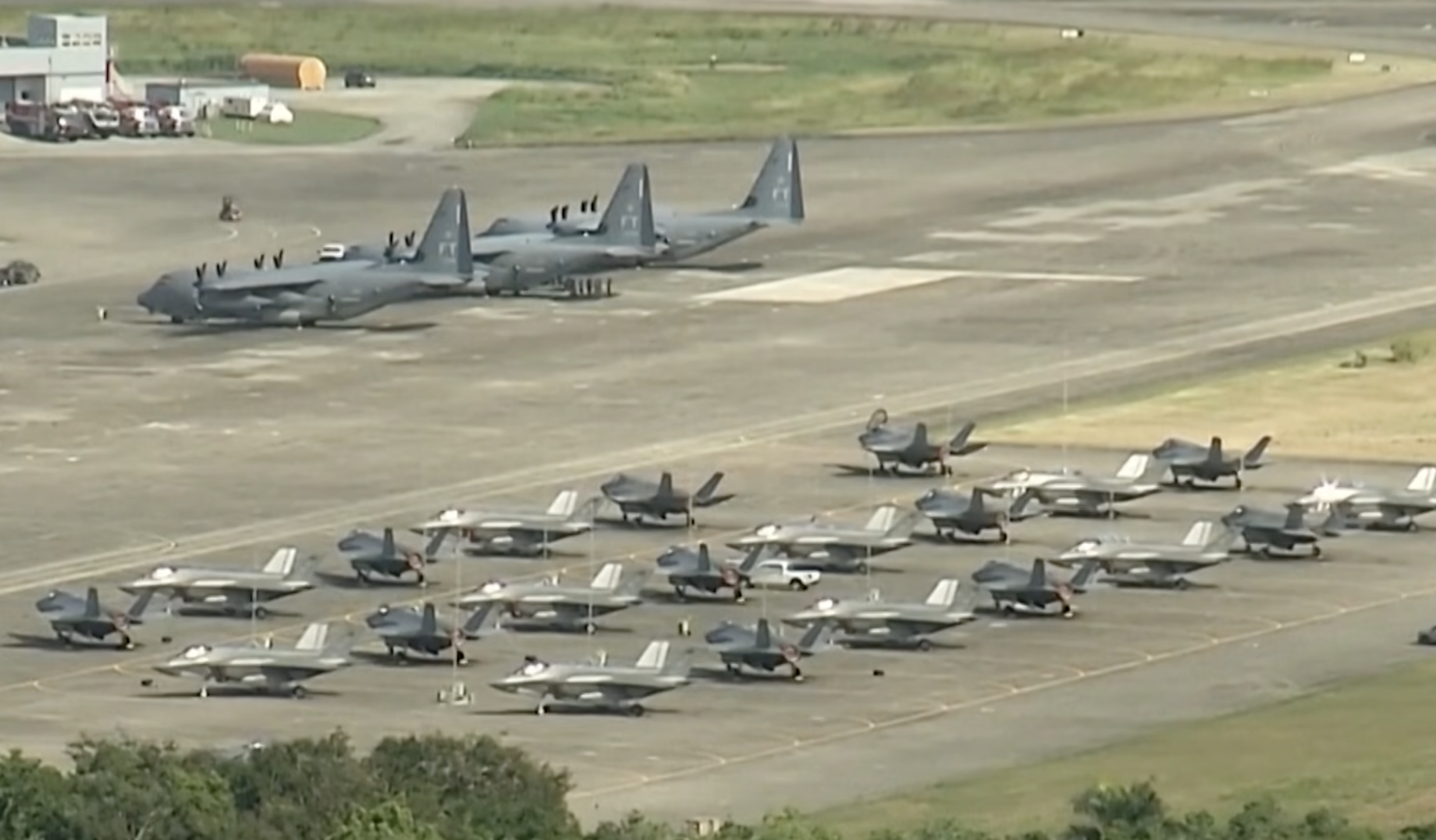
The U.S. has bolstered its special operations air presence in Puerto Rico amid escalating tensions in the Western Hemisphere, according to satellite imagery, flight-tracking data, and media reports.
Why It Matters
Puerto Rico has emerged as a crucial power-projection hub for the U.S. Air Force in recent months. The deployed aircraft are operating primarily from Rafael Hernández Airport in Aguadilla and the former Roosevelt Roads Naval Station in Ceiba, reactivating key infrastructure to support U.S. operations in the Caribbean.
This expanded military footprint supports counternarcotics operations and places significant pressure on Venezuela. As the Wall Street Journal reports, the movement of large numbers of special operations aircraft, troops, and equipment provides Washington with additional options for possible military action in the region. The deployment is described as the largest military buildup in the area in generations.
What To Know
According to open-source intelligence and satellite imagery, the U.S. has positioned specific high-value assets on the island. Five MC-130J Commando II aircraft were identified at Rafael Hernández International Airport. These aircraft are designed for clandestine, low-visibility missions into denied airspace, including the infiltration and extraction of forces.
Additionally, at least 10 CV-22 Osprey tilt-rotor aircraft have been moved into the theater. The Ospreys offer greater range and speed than traditional helicopters, a capability defense analysts say is critical for operations across a country as large as Venezuela.
This air power is complemented by a massive naval presence. AP News reports that the Navy has 11 warships in the region, including the USS Gerald R. Ford, five destroyers, and three amphibious assault ships carrying expeditionary units of Marines. Other assets spotted in Puerto Rico include F-35B Lightning II jets, EA-18G “Growler” electronic warfare jets, and MQ-9 Reaper drones capable of carrying laser-guided missiles.
U.S. Southern Command states that there are approximately 15,000 personnel currently operating in the area, a figure that includes sailors, Marines, and government civilians.
What People Are Saying
Secretary of the Navy John Phelan confirmed the high-level activity on social media, writing on X: “Today, on Christmas Eve, my wife Amy and I visited our forward-deployed service members who are spending their Christmas supporting Operation Southern Spear in Puerto Rico. Impressive Joint effort—Bravo Zulu.”
While the buildup is significant, officials emphasize that the current strategy relies heavily on economic leverage. A U.S. official told Reuters, “While military options still exist, the focus is to first use economic pressure by enforcing sanctions to reach the outcome the White House is looking [for].”
Lt. Col. Emanuel Ortiz, a spokesperson for Southern Command, told outlets that while they would not provide a formal breakdown of the 15,000 personnel for operational security reasons, the total includes “all military services and government civilians in support of this mission.”
What Happens Next
The Trump administration continues to escalate pressure on Venezuelan President Nicolás Maduro through a “quasi-blockade” and the seizure of oil tankers. Anadolu Agency notes that the U.S. continues to boost its military presence to support these broader force posture goals.
U.S. officials believe that by late January, Venezuela may face an “economic calamity” unless it agrees to significant concessions. Meanwhile, military signaling continues; the U.S. recently flew F/A-18 fighter jets over the Gulf of Venezuela, marking the closest American warplanes have come to the country’s airspace since the campaign began. With destroyers and submarines in the region capable of launching Tomahawk cruise missiles, the U.S. maintains a high state of readiness for various contingencies.


