
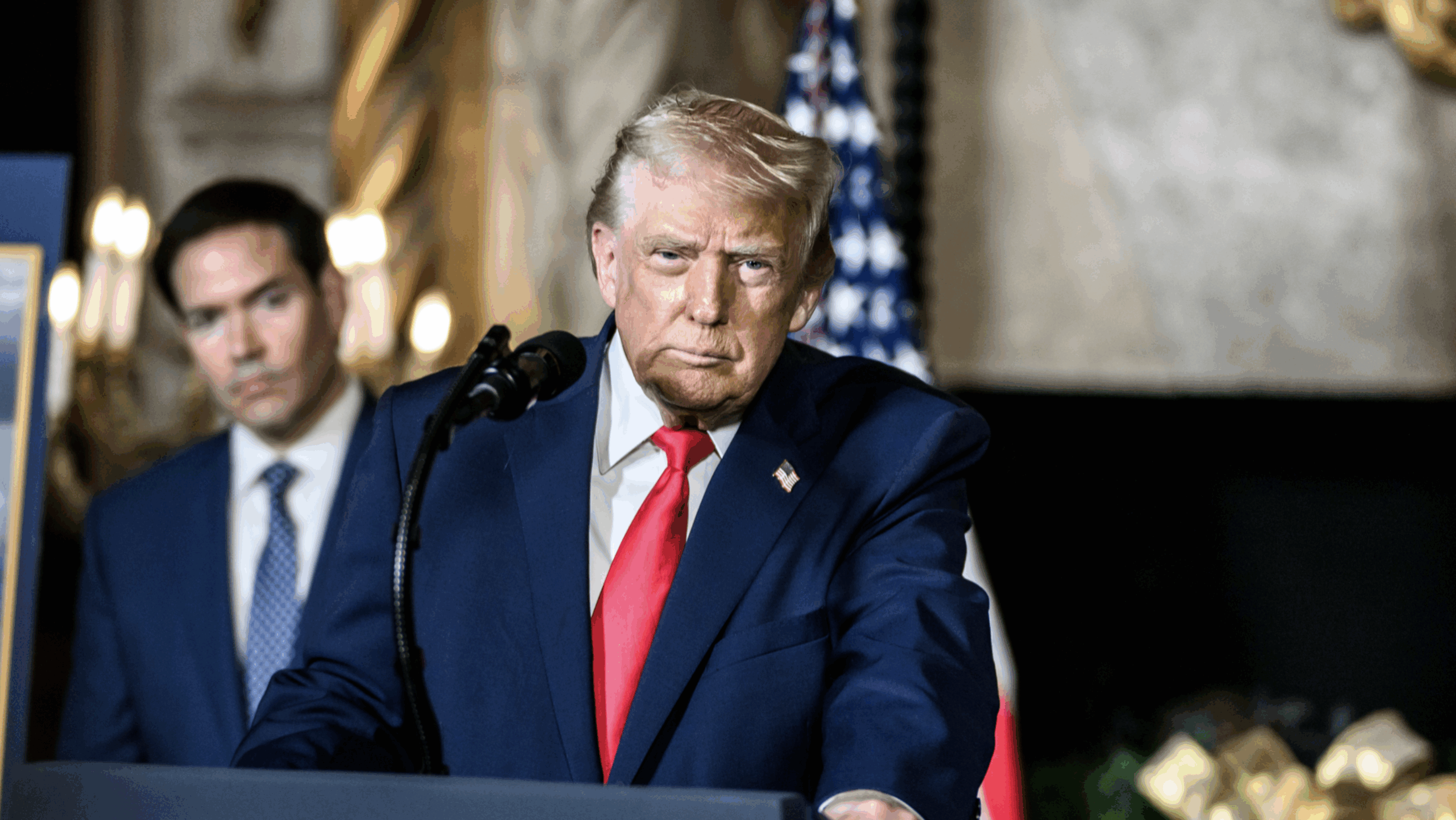
President Donald Trump hosted Israeli Prime Minister Benjamin Netanyahu at his Mar-a-Lago club on Monday, signaling a robust and unified stance against Tehran’s regional influence. During the meeting, which was intended to break the deadlock over a Gaza ceasefire and address threats from Hezbollah, Trump warned that the United States is prepared to launch military strikes against Iran if it persists in developing its nuclear and ballistic missile programs.
Why It Matters
The summit underscores a tightening alliance between the U.S. and Israel at a volatile moment for the Middle East. Trump’s explicit endorsement of military force marks a significant escalation in rhetoric, shifting from focusing solely on nuclear containment to addressing Iran’s broader ballistic capabilities. For Netanyahu, the meeting serves to bolster his security credentials as he navigates domestic political pressure and an upcoming national election, while the U.S. seeks to cement a transitional governance plan for a post-war Gaza.
What to Know
The two leaders reportedly moved with high efficiency, with Trump claiming that scheduled diplomatic talks resolved three major difficulties regarding the Gaza situation within the first five minutes. Trump struck a supportive tone, praising Netanyahu’s leadership and stating that Israel’s survival depended on the Prime Minister’s firm hand.
Central to the discussions was a detailed intelligence dossier brought by Netanyahu, which reportedly outlined Tehran’s recent efforts to rebuild its military infrastructure. Trump celebrated previous U.S. military successes—specifically mentioning the use of B-2 bombers to degrade Iranian nuclear sites—and warned that further provocations would meet “severe” consequences. “We’ll knock the hell out of them,” Trump told reporters, adding that the Iranian regime would face harsher repercussions than in previous engagements if their weapons development continues.
Regarding the conflict in Gaza, Trump insisted on the total disarmament of Hamas before the current ceasefire deal could progress to its second phase. He noted that while several countries are pushing for a resolution, the U.S. position remains that Hamas must be “wiped out” if they do not comply with disarmament terms.
What People Are Saying
The meeting has drawn varied reactions from political analysts and officials. Chuck Freilich, a political scientist at Tel Aviv University and former deputy national security adviser, noted that Netanyahu is in a “tight spot” with an election scheduled for October. Freilich suggested that the Prime Minister cannot afford a public clash with Trump and may be forced to make significant compromises to keep the ceasefire process moving.
Inside the U.S., close Trump ally Senator Lindsey Graham recently returned from Israel where he focused heavily on the Iranian ballistic threat, aligning with Trump’s renewed focus on Tehran. Meanwhile, a minor controversy emerged regarding claims that Israeli President Isaac Herzog planned to pardon Netanyahu of corruption charges. Herzog’s office clarified that while a representative of Trump had inquired about the status of the pardon request, no direct conversation between the two presidents had occurred since the request was submitted.
What Happens Next
The focus now shifts to the “second phase” of the Gaza ceasefire, which involves a transition toward a Board of Peace and a governing body of Palestinian technocrats. However, major hurdles remain. Netanyahu is reportedly demanding the return of the remains of Ran Gvili—the last Israeli hostage held in Gaza—as a prerequisite for opening the Rafah crossing and moving forward with the deal.
Furthermore, the U.S. is pushing for the deployment of an international security force, with Trump mentioning that Turkey has been “great” in discussions regarding their potential involvement in a stabilization force. As the October election in Israel approaches, the pressure on Netanyahu to balance these international demands with domestic security requirements will likely intensify.


