A U.S. Air Force Thunderbirds pilot walked away from a fiery crash Wednesday morning after successfully ejecting from an F-16C Fighting Falcon during a training mission over the Southern California desert.
The aircraft went down around 10:45 a.m. near Trona, an unincorporated community in the Mojave Desert about 180 miles north of Los Angeles. The pilot was transported to a hospital with non-life-threatening injuries and is in stable condition.
The Crash
The F-16C Fighting Falcon crashed during a training mission “over controlled airspace in California” near the San Bernardino-Inyo County line, according to a statement from Nellis Air Force Base in Nevada.
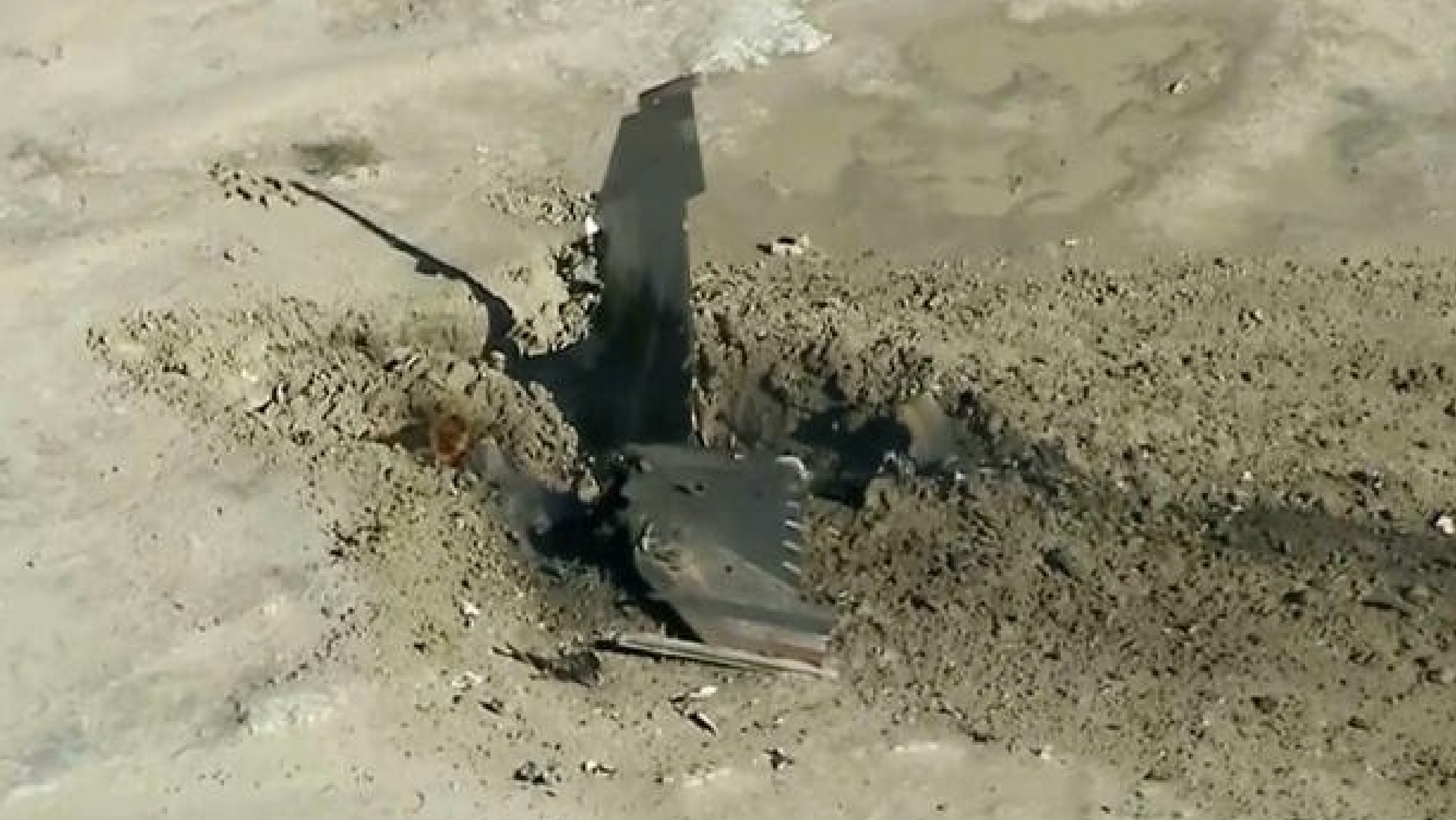
The San Bernardino County Fire Department responded to an “aircraft emergency” near Naval Air Weapons Station China Lake. Video from the scene showed the burning wreckage on a dry lake bed along Trona Road.
The pilot [successfully ejected and was seen drifting down with their parachute](https://www.airandspaceforces.com/thunderbird-f-16-crashes-in-california-pilot-ok/#:~:text=An Air Force F-16,drifting down with their parachute.) before the aircraft impacted the ground. Emergency responders reached the pilot quickly, and they were transported to an area hospital for treatment.
About the Thunderbirds
The Air Force Thunderbirds are the elite demonstration squadron that performs precision flying at air shows around the country. Formed in 1953, the Thunderbirds practice seasonally out of Nellis Air Force Base near Las Vegas.
Like the Navy’s Blue Angels, the Thunderbirds perform famous tight formations at air shows and train to fly within inches of each other. The squadron uses F-16C Fighting Falcons, the same aircraft that crashed Wednesday.
Investigation Underway
The crash is under investigation by the 57th Wing Public Affairs Office at Nellis Air Force Base. The Air Force has not released details about the circumstances that led to the crash.
“The incident is under investigation and further information will be released from the 57th Wing Public Affairs Office,” the Air Force statement said.
History of Demonstration Squadron Crashes
Both the Air Force Thunderbirds and Navy Blue Angels have experienced crashes throughout their long histories. The demonstration squadrons fly high-performance aircraft in challenging formations, inherently increasing risk despite rigorous training and safety protocols.
In 2022, a Navy F/A-18E Super Hornet crashed near Trona, killing the pilot. That crash occurred in the same general area where Wednesday’s incident took place.
The location near Naval Air Weapons Station China Lake is frequently used for military training exercises due to the controlled airspace and remote desert terrain.
Training vs. Performance
The crash occurred during a training mission, not during an air show performance. The Thunderbirds conduct regular training flights to maintain proficiency and develop new routines for their demonstration season.
Nellis Air Force Base, where the Thunderbirds are stationed, houses various military aircraft including F-16 Falcon and F-22 Raptor fighter jets as well as A-10 Warthog ground-attack jets. The base serves as a major training facility for Air Force pilots.
Pilot Safety Systems
The successful ejection demonstrates the effectiveness of modern ejection seat technology. F-16 ejection seats are designed to safely extract pilots even at low altitudes and high speeds, though ejections always carry risk of injury.
The pilot’s survival with non-life-threatening injuries represents a best-case outcome for what could have been a fatal accident. Ejection seats have saved thousands of military pilots since their introduction in the 1940s.
What’s Next
The 57th Wing will conduct a thorough investigation to determine the cause of the crash. This typically includes:
- Analysis of flight data recorders
- Examination of wreckage
- Interviews with the pilot and ground crew
- Review of maintenance records
- Assessment of weather conditions
The investigation could take weeks or months to complete. Until the findings are released, the Air Force is unlikely to provide additional details about what caused the F-16 to crash.
The Thunderbirds’ training schedule and upcoming air show appearances could be affected depending on the investigation’s findings, though the Air Force has not announced any changes to the squadron’s operations.


