
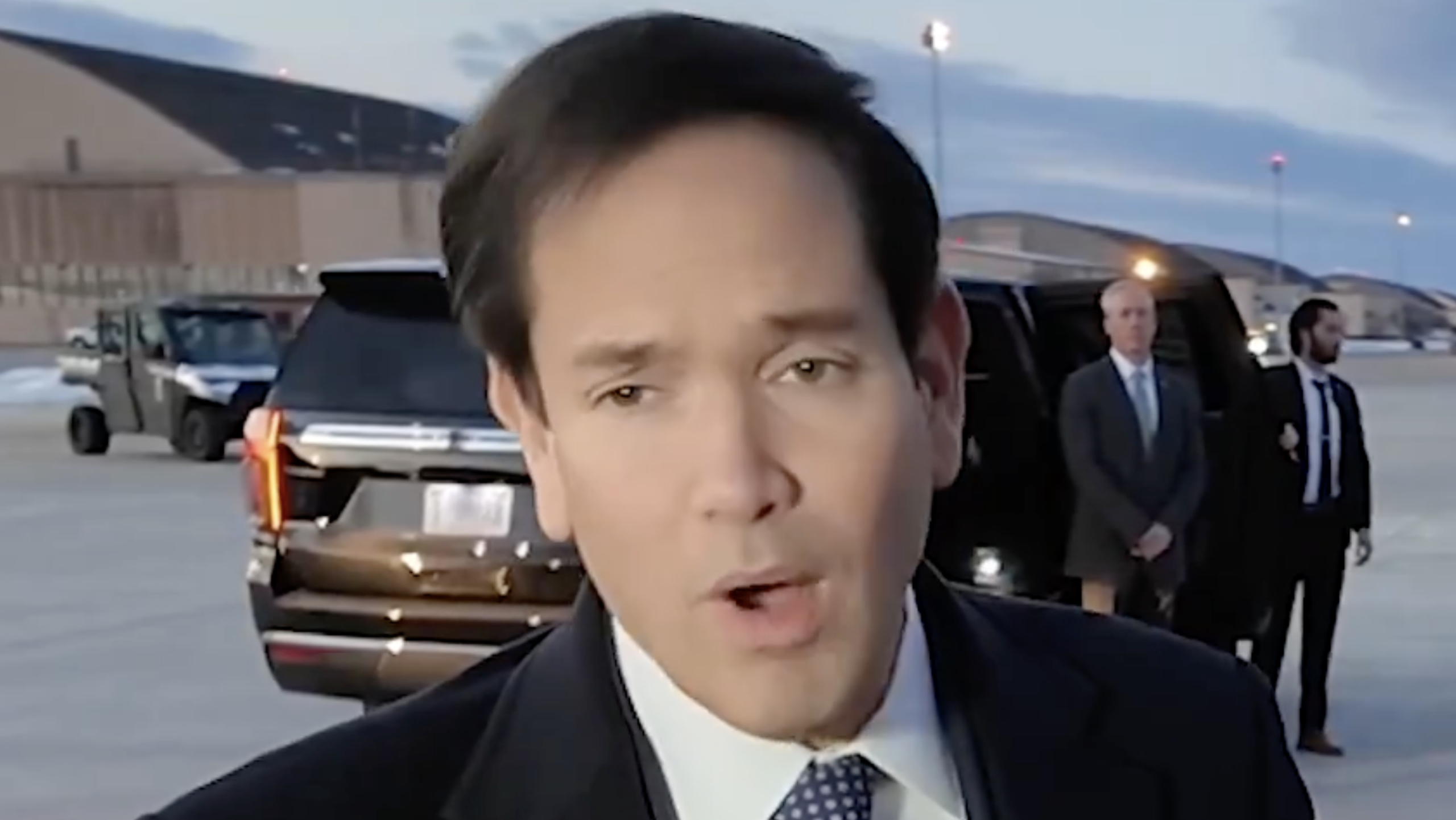
As he prepared to depart for the Munich Security Conference, Secretary of State Marco Rubio said the United States and its allies are navigating a period of profound global change, declaring that “the old world is gone” and that a new geopolitical era is taking shape. His remarks come as the Trump administration signals a broader reassessment of America’s alliances and international commitments, particularly in Europe, amid the ongoing war in Ukraine and shifting economic and security priorities.
.@SecRubio: "The world is changing very fast right in front of us. The old world is gone … We live in a new era in geopolitics, and it's going to require all of us to sort of re-examine what that looks like and what our role is going to be." pic.twitter.com/wgPrl2xJZC
— Department of State (@StateDept) February 13, 2026
Speaking to reporters before leaving for Munich, Rubio described the conference as a pivotal moment for transatlantic dialogue. Asked what message he planned to deliver, he declined to preview his speech but indicated it would offer clarity about Washington’s direction.
“I think they want honesty,” Rubio said of European leaders. “They want to know where we’re going, where we’d like to go, and where we’d like to go with them. That’s our hope.”
Rubio noted that this would be his third time attending the annual gathering in Germany — twice as Secretary of State and previously as a member of Congress — underscoring the forum’s importance as a venue for high-level diplomacy between the United States and Europe. He said the speed of global change was central to his message.
“It’s an important moment,” Rubio said, referencing his earlier confirmation hearing. “The world is changing very fast right in front of us. The old world is gone — frankly, the world I grew up in — and we’re living in a new era of geopolitics. It’s going to require all of us to reexamine what that looks like and what our role will be.” He emphasized that the United States continues to view European nations as allies and that many of these conversations have already taken place privately. “They are our allies,” Rubio said, adding that meetings in Munich would aim to move discussions forward.
The secretary’s comments align with recent remarks by Vice President J.D. Vance, who said in an interview that a “new world order” is already underway and that President Trump is reshaping trade relationships and alliance structures in line with an America First agenda. Vance argued that tensions with European leaders reflect a broader realignment in global power, even as private negotiations continue behind the scenes.
JD Vance on the new world order:
— Clash Report (@clashreport) February 4, 2026
There’s a new world order and Trump is willing to shake up some old alliance structures.
I mean NATO I think is much different because of Trump’s leadership than it was 10 years ago.
It was effectively a protectorate of the United States of… pic.twitter.com/QiCNvchhsG
Rubio’s trip comes at a moment of heightened concern in Europe over the war in Ukraine. Asked about continued Russian bombardment during the winter months, Rubio called the situation “terrible.”
“It’s a war. That’s why we want the war to end,” he said. “People are suffering. It’s the coldest time of year. The suffering is unimaginable. That’s the problem with wars — that’s why wars are bad. That’s why we’ve worked so hard for over a year now to try to bring this one to an end.” Rubio said he expected to meet with Ukrainian President Volodymyr Zelenskyy on the sidelines of the conference, though he noted he was not entirely certain of the final schedule.
Beyond Ukraine, Rubio indicated that other sensitive geopolitical issues could surface in Munich, including Greenland, which has become the subject of renewed strategic attention in recent months. “I’m sure somebody will raise it,” he said. “We’re working on that. We feel good about it.”
Following the conference, Rubio plans to visit Hungary and Slovakia, describing both countries as strong partners of the United States. He confirmed he would meet with Hungarian Prime Minister Viktor Orbán, saying the visit had been previously discussed after Hungarian officials traveled to the United States late last year.
.@SecRubio on travel to Slovakia and Hungary: “These are the countries that are very strong with us, very cooperative with the United States, work very closely with us, and it's a good opportunity to go see them, and two countries I've never been in.” pic.twitter.com/VfkNG4wStd
— Department of State (@StateDept) February 13, 2026
“The president has said he’s very supportive of him, and so are we,” Rubio said, characterizing the stop as a bilateral engagement that was added to the Munich trip for convenience.
He also said he would stop in Slovakia, noting that U.S. officials had pledged to visit after prior meetings. When asked whether he would press Hungary and Slovakia to reduce purchases of Russian energy, Rubio said those conversations would take place privately. “We’ll talk about what needs to happen,” he said, declining to provide specifics.
Rubio rejected the notion that the frequency of his recent transatlantic travel signaled any unusual shift in policy, noting that both the Munich conference and the Winter Olympics were longstanding events. Still, he underscored the depth of U.S.-European ties.
“Europe is important to us. We’re very tightly linked,” Rubio said. “Most people in this country can trace either their cultural or personal heritage back to Europe. We’re deeply tied to Europe, and our futures have always been linked and will continue to be. We just have to talk about what that future looks like.”
His remarks reflect an administration seeking to recalibrate long-standing alliances while maintaining engagement with traditional partners. As debates continue over NATO, trade policy and the trajectory of the Ukraine war, Rubio’s message ahead of Munich suggests that Washington sees the current moment not as a temporary disruption, but as a structural shift in the international system — one that will require allies on both sides of the Atlantic to redefine their roles in a rapidly changing world.


