
American aircraft production during World War II represented an unprecedented industrial achievement that historians credit with decisively shifting the conflict in favor of the Allies, with five aircraft types standing out for their strategic impact.
The United States produced more than 300,000 military aircraft between 1940 and 1945, transforming from building fewer than 3,000 planes in 1939 to becoming what President Franklin D. Roosevelt called “the arsenal of democracy.”
Aviation historians and military experts identify five American aircraft as particularly significant in determining the war’s outcome, based on their combat effectiveness, production numbers, and strategic impact across both European and Pacific theaters.
P-51 MUSTANG: LONG-RANGE FIGHTER

U.S. Air Force photo by Tech. Sgt. Ben Bloker (public domain)
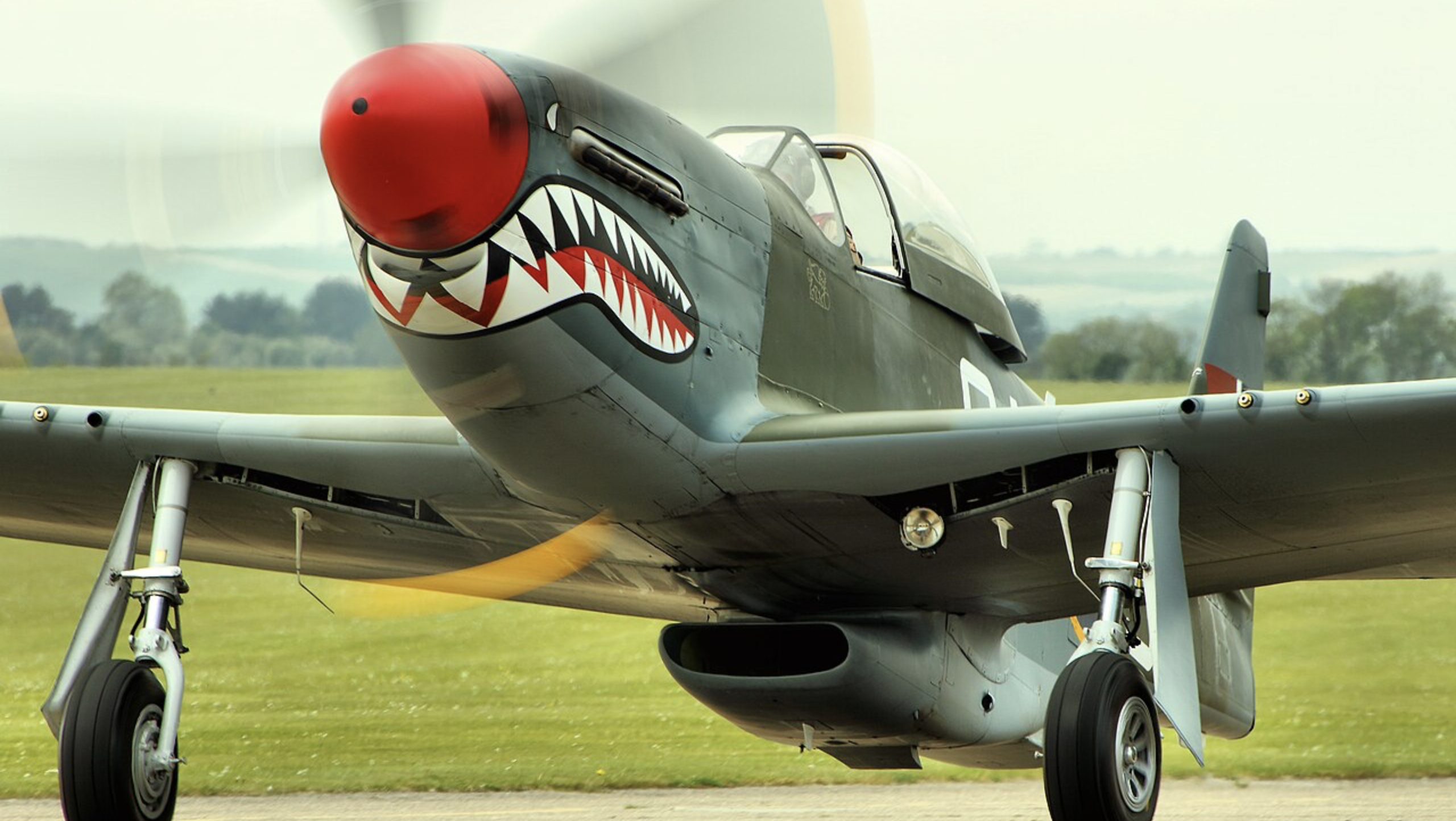
The North American P-51 Mustang is widely regarded by warbird experts as the finest fighter of World War II, according to the Smithsonian Institution. The aircraft’s combination of range and speed proved decisive in weakening German air defenses.
Conceived in April 1940 when the Royal Air Force requested additional fighters, the P-51’s breakthrough came with the addition of a Merlin engine, giving it the range to escort B-17 and B-24 bombers deep into Germany. “Escorting bombers to Berlin and whupping the German fighters that attacked them, the P-51 was significant in weakening the German air force,” aviation historians note.
B-17 FLYING FORTRESS: STRATEGIC BOMBER

The Boeing B-17 Flying Fortress became the iconic bomber of the European theater, carrying the strategic bombing campaign to German industrial targets. The four-engine heavy bomber earned its “Flying Fortress” nickname from its defensive firepower.
First flown in 1935 as the Boeing Model 299, the B-17 could fly higher than its British counterpart, the Lancaster, and proved remarkably resilient, with numerous documented cases of aircraft returning to base despite catastrophic damage. The U.S. produced 12,731 B-17s during the war.
B-29 SUPERFORTRESS: PACIFIC DOMINANCE

Photo by wallycacsabre, Creative Commons Attribution 2.0 (CC BY 2.0)
The Boeing B-29 Superfortress represented the most advanced bomber of the war and remains the only aircraft to have dropped nuclear weapons in combat. The pressurized, high-altitude bomber was designed specifically for the Pacific theater’s long-range missions.
The B-29’s technological sophistication included remote-controlled gun turrets and pressurized crew compartments, allowing operations at altitudes beyond the reach of most Japanese fighters. The aircraft played a crucial role in the strategic bombing campaign against Japan.
C-47 SKYTRAIN: LOGISTICS BACKBONE

Photo by Michael Barera, Creative Commons Attribution-ShareAlike 4.0 (CC BY-SA 4.0)
The Douglas C-47 Skytrain, military version of the DC-3 commercial airliner, proved indispensable for transport, paratroop drops, and medical evacuation across all theaters. General Dwight D. Eisenhower counted the C-47 among the most important tools for winning the war.
The aircraft’s reliability and versatility made it essential for major operations including the D-Day invasion, where C-47s dropped thousands of paratroopers behind German lines. More than 10,000 were produced during the war.
F6F HELLCAT: CARRIER FIGHTER
The Grumman F6F Hellcat dominated the Pacific air war against Japan, with Navy pilots achieving a kill ratio exceeding 19:1 against Japanese aircraft. The carrier-based fighter addressed earlier stability issues with the F4U Corsair while offering superior performance against the Mitsubishi A6M Zero.
Retired Admiral James Winnefeld, a former TOPGUN instructor, noted the Hellcat’s superiority combined pilot skill with aircraft performance to decisively shift the Pacific air war in America’s favor.
The massive scale of American aircraft production – which saw the industry rise from 41st place among U.S. industries to first place in less than five years – provided Allied forces with overwhelming numerical superiority that historians identify as crucial to victory in both theaters.


