
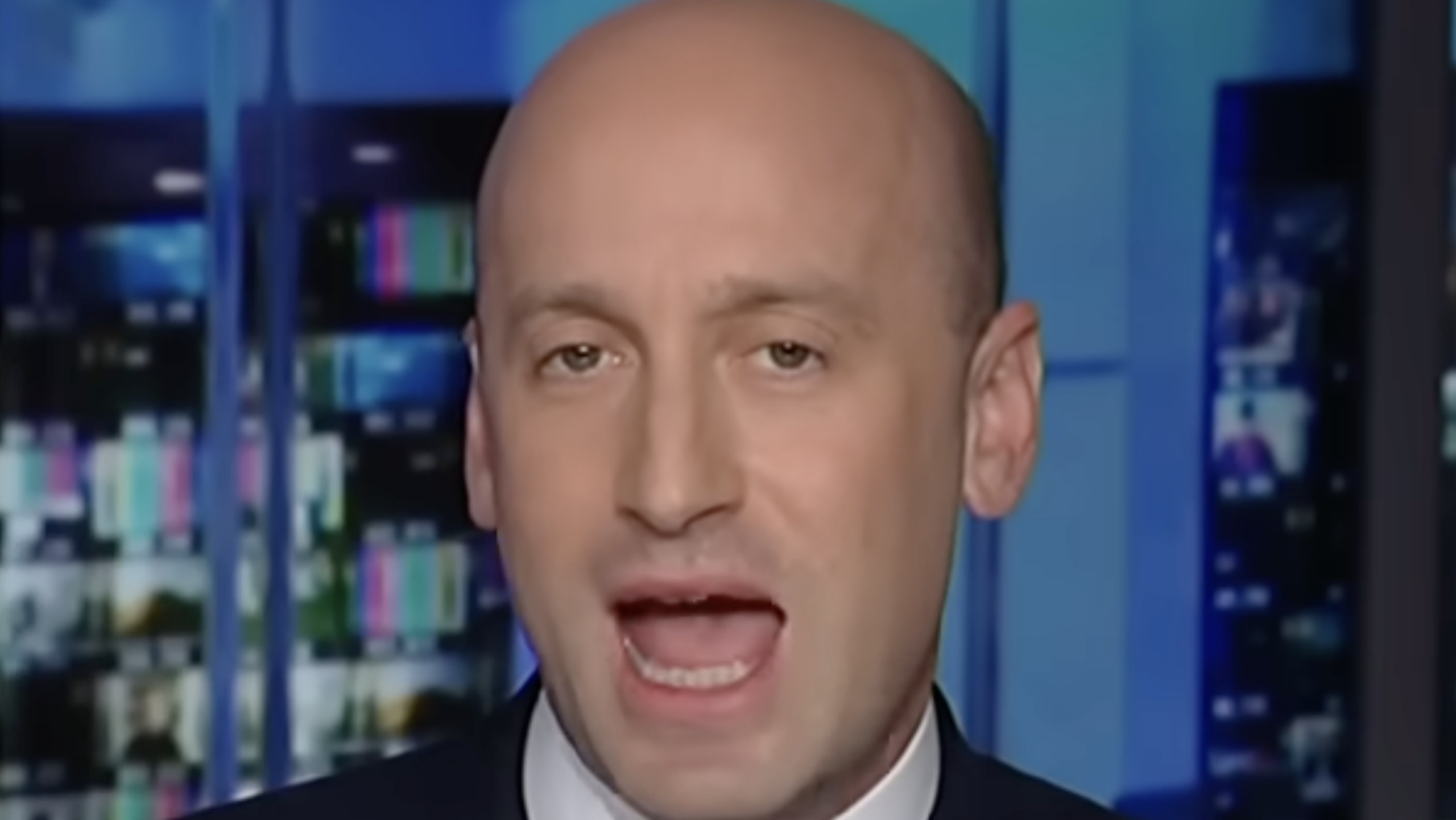
Stephen Miller, a senior advisor to President Donald Trump and United States Homeland Security Advisor, sharply condemned Democratic members of Congress for their response to a key moment in the president’s State of the Union address. In a social media post, Miller wrote that the entire Democratic Party had disqualified itself from government service in one exchange, describing it as something without precedent in American history.
The entire Democrat Party disqualified itself from government service in this one exchange. Nothing like it in US history. https://t.co/KpMBchLfc4
— Stephen Miller (@StephenM) February 25, 2026
The comment came directly in response to footage from the address where Democrats remained seated during a pointed appeal from Trump. The president had invited lawmakers to stand if they agreed with a basic principle. “If you agree with this statement then stand up and show your support: the first duty of the American government is to protect American citizens not illegal aliens,” Trump said. As Republicans rose to their feet with applause, Democrats stayed in their seats, prompting chants of “USA” from supporters and visible frustration from the president.
WOW
— Daily Wire (@realDailyWire) February 25, 2026
President Trump invites Congress to stand if they agree that the first duty of the American government is to protect American citizens, not illegal aliens.
Republicans give him a standing ovation, and Democrats stay seated.
"You should be ashamed of yourself." pic.twitter.com/h1ZrHs3LSZ
Trump pressed the point repeatedly, calling the refusal a shame. “Isn’t that a shame? You should be ashamed of yourself not standing up. You should be ashamed of yourself,” he continued. He tied the moment to broader calls for policy changes, urging an end to sanctuary cities that shield criminal aliens, stronger penalties for officials who obstruct deportations of dangerous individuals such as drug lords and murderers, and passage of the Save America Act. That legislation would require voter ID and proof of citizenship for federal elections, ban most mail-in ballots except in limited cases like illness or military service, and prevent unpermitted persons from voting. Trump noted that such measures poll at high levels, including 89 percent overall support, and even drew a comparison to New York City’s requirements for basic jobs like snow shoveling, which demand identification while voting does not in many places.
The president argued that opposition to voter ID stems from a desire to enable cheating, claiming Democrats’ policies are so unpopular that they rely on fraud to win elections. He insisted the measures enjoy bipartisan agreement and should pass immediately. The refusal to stand became a flashpoint, amplified by conservative commentators as a clear display of priorities.
Miller expanded on his criticism in related remarks, calling Democrats’ actions a declaration of searing disdain and profound disloyalty to American citizens. He noted that Trump had entreated them repeatedly to stand, yet they refused, creating a moment he said chills to the bone and would endure for generations. The exchange highlighted deep partisan divides over immigration enforcement, border security, and election integrity, issues that have defined much of the current administration’s agenda.
Democrats declared to the world their searing disdain for, and profound disloyalty to, the actual citizens of the United States. They were repeatedly entreated to stand. Over and over. They refused. It was a moment that chills to the bone and which will live for a thousand years. https://t.co/rdjcjZxj0L
— Stephen Miller (@StephenM) February 25, 2026
The State of the Union, delivered amid ongoing debates about immigration policy and its impacts, featured Trump emphasizing recent border security gains while criticizing past approaches that allowed unchecked entries. Democrats have countered by pointing to consequences of aggressive enforcement, including incidents involving American citizens, and have pushed for oversight reforms. The seated response from one side of the aisle underscored those tensions, turning a routine rhetorical device into a widely discussed symbol of ideological differences.


