
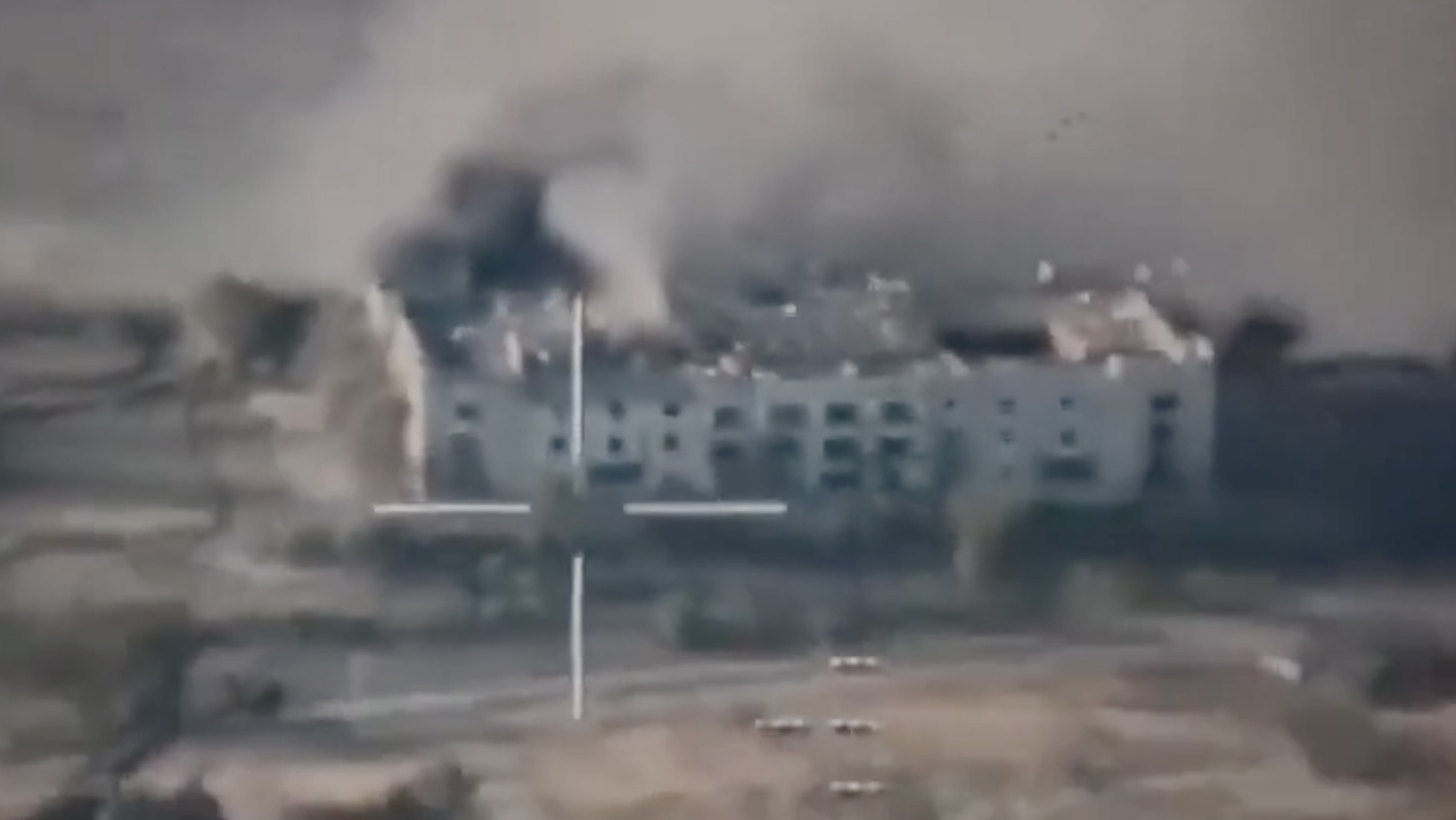
Thai F-16 fighter jets bombed a Cambodian casino near the border that had been converted into a military base for drones and heavy weapons on December 8, 2025, marking a dramatic escalation in fighting that threatens to collapse a peace deal brokered by US President Donald Trump just two months earlier.
The Casino Military Base
The primary target was a casino near the Chong An Ma border pass in Ubon Ratchathani province that Cambodia had been using as a base for drones and heavy weapons to attack Thailand, according to Bangkok’s military.
Thai F-16s also struck a Cambodian cable car station near Prasat Ta Khwai ruins in Surin province, which Thailand identified as another military position being used to support attacks on Thai forces.
The strikes razed the casino, which Thailand accused Cambodia of using to launch drone operations and artillery attacks across the border. Thai Army spokesperson Maj. Gen. Winthai Suvaree said the airstrikes targeted “Cambodian military infrastructure” and fire-support positions.
The Triggering Attack
Thailand launched the airstrikes after one Thai soldier was killed and four wounded when Cambodian forces opened fire with small arms and indirect-fire weapons at around 5:05 a.m. local time on Monday morning in the Chong Bok area of Nam Yuen district.
Earlier that morning, clashes had broken out in the Chong An Ma area when Cambodian troops opened fire with small arms and indirect-fire weapons at Thai positions around 5:05 a.m. and continued firing.
Thailand accused Cambodia of using artilleries and mortar launchers to attack Thai forces at Anupong Base, beginning around 3 a.m. local time. “The Thai side has now begun using aircraft to strike military targets in several areas,” the Thai military said in a statement.
Cambodia Denies Allegations
Cambodia’s Ministry of National Defense denied Thailand’s allegations, calling them “false information.” The Cambodian army accused Thailand of launching an unprovoked attack on its forces at around 5:04 a.m. local time, claiming “this attack occurred after the Thai forces engaged in numerous provocative actions for many days.”
The defense ministry said it “did not retaliate at all” and accused Thailand of aggression.
Civilian Casualties and Evacuations
At least four Cambodian civilians have been killed and nine others injured, according to Cambodian Minister of Information Neth Pheaktra. The violence has triggered a massive humanitarian crisis on both sides of the border.
Thailand began evacuating civilians from affected border towns on Sunday, with about 70% already moved to safety. Nearly 400,000 people have evacuated to temporary shelters, according to Thailand’s foreign ministry spokesperson Nikorndej Balankura.
Tens of thousands more have been displaced on the Cambodian side, though exact figures remain unclear.
Leaders Respond
Thailand’s Prime Minister Anutin Charnvirakul said the country “never wished to see violence” but would “not allow the violation of its sovereignty.” He indicated that additional military action would be decided “according to the conditions of the situation.”
Thailand’s Foreign Minister Sihasak Phuangketkeow told CNN that military action would continue “until we feel that sovereignty and territorial integrity are not challenged.” When asked if Thailand was planning to discuss the latest clashes with Trump, Sihasak said it was up to Cambodia and Thailand to “work things out,” adding: “We’re not really convinced that the joint declaration is working according to its intention.”
Prime Minister Anutin added that Thailand had “responded in kind” to Cambodian aggression and would continue defending its territory.
Trump’s Peace Deal Collapses
The airstrikes represent the most serious breach of a ceasefire agreement signed just weeks earlier. Following deadly five-day clashes in July 2025 that left at least 38-43 people dead and displaced more than 300,000, an initial ceasefire was agreed on July 28 after Trump held calls with both countries’ leaders.
Thailand and Cambodia then signed an expanded ceasefire declaration in Kuala Lumpur in late October in a ceremony witnessed by Trump and Malaysian Prime Minister Anwar Ibrahim. The October ceasefire declaration was viewed by Trump as a major diplomatic victory.
However, within less than two weeks of signing, the agreement began fraying. Thailand halted progress on the agreement after a landmine explosion at the border injured several Thai soldiers. Thailand accused Cambodia of secretly laying new anti-personnel landmines along Thai patrol routes, a charge Cambodia denied.
Regional Alarm
Malaysian Prime Minister Anwar Ibrahim said he was “deeply concerned by reports of armed clashes,” warning that “the renewed fighting risks unravelling the careful work that has gone into stabilising relations between the two neighbours.”
Thailand’s foreign ministry met with the Malaysian ambassador and the chargé d’affaires of the United States following the latest flare-up, seeking to explain Bangkok’s position and coordinate regional responses.
Malaysia, Thailand and Cambodia are all members of the Association of Southeast Asian Nations (ASEAN), a regional bloc focused on economic, political, and security cooperation in Southeast Asia. The renewed fighting threatens regional stability and undermines ASEAN’s credibility as a conflict-resolution mechanism.
The Border Dispute
The two countries share a 500-mile (800-kilometer) land border, and the territorial dispute over demarcated portionslargely stems from a map drawn up by the French when they controlled Cambodia as a colony, which Thailand does not accept.
The nations have repeatedly fought brief border skirmishes in recent decades, but the July 2025 conflict was the most serious fighting in years, with dozens killed and hundreds of thousands displaced.
Key flashpoints include the area around the 11th-century Preah Vihear temple, which sits on a clifftop on the border. Despite a 1962 International Court of Justice ruling awarding the temple to Cambodia, disputes over surrounding territory have repeatedly sparked violence.
What’s Next
With Monday’s escalation and the deployment of F-16 fighter jets to strike military targets deep inside Cambodia, the Trump-brokered peace agreement appears to have collapsed entirely.
Thailand has indicated military operations will continue until it feels its sovereignty is secure, while Cambodia maintains it remains committed to implementing the previous ceasefire—though it denies any violations.
The collapse of the agreement represents a significant setback for Trump’s foreign policy agenda in Southeast Asia and raises questions about the durability of cease-fires brokered without addressing underlying territorial disputes.
As F-16 sorties continue and both sides mobilize additional forces to the border, the risk of further escalation remains high, with regional powers scrambling to prevent a broader conflict.


