
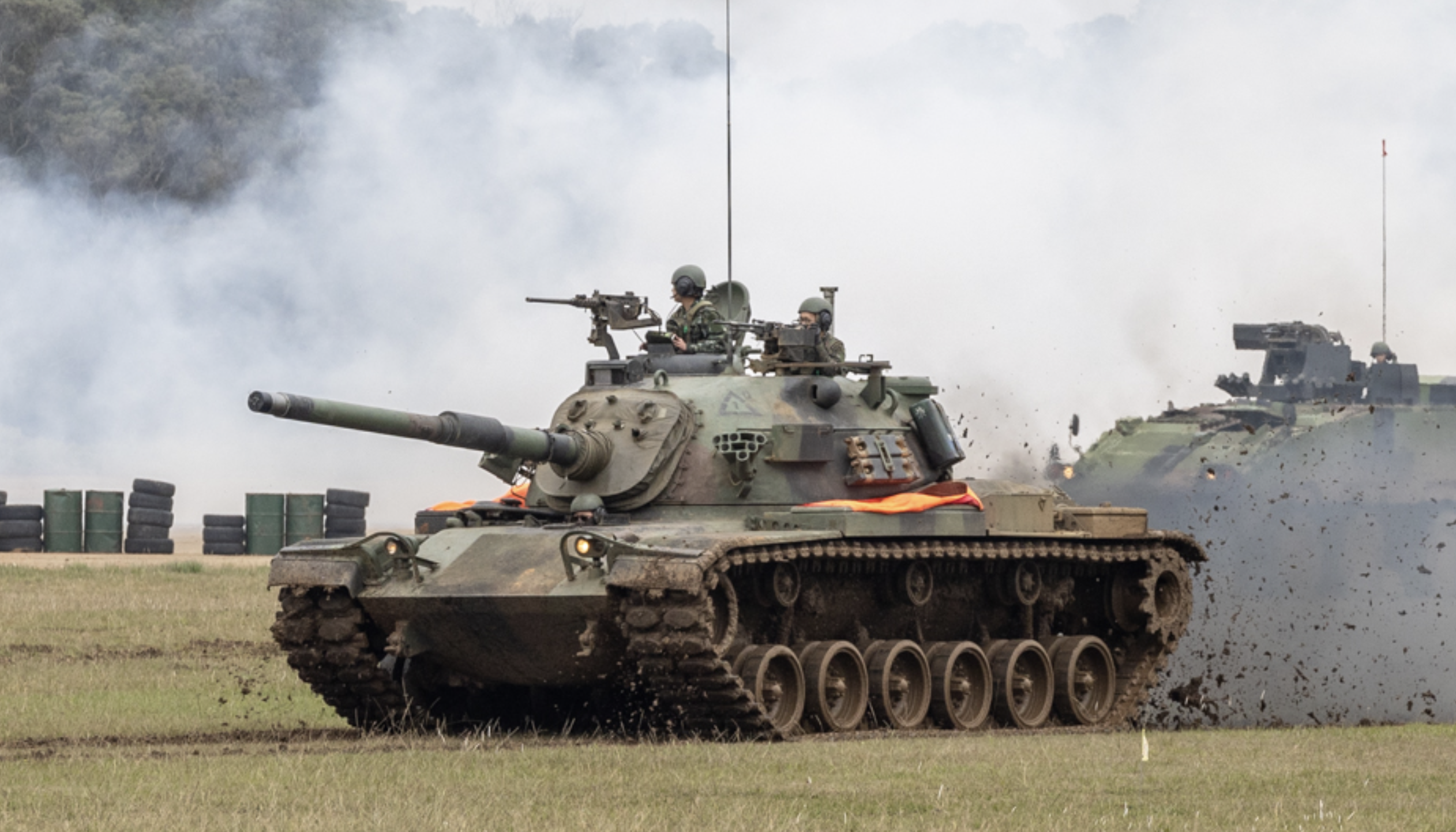
The United States has accelerated the transfer of asymmetric weapons to Taiwan to deter a potential Chinese invasion, but a leading industry voice warns that this singular focus leaves the island vulnerable to other threats, such as a sustained blockade.
Why it matters
As tensions in the Indo-Pacific rise, the strategy for arming Taiwan has shifted dramatically. While Washington has prioritized “porcupine” tactics—arming the island with mobile, hard-to-target weapons—experts argue that a lack of conventional platforms could hinder Taiwan’s ability to keep sea lanes open and maintain air defense over time. The current approach prioritizes stopping a “D-Day” style landing but may overlook the “gray-zone” pressure and blockade scenarios that Beijing employs daily.
What to know
At a recent event hosted by the Hudson Institute, Rupert Hammond-Chambers, president of the US-Taiwan Business Council, argued that the current state of U.S. military aid has swung too far in one direction.
“We are not doing every day, and there needs to be a swing back and more of a balance,” Hammond-Chambers said, referring to the need for conventional capabilities alongside asymmetric ones. He noted that while sales years ago focused on high-profile platforms like F-16 Fighting Falcon fighter jets and M1A2 Abrams tanks, the pendulum has now swung to “the other extreme where we’re only doing asymmetric.”
In recent years, American support has focused on survivable, distributed systems. Just this month, the U.S. announced a massive $11 billion arms sale to Taiwan, which included High-Mobility Artillery Rocket Systems (HIMARS), Army Tactical Missile Systems (ATACMS), and drones. These systems align with Washington’s push for a decentralized defense strategy.
However, Hammond-Chambers contends that conventional capabilities are still vital for sustaining operations and defending sea lanes during a blockade—a scenario distinct from a full-scale invasion.
Taiwan’s government is attempting to bridge this gap domestically. It has proposed billions in supplemental funding for an island-wide air defense network known as the “Taiwan Dome” or T-Dome. The Taiwan Ministry of National Defense stated that U.S. assistance helps in “rapidly building strong deterrent power and leveraging asymmetric warfare advantages,” which they view as the foundation for regional peace.
What people are saying
The debate centers on whether the current mix of weapons can handle the full spectrum of threats from the People’s Liberation Army.
“Will American security assistance adjust given that Taiwan is putting an enormous amount of money further down for this so-called asymmetric approach and allow for consideration of other platforms and systems?” Hammond-Chambers asked.
Others emphasize the logistical nightmare of a blockade. Lee Hsi-Min, a retired admiral and former chief of the general staff for Taiwan’s defense ministry, argued at the same event that the island must prioritize manufacturing weapons at scale locally rather than relying on foreign supply chains that could be severed.
Betsy Shieh, a former senior commercial officer with the U.S. Department of Commerce, agreed, suggesting a specific path forward for the island’s industrial base. “The fastest way to production is to license American and Ukrainian and European designs and to produce on island,” Shieh said. “The short term is license, license, license, build on island.”
What happens next
Taiwan is expected to continue increasing its defense budgets while assessing the most effective mix of weaponry. Domestic companies are already pivoting toward drone production, with a government-backed national drone team working to unify firms across the industrial base.
Observers will be watching to see if future U.S. arms packages reintroduce conventional platforms to address the blockade concerns raised by business leaders, or if the commitment to a strictly asymmetric “porcupine” strategy remains the dominant doctrine for deterring China.


