
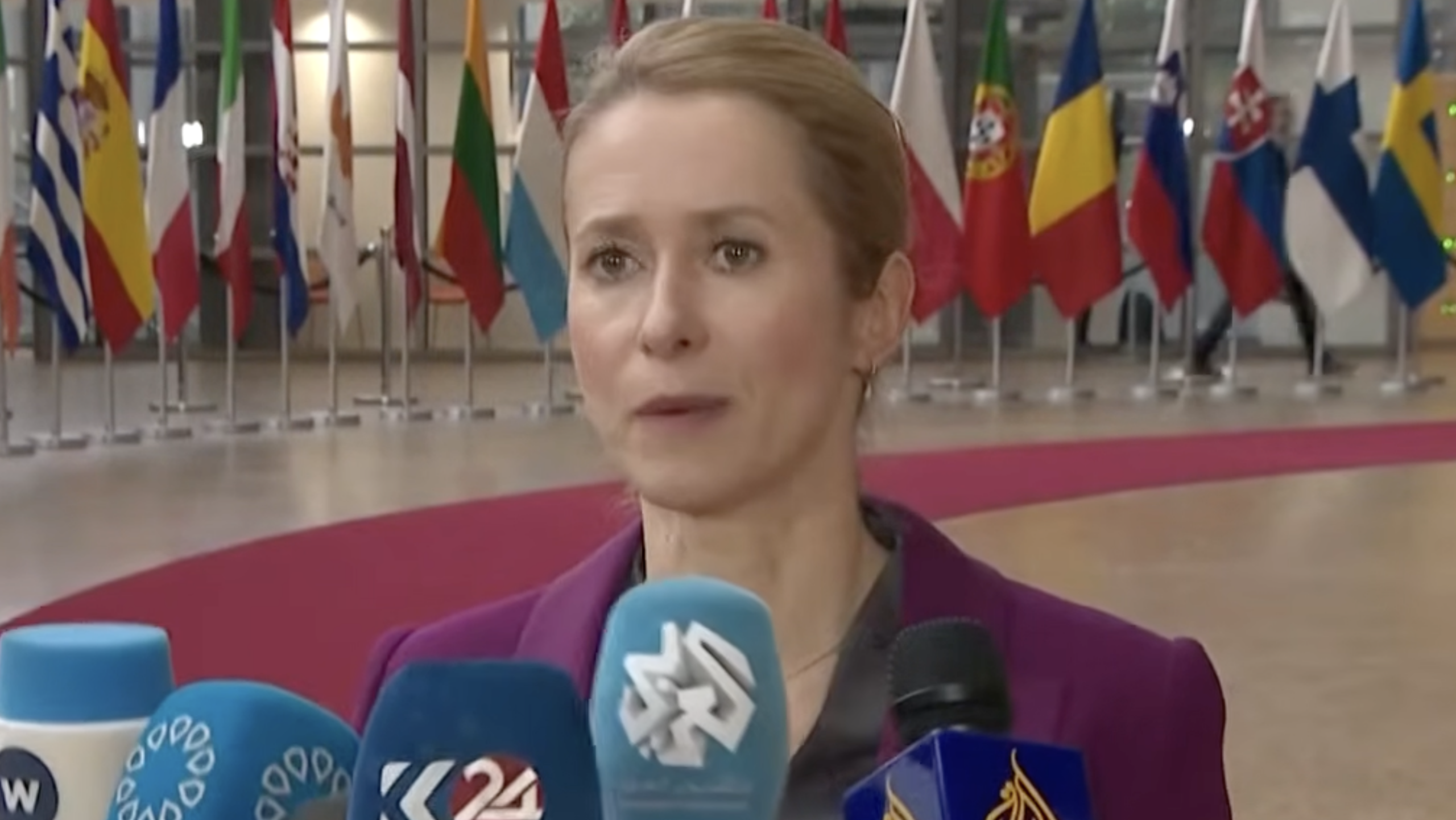
Vice-President of the European Commission Kaja Kallas pushed back forcefully against any suggestion that Moscow is gaining the upper hand in its war against Ukraine, arguing that rising Russian casualties and mounting economic strain tell a different story. Speaking ahead of a meeting of European defense ministers, Kallas said the European Union must keep its attention fixed squarely on Ukraine, even as new security concerns emerge elsewhere.
“Russia is not winning this war. The casualty rates are surging, and their economy is not doing well,” Kallas said, framing the conflict as one in which sustained Western support remains decisive. Her remarks come as European governments weigh long-term defense planning and financial commitments for Kyiv while also confronting evolving security dynamics in the Arctic and the Middle East.
Russia is not winning this war.
— Kaja Kallas (@kajakallas) February 11, 2026
Its casualty rates are surging, and its economy is struggling.
Today, Ministers will discuss how we can further support Ukraine.
On the table are proposals to establish two training facilities inside Ukraine and to mobilise additional private… pic.twitter.com/SE8KhhHb77
Kallas emphasized that discussions with defense ministers would focus both on additional support for Ukraine and on lessons Europe can draw from Kyiv’s battlefield experience. Ukraine’s new defense minister, described as being known for defense innovation, participated in the meeting, underscoring what Kallas called the need to “learn from them when it comes to defense innovation and how to ramp up our defense spending very fast.”
The European Union is also examining its role in potential security guarantees for Ukraine. Kallas said member states are discussing the possibility of training Ukrainian soldiers on Ukrainian soil and have identified two training centers for that purpose. The move would mark a further evolution of EU assistance, which has already included large-scale training missions conducted outside Ukraine.
Financing remains central to those efforts. Kallas thanked the European Parliament for its swift approval of a €90 billion loan package for Ukraine, calling it vital that “the urgent priorities of Ukraine are addressed” and that there is sufficient flexibility in how the funds are used. In addition to public financing, she said, private capital must play a role. Two proposals have been put forward for the European Investment Bank: earmarking funds for production in Ukraine and aligning the definition of dual-use goods with the broader standards applied to European companies, which are currently more expansive than those applied to Ukraine.
Parliament has approved a €90 billion Ukraine support loan package.
— European Parliament (@Europarl_EN) February 11, 2026
Learn more ↓https://t.co/5i96WbmZnF
Kallas also addressed how the loan structure is designed to interact with industry and NATO coordination. She described a “cascade method” built into the financing mechanism, allowing funds to be spent outside Europe or Ukraine if necessary capabilities cannot be delivered quickly enough by European or Ukrainian companies. The approach, she said, would also create competitive pressure within the European defense industry to accelerate production.
While NATO on the same day agreed to an Arctic Sentry mission, Kallas cautioned against allowing new theaters of concern to dilute focus on Ukraine. She noted that the European Union is developing a new Arctic strategy that, unlike previous versions centered on climate and environmental issues, will incorporate security dimensions. Still, she stressed that attention must remain on the most immediate threat.
“It’s important that we remain vigilant but do not draw our attention away from where the threats are currently the most acute, which is Ukraine,” she said. Later, she reinforced the point: “The focus must remain where the threats are the hottest — Russia’s attacks on Ukraine every day.”
Kallas linked security developments in the Arctic to the trajectory of the war, arguing that broader regional risks are shaped by how the conflict unfolds. As long as Russia continues daily attacks on Ukraine, she suggested, European security planning must treat that front as paramount.
On sanctions, Kallas confirmed that work is ongoing on a 20th package of EU measures against Russia, with proposals under discussion that may also be raised within the G7, including a potential maritime services ban. She declined to comment on specific elements, noting that negotiations remain fluid.
Addressing questions about Ukraine’s domestic political process, Kallas said that most European countries have constitutional provisions preventing elections during wartime. Holding elections while under sustained external attack, she argued, would divert attention to internal political competition at a time when national focus must remain on defense. “When your adversary is attacking from outside, you need to concentrate all efforts on countering that threat,” she said, adding that she does not currently see Russia making genuine efforts toward peace.
As European leaders prepare to shape the bloc’s 2026 outlook and a new European security strategy, Kallas’s message was clear: despite new geopolitical pressures and competing crises, the central test of Europe’s resolve remains Russia’s war against Ukraine — a conflict she insists Moscow is not winning, but one that still demands sustained, coordinated support.


