
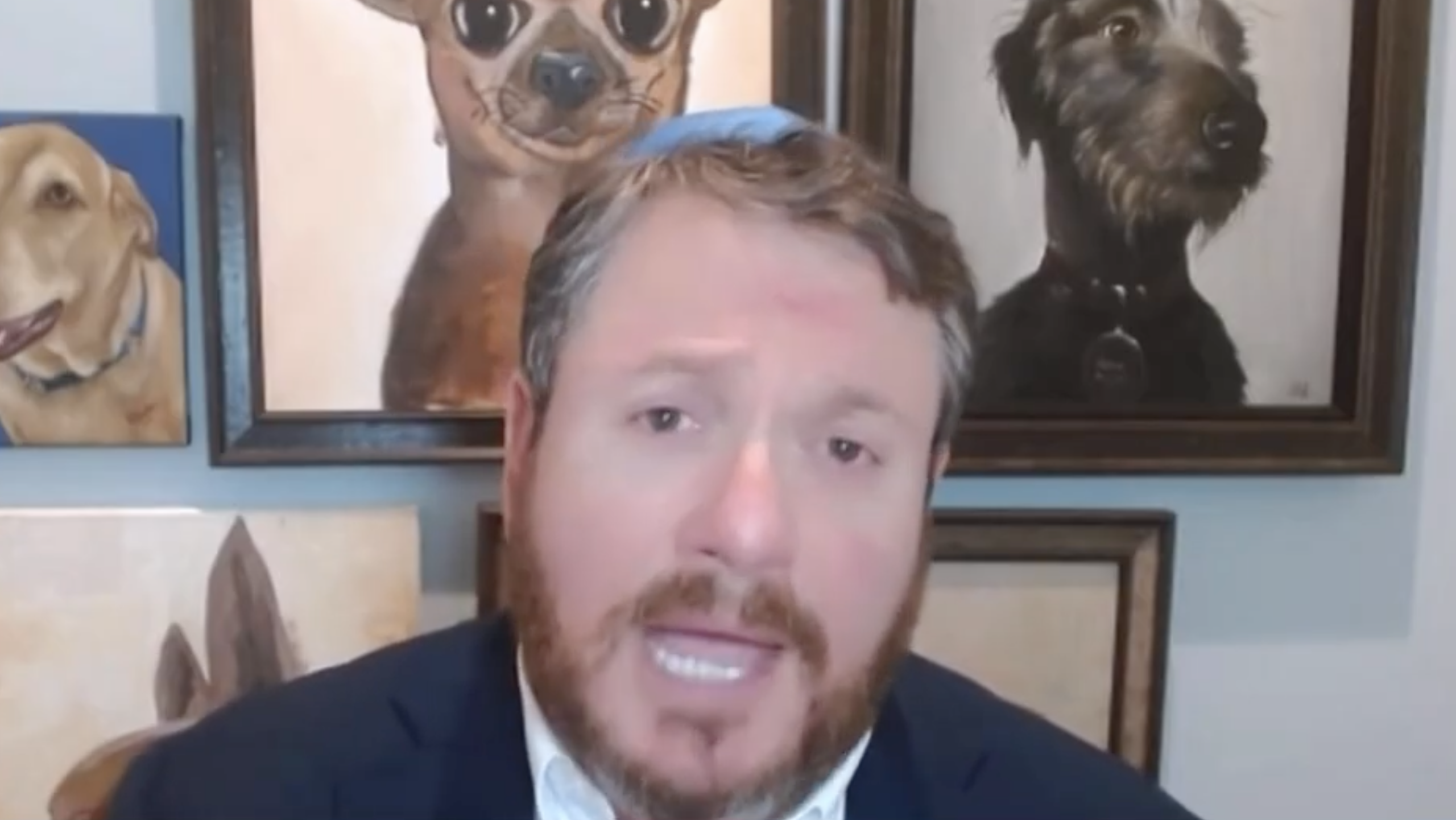
Representative Randy Fine (R-Fla.) announced legislation called the Protecting Puppies from Sharia Act, a proposal that would bar federal funding to any state or local government that considers dogs “haram.” Fine framed the measure as a clear choice between American pets and practices he views as foreign, stating that “Democrats are losing their minds because I made a simple statement—given a choice between our dogs and those who would ban them, the choice is easy.” The announcement comes amid Fine’s broader campaign against the influence of Sharia law in the United States and has sparked immediate controversy online.
I am proud to introduce the Protecting Puppies from Sharia Act.
— Congressman Randy Fine (@RepFine) February 19, 2026
Democrats are losing their minds because I made a simple statement—given a choice between our dogs and those who would ban them, the choice is easy.
They can pound sand.
This bill will ban federal funds to any… pic.twitter.com/KjertyzUJc
Fine, who represents Florida’s 6th District and is a member of the recently established Sharia-Free America Caucus, has repeatedly positioned himself as a vocal opponent of Sharia law, emphasizing that the United States must remain free from its influence. Earlier this month, he spoke at the caucus’s inaugural press conference in Washington, declaring, “If you would like to live under Sharia law, you have 57 countries to choose from. The United States will NEVER be the 58th.” His statements have frequently tied cultural and religious practices abroad to broader concerns about national identity and sovereignty.
The announcement of the Protecting Puppies from Sharia Act is following his recent social media posts discussing Islamic perspectives on pets, particularly a statement by Muslim activist Nerdeen Kiswani that “dogs definitely have a place in society, just not as indoor pets.” Fine contextualized Kiswani’s remarks with reference to Mayor Zohran Mamdani and the broader debate over pet ownership in Islamic communities, framing the issue in harsh cultural terms. His social media post, which included the comment “If they force us to choose, the choice between dogs and Muslims is not a difficult one,” drew sharp criticism from Kiswani, who called it a “genocidal statement” and accused Fine of Islamophobia.
If they force us to choose, the choice between dogs and Muslims is not a difficult one.
— Congressman Randy Fine (@RepFine) February 15, 2026
The Protecting Puppies from Sharia Act would make states or localities ineligible for federal funding if they adopt policies treating dogs as forbidden, a move that Fine says reinforces American cultural norms. The legislation aligns with his broader advocacy through the Sharia-Free America Caucus, which aims to prevent the adoption or influence of Sharia law in the United States. The caucus, launched by Representatives Chip Roy (R-Texas) and Keith Self (R-Texas), includes over 40 Republican members who have framed their efforts as a matter of legal integrity, national sovereignty, and cultural preservation.
Fine’s announcement and the reaction it has generated underscore the ongoing national debate over the intersection of religion, law, and cultural practices in American society. While the bill focuses on a seemingly narrow issue—whether dogs can be considered pets indoors—it reflects broader political arguments about identity, cultural influence, and the limits of religious freedom in public policy. Responses highlight the sharp divisions in public opinion, illustrating how symbolic cultural debates are being leveraged to advance wider political messages.


