
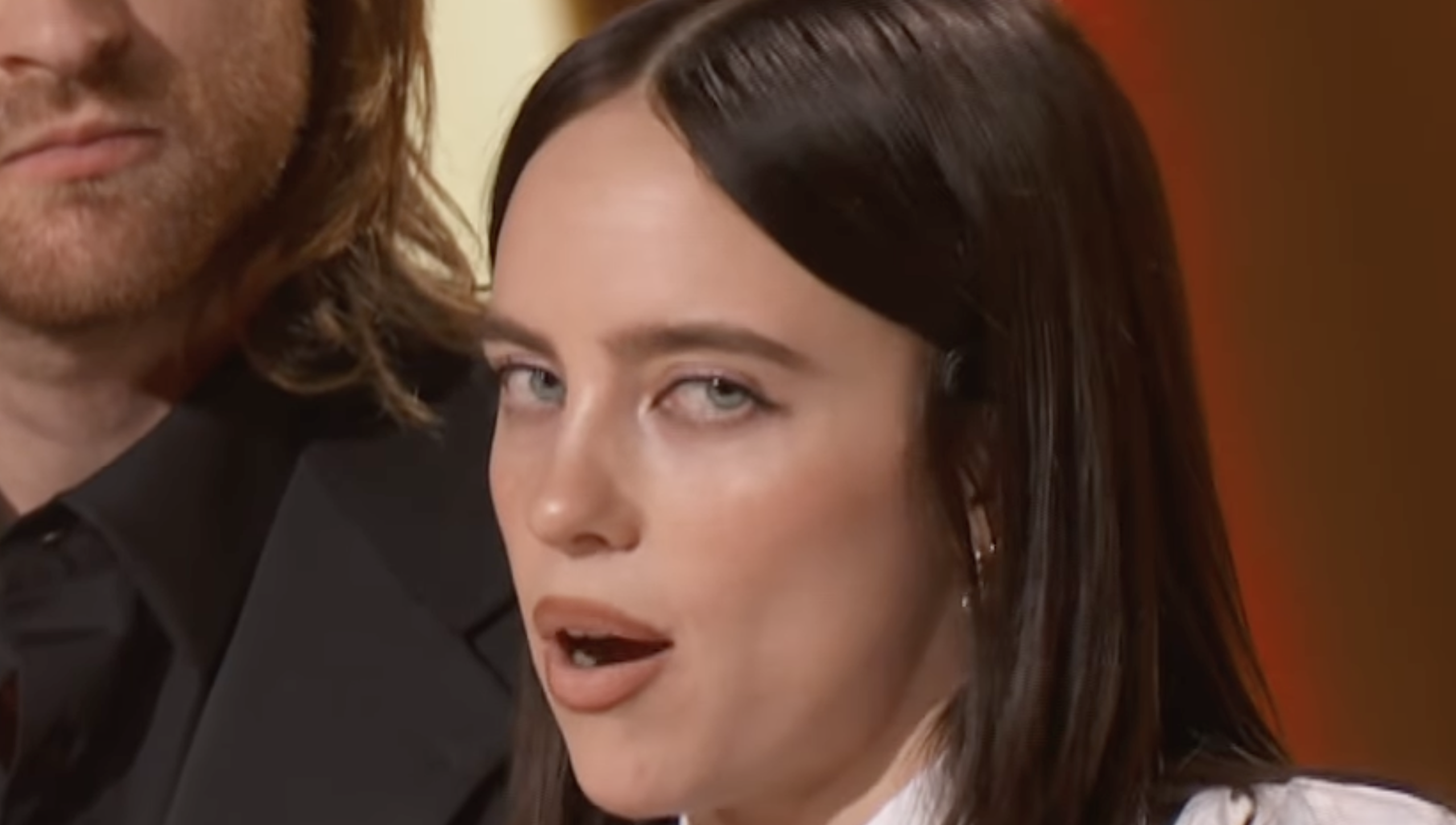
Billie Eilish used her acceptance speech at the 2026 Grammy Awards to deliver a harsh message on immigration enforcement, drawing attention amid heightened national tensions over federal operations by Immigration and Customs Enforcement.
The singer, who won Song of the Year for her track “Wildflower” alongside her brother and collaborator Finneas O’Connell, took the stage in Los Angeles and addressed the audience directly after expressing gratitude for the honor. She began by acknowledging her fellow nominees in the category, saying she felt honored to share the room with them. She then shifted to the core of her remarks. “As grateful as I feel, I honestly don’t feel like I need to say anything, but that no one is illegal on stolen land,” she said. She continued, “And yeah, it’s just really hard to know what to say and what to do right now. And I just I feel really hopeful in this room and I feel like we just need to keep fighting and speaking up and protesting and our voices really do matter and the people matter and f*** ICE is all I want to say. Sorry. Thank you so much. I can’t believe this.”
Billie Eilish calls America "stolen land"
— End Wokeness (@EndWokeness) February 2, 2026
Ok, Billie. Your $14,000,000 mansion in LA is built where the Tongva tribes once lived. Any plans on returning it?
pic.twitter.com/3qu0ubWX8G
The phrase “no one is illegal on stolen land” referenced a longstanding activist slogan that highlights the history of Indigenous displacement in the United States and questions borders imposed on Native territories.
Eilish’s comments came at a moment when immigration enforcement had intensified under the current administration. In recent weeks, ICE had deployed thousands of agents for large-scale operations, particularly in Minneapolis, where federal actions led to the fatal shootings of U.S. citizens Renee Good and another individual during encounters with officers. Those incidents sparked widespread protests, clashes between demonstrators and agents, and calls for greater oversight of ICE conduct.The Grammys unfolded against this backdrop, with several artists, including Eilish, wearing “ICE OUT” pins on the red carpet and incorporating similar themes into their speeches, reflecting broader concern in entertainment and activist circles.
Eilish’s statement also contradicts her ownership of a multimillion-dollar property in the Los Angeles area, reportedly valued around $14 million with accounts of her real estate holdings situated in a region historically inhabited by the Tongva people, the Indigenous group whose traditional lands encompassed much of what is now greater Los Angeles before European colonization and subsequent development. The Tongva, also known as the Gabrieleño, faced significant displacement through missions, ranchos, and urban expansion in the 18th and 19th centuries, leaving limited recognition of their original stewardship in modern property contexts. This juxtaposition—between Eilish’s invocation of “stolen land” and her ownership of high-value real estate on such territory—echoed recurring critiques in public discourse about how calls for Indigenous justice and immigrant rights align with personal circumstances in a city built on contested history with her giving no recognition to her very house being on said “stolen land.”
ICE should show up with trucks of illegals to Billie Eilish's $14 million mansion in LA and livestream it pic.twitter.com/tODfTZR6iX
— End Wokeness (@EndWokeness) February 2, 2026
Her remarks drew applause from the audience and quickly spread across social media and news outlets, contributing to a night where immigration policy surfaced repeatedly among winners and attendees. As protests continued nationwide and legal challenges to enforcement practices played out in courts, Eilish’s speech served as a high-profile reminder of how cultural platforms can amplify debates over borders, enforcement, and historical accountability in the current moment.


