
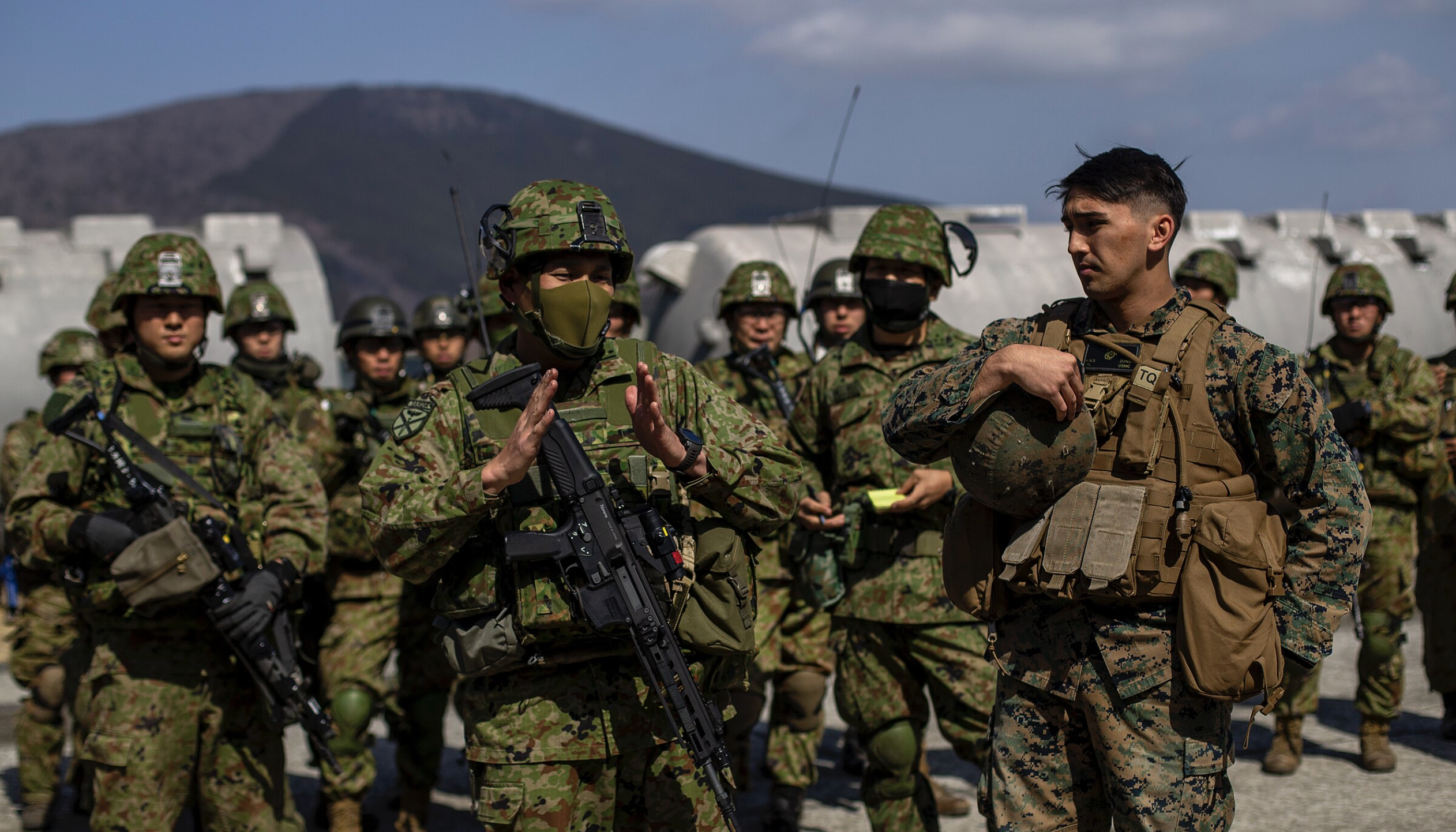
The Japanese parliament has approved the nation’s largest defense budget in history, hitting a target of allocating 2 percent of its GDP to military spending two years ahead of schedule. The move signals a major pivot for Tokyo as it navigates escalating regional security threats and increasing pressure from the Trump administration.
Why it Matters
For decades, Japan capped defense expenditures at 1 percent of its gross domestic product to maintain postwar pacifist norms. The new budget, which adds $7.1 billion to reach a total of $71 billion, underscores a dramatic shift in how Tokyo views its security environment. With President Donald Trump recently referring to the U.S. and China as a “G2″—suggesting a peer management of global affairs—officials in Tokyo are increasingly anxious about the reliability of U.S. security commitments. By bolstering its own capabilities, Japan aims to demonstrate to Washington that the alliance remains in America’s direct interest.
What to Know
Prime Minister Sanae Takaichi, a security hawk who took office in October, supercharged the timeline originally set for 2028. The acceleration is partly a response to Beijing’s growing military footprint; Chinese fighter jets recently directed radar at Japanese aircraft, and coast guard vessels have entered territorial waters near the disputed Senkaku islands.
To counter these threats, Japan is investing in indigenous capabilities, including long-range “standoff” missiles capable of striking deep into China or North Korea, hypersonic guided missiles, and a new coastal drone “shield” system. The rapid budget increase was financed through a mix of bonds and tax surpluses to avoid immediate public backlash, though long-term funding remains a challenge.
What People are Saying
Mira Rapp-Hooper, who oversaw East Asia at the National Security Council under the Biden administration, noted that hitting the target early speaks to “radical changes in the way Japan thinks about its own security.”
Meanwhile, Takayuki Kobayashi, policy chief of the Liberal Democratic Party, emphasized the need for self-reliance. “While we are strengthening our relationship with the United States, Japan also needs to maximize what we can do on our own,” Kobayashi said.
However, Ken Jimbo, an international security expert at Keio University, warned that Tokyo can no longer rely on the “basic assumption” of automatic U.S. intervention in conflicts that don’t directly affect American national interests. “The security environment surrounding Japan has become extremely severe,” Prime Minister Takaichi added, calling the strengthened capabilities “indispensable.”
What Happens Next
While the 2 percent target has been met, the U.S. is pushing for more. American officials have signaled expectations for Japan to eventually raise spending to 3.5 percent, a benchmark recently adopted by NATO nations and South Korea. Japanese officials warn that such a drastic increase—roughly 75 percent—is impossible to implement immediately given stagnant wages and a shrinking population. The government will likely face difficult decisions regarding income tax hikes to sustain the current buildup as it continues to modernize its integrated air and missile defense systems.


