
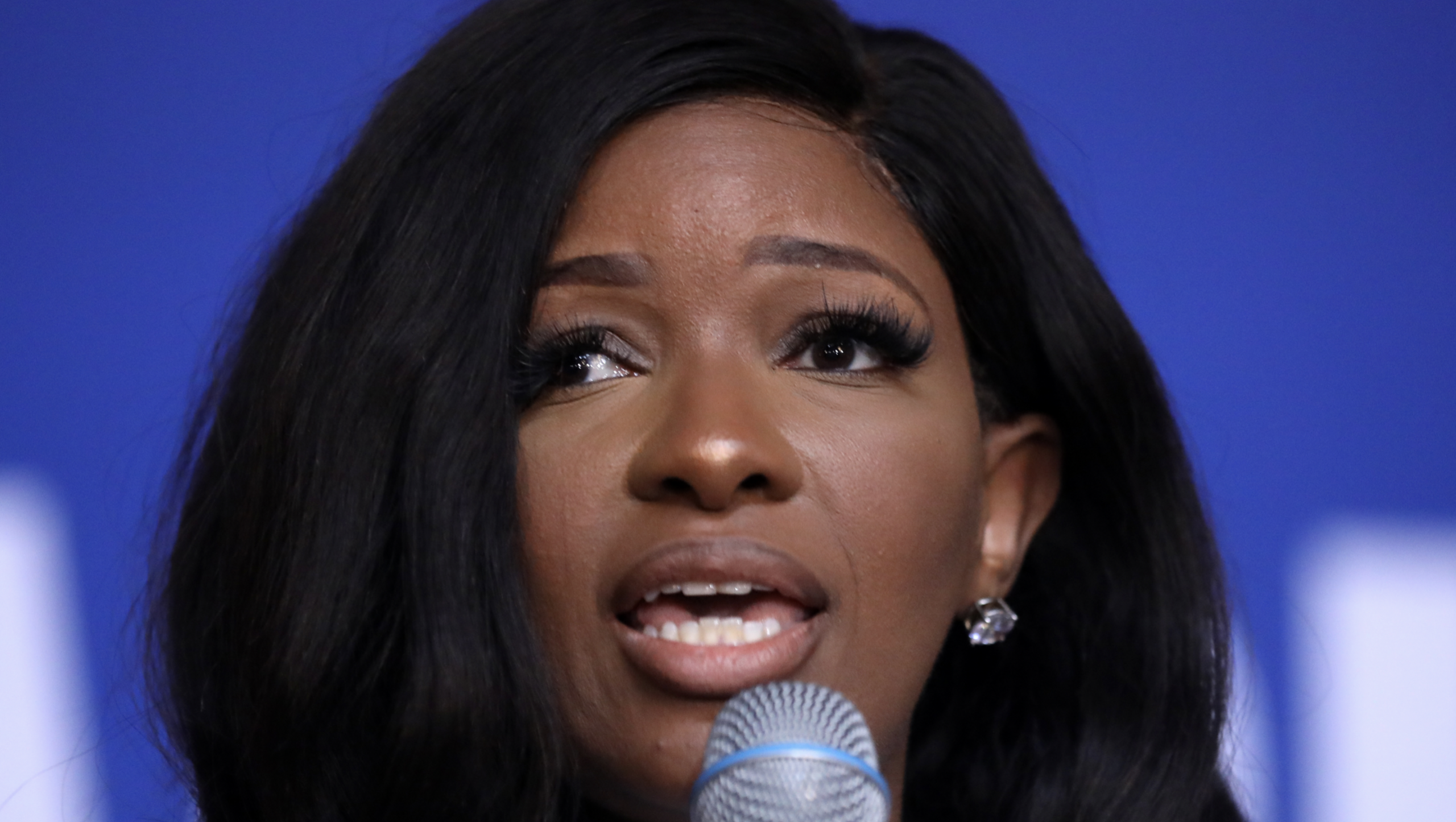
Democratic Rep. Jasmine Crockett is drawing renewed attention for comments she made about crime and criminal justice during an appearance on the “Getting Better” podcast, where she reflected on her years as a public defender and argued that committing a crime does not automatically define a person as a criminal. The remarks come as Crockett remains in the national spotlight amid a high-profile Senate primary in Texas and recent clashes with prominent political figures.
Speaking with the podcast host Jonathan, Crockett described her time representing indigent clients in Texas as some of the most formative work of her career. Crockett explained that as a public defender she represented individuals who met the legal definition of indigent, meaning they were living at or below poverty levels and unable to afford private counsel.
Jasmine Crockett: "Just doin crime does not make you a criminal" pic.twitter.com/g8G3vYzkR2
— End Wokeness (@EndWokeness) December 9, 2025
Working closely with low-income defendants gave her insight into the circumstances that can lead people into the criminal justice system, she said. “Just because someone has committed a crime it doesn’t make them a criminal,” Crockett said during the interview. “Being a criminal is more so about your mindset. Committing a crime can come for a lot of different reasons. It could have been like a crime of survival.”
She drew a distinction between what she characterized as a “criminal mindset” — describing repeated, intentional misconduct without attempts to change — and isolated acts that may stem from poverty, mental health struggles or desperation. As an example, she pointed to cases involving theft driven by basic needs, such as stealing diapers for a child. In those instances, she suggested, the underlying issue is often economic instability rather than entrenched criminal intent.
Crockett also discussed how mental health challenges and limited access to health care frequently intersected with the cases she handled, particularly drug-related offenses. She said she encountered many individuals who appeared to be self-medicating without access to proper treatment.
Another issue Crockett highlighted was the age of criminal responsibility in Texas. She said Texas is among a small number of states that treat 17-year-olds as adults for criminal justice purposes, even though the age of majority in most other contexts is 18. She described cases in which teenagers faced felony charges that carried long-term consequences, including barriers to employment and ineligibility for certain forms of federal financial aid for education following drug convictions.
According to Crockett, those consequences can derail young people before adulthood. She said she worked on legislative efforts aimed at raising the age of adult criminal responsibility to 18, arguing that a single mistake at 17 can have lifelong repercussions.
One case in particular, she said, motivated her decision to seek public office. Crockett recounted representing a 17-year-old who stole less than $20 worth of candy from a high school concession stand. In Texas, she said, the offense was charged as burglary of a building, a felony. The teenager was placed on felony probation, but after failing to comply with technical requirements — including consistent reporting — a judge revoked the probation and imposed the maximum sentence, despite no new charges or failed drug tests.
Crockett said the young man later returned to prison after reoffending, a development she viewed as evidence that the system had failed to rehabilitate him. The felony conviction, she noted, would not specify the minor nature of the original offense, only that it was burglary.
Her comments on the podcast arrive as Crockett is engaged in a closely watched Democratic primary for U.S. Senate in Texas against state Rep. James Talarico. The race has attracted national media coverage, particularly after Talarico’s appearance on The Late Show with Stephen Colbert generated viral attention and a surge in fundraising.
As the Senate contest intensifies and criminal justice remains a central political issue nationwide, Crockett’s remarks underscore the perspective she brings from her legal background. Framing crime as a complex issue shaped by poverty, mental health and policy choices, she argued that long-term public safety depends not only on punishment but on addressing the conditions that lead individuals into the system in the first place.


