
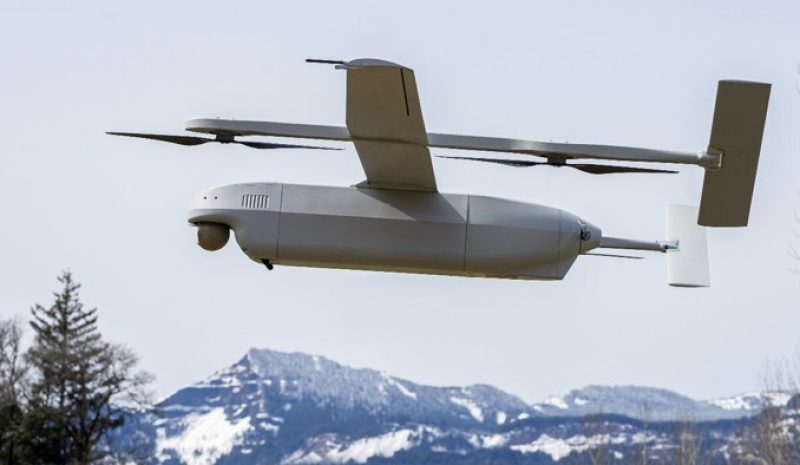
Israeli drone manufacturer Heven AeroTech has become the country’s first defense-tech unicorn after reaching a valuation of over $1 billion following a $100 million Series B funding round led by quantum computing company IonQ.
The milestone was announced by investor Lorne Abony of Texas Venture Partners, who described Heven as “Israel’s first defense tech unicorn.” Texas Venture Partners was an early investor, putting in $4.5 million when the company was just getting started.
What Heven Does
Virginia-based Heven AeroTech, founded in 2019, specializes in hydrogen fuel cell propulsion for long-endurance drones. The company’s flagship Z1 platform can fly for over 10 hours and travel more than 600 miles on a single tank of hydrogen.
These aren’t ordinary surveillance drones. Heven’s systems can carry significant payloads for defense, public safety, and commercial missions. The company has even developed drones that can parachute blood into battlefields to save lives.
From Fire Kites to Defense Unicorn
Founder and CEO Bentzion Levinson got the idea for Heven in 2018 when he watched Israel struggle to stop fire kites and balloons launched by Hamas from Gaza.
“My mind was going crazy that terrorists are sending kites and this high tech nation couldn’t handle it,” Levinson said at the International DefenseTech Summit in Tel Aviv. “I understood that drones with cameras are good, but the moment drones become flying robots and can do missions, everything changes.”
Levinson took some tuition money, found people to work with, and founded Heven in 2019. A year later, during the COVID-19 pandemic, his drones were delivering coronavirus tests in Israeli hospitals.
Then came the war in Ukraine, followed by the October 7th Hamas attack. Levinson was called up to serve on Israel’s northern border and spent time in Gaza.
“Do you know what it’s like to be on the border and be blind?” Levinson said. “The value of having a drone fly even one or two kilometers—that’s the future and we need to get it right.”
Why Quantum Technology Matters
In November 2025, IonQ announced a strategic partnership with Heven to integrate quantum computing, quantum networking, quantum sensing, and quantum security technologies into the drones.
The goal is to improve the drones’ accuracy and stability in GPS-denied environments saturated with electronic interference—exactly the kind of contested battlefields where these systems need to operate.
“Five years ago people laughed about hydrogen drones,” Levinson said. “Now that we can fly 1,000 km and more into contested environments, what do we need to operate and communicate there? We need the most advanced technology powering them.”
As part of the deal, senior officials at IonQ will join Heven’s board of directors, suggesting this is more than just a financial investment.
The Hydrogen Advantage
Hydrogen fuel cells offer several advantages over traditional lithium-ion batteries:
- Longer range: The Z1 can fly over 600 miles, with plans to extend that to 1,200 miles
- Quieter operation: Hydrogen drones are nearly silent, making them harder to detect
- Faster refueling: No need to wait hours for batteries to charge
- Lower environmental impact: No lithium mining required
Heven’s stealth hydrogen-powered drones currently have an endurance of 1,000 kilometers and are expected to expand to 2,000 kilometers soon.
Working with the US and Israel
The company now works with both the Israel Defense Forces and the U.S. Department of Defense. With support from MAFAT (Israel’s Directorate of Defense Research and Development) and international investors, Heven has gone from a startup that people dismissed as “cool tech, that’s it” to a billion-dollar defense company in just six years.
The new funding will help Heven expand domestic production facilities to meet growing customer demand and reduce reliance on global supply chains.
What’s Next
For Levinson, reaching unicorn status is just the beginning.
“The more we grow, the more we have to grow,” he said. “It’s an important milestone, but it’s only the first 1% of the journey. We believe it will scale out and change the world.”
With millions of drones expected to fill the skies in the coming years, Heven is betting that quantum-powered hydrogen drones will be the ones leading the way.


