
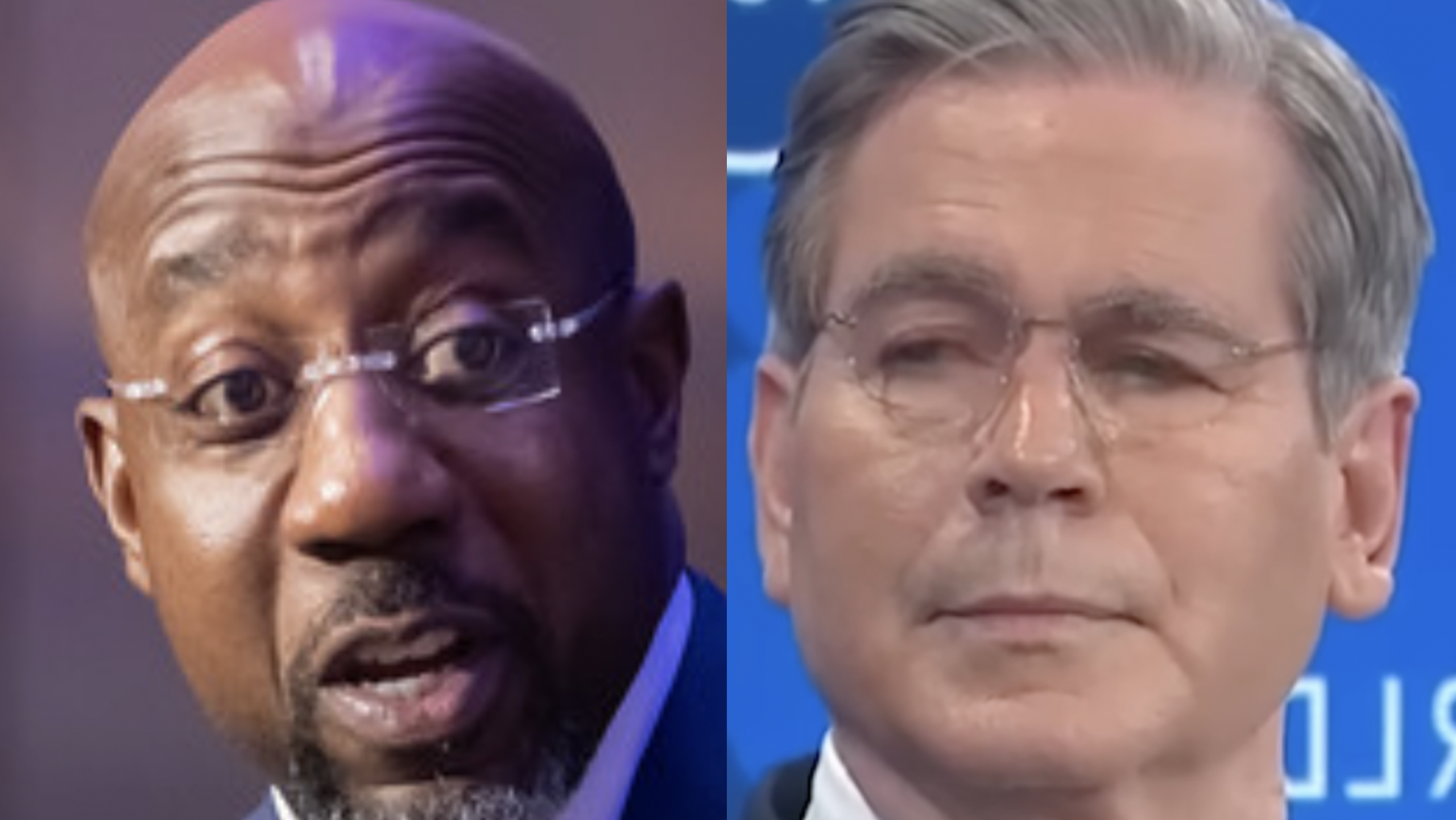
In a tense moment during a Senate hearing, Georgia Senator Raphael Warnock sharply rebuked Treasury Secretary Scott Bessent, declaring, “I don’t need you to tell me where I was,” after Bessent noted that a key statistic had already been discussed while Warnock was briefly out of the room. The exchange highlighted deep Democratic skepticism about the Trump administration’s tariff-driven economic agenda more than a year into its second term, as manufacturing job losses mount and small businesses report mounting pressures from higher costs.
“I don’t need you to tell me where I was” pic.twitter.com/7sfaoBywl9
— American Gazzete (@AmericanGazzete) February 5, 2026
The February 5, 2026, hearing centered on whether President Trump’s promise of a “golden age of American manufacturing” had come to fruition. Warnock began his questioning by recalling Trump’s September 2024 rally in Georgia, where the president declared, “We’re going to have a manufacturing boom.” He asked Bessent directly whether such a boom had occurred. Bessent replied that the country was seeing “the beginnings of a manufacturing boom,” pointing to factory groundbreakings and announced intentions. Warnock pressed, asking if that amounted to a yes. Bessent clarified that the process was just starting.
“We will lead an American manufacturing boom” pic.twitter.com/PQmZXBtR5m
— American Gazzete (@AmericanGazzete) February 5, 2026
Warnock countered by citing manufacturers’ consistent reports of struggles tied to the administration’s policies. He entered into the record a recent Wall Street Journal article headlined “U.S. Manufacturing Is in Retreat and Trump’s Tariffs Aren’t Helping,” which described ongoing contraction in the sector despite the tariff strategy. He then asked how many manufacturing jobs had been lost since “Liberation Day” in April 2025, when President Trump first rolled out the sweeping tariffs.
Bessent confirmed the figure of 72,000 jobs, according to Federal Reserve Bank of St. Louis data, and began to reference the Wall Street Journal again. When he mentioned that the discussion had occurred earlier while Warnock was absent, the senator cut in firmly: “I don’t need you to tell me where I was.” Bessent attempted to continue, but Warnock, mindful of his three-minute time limit, redirected: “Sir, I’m not asking you to opine on The Wall Street Journal. I have three minutes. Just answer the questions I’m actually asking.”
Warnock emphasized that manufacturers had shed workers in each of the eight months following the tariff announcement, calling it a “strange liberation and a curious freedom that leaves you unemployed.” He turned particular attention to small businesses in Georgia, which he said lack the resources of larger firms to shift suppliers or secure exemptions. These companies, he noted, do not have direct access to the president or venues like Mar-a-Lago to seek relief from tariff-related disruptions. He asked Bessent what such businesses should do for help.
Bessent responded that small business confidence had risen and highlighted provisions in the “one big beautiful bill” that allow full expensing for equipment, factories, and structures. Warnock expressed doubt, observing that the real message appeared to be for struggling businesses to simply wait longer for promised benefits. He questioned whether a manufacturing boom would truly materialize a year from now. Bessent expressed confidence that it would, citing recent developments in South Carolina and optimism for Georgia given its pro-business environment, along with elevated factory build intentions nationwide.
The hearing reflects broader congressional debate over the economic fallout of the administration’s trade policies, as lawmakers in manufacturing-heavy states weigh job data against long-term promises of industrial revival. With the current fiscal year well underway, the exchange underscored persistent partisan divides on how best to support American workers and businesses amid ongoing tariff effects.


