
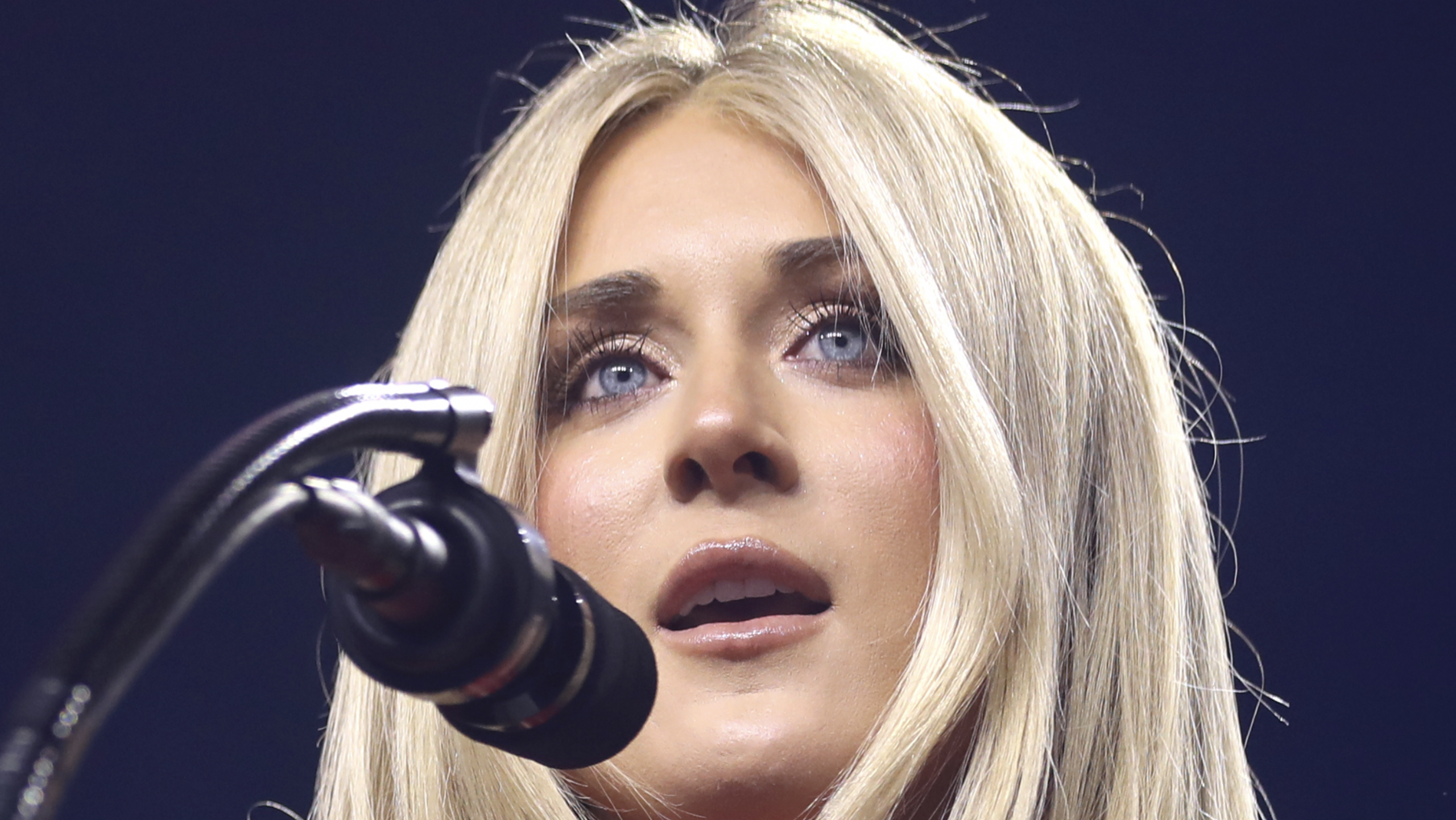
Riley Gaines questioned whether members of Congress who declined to stand during a portion of President Donald Trump’s State of the Union address should be considered fit to serve, writing on social media shortly after the speech, “How is it not disqualifying for a member of congress to be unable to pledge allegiance to America and it’s citizens? Like seriously, is that not treasonous? It’s an act of betrayal.”
How is it not disqualifying for a member of congress to be unable to pledge allegiance to America and it's citizens?
— Riley Gaines (@Riley_Gaines_) February 25, 2026
Like seriously, is that not treasonous? It's an act of betrayal.
The remarks came in response to a moment during Trump’s address when he asked lawmakers to rise if they agreed with what he described as a “fundamental principle” of government: that the first duty of the American government is to protect American citizens, not illegal aliens. As applause broke out among many Republicans, while very Democrats stood.
“One of the great things about the State of the Union is how it gives Americans the chance to see clearly what their representatives really believe,” Trump said before inviting legislators to stand. “The first duty of the American government is to protect American citizens, not illegal aliens.” After observing that many Democrats remained seated, he added, “You should be ashamed of yourself not standing up.”
WOW
— Daily Wire (@realDailyWire) February 25, 2026
President Trump invites Congress to stand if they agree that the first duty of the American government is to protect American citizens, not illegal aliens.
Republicans give him a standing ovation, and Democrats stay seated.
"You should be ashamed of yourself." pic.twitter.com/h1ZrHs3LSZ
Trump went on to call for an end to sanctuary city policies, penalties for public officials who block the removal of criminal immigrants, and passage of what he referred to as the Save America Act, which he said would require voter identification and proof of citizenship in federal elections. He argued that such measures were widely supported and framed opposition as politically motivated.
The moment quickly circulated on social media, drawing sharp reactions from both supporters and critics of the president. Gaines, who has become an outspoken conservative commentator in recent years, followed up her initial post with another message directed at Democrats who remained seated.
Of course Democrats wouldn't stand when asked to if they believe the first job of the American government is to protect Americans NOT illegal aliens
— Riley Gaines (@Riley_Gaines_) February 25, 2026
They'd hate to disparage their voting base
“Of course Democrats wouldn’t stand when asked to if they believe the first job of the American government is to protect Americans NOT illegal aliens,” she wrote. “They’d hate to disparage their voting base.”
The exchange reflects the broader political divide over immigration enforcement, voter identification laws, and the role of federal and local authorities in immigration policy. Sanctuary city policies and voter ID requirements have long been flashpoints between Republican and Democratic lawmakers, with Republicans arguing such measures are necessary to ensure public safety and election integrity, while Democrats have often raised concerns about civil rights and access to the ballot.
Gaines, a former collegiate swimmer at the University of Kentucky, first gained national attention after tying in a championship race with transgender swimmer Lia Thomas. Since then, she has emerged as a prominent advocate against allowing transgender women to compete in women’s sports. Her activism has expanded beyond athletics into broader political commentary, particularly on issues related to gender identity, education policy, and immigration. She has appeared at events hosted by Turning Point USA and worked alongside conservative figures including Charlie Kirk on college campuses, criticizing Democratic leadership and progressive policies.
Her comments following the State of the Union underscore how high-profile activists outside of elected office continue to shape and amplify partisan reactions to moments inside Congress, particularly on issues that have become central to the 2026 political landscape.


