
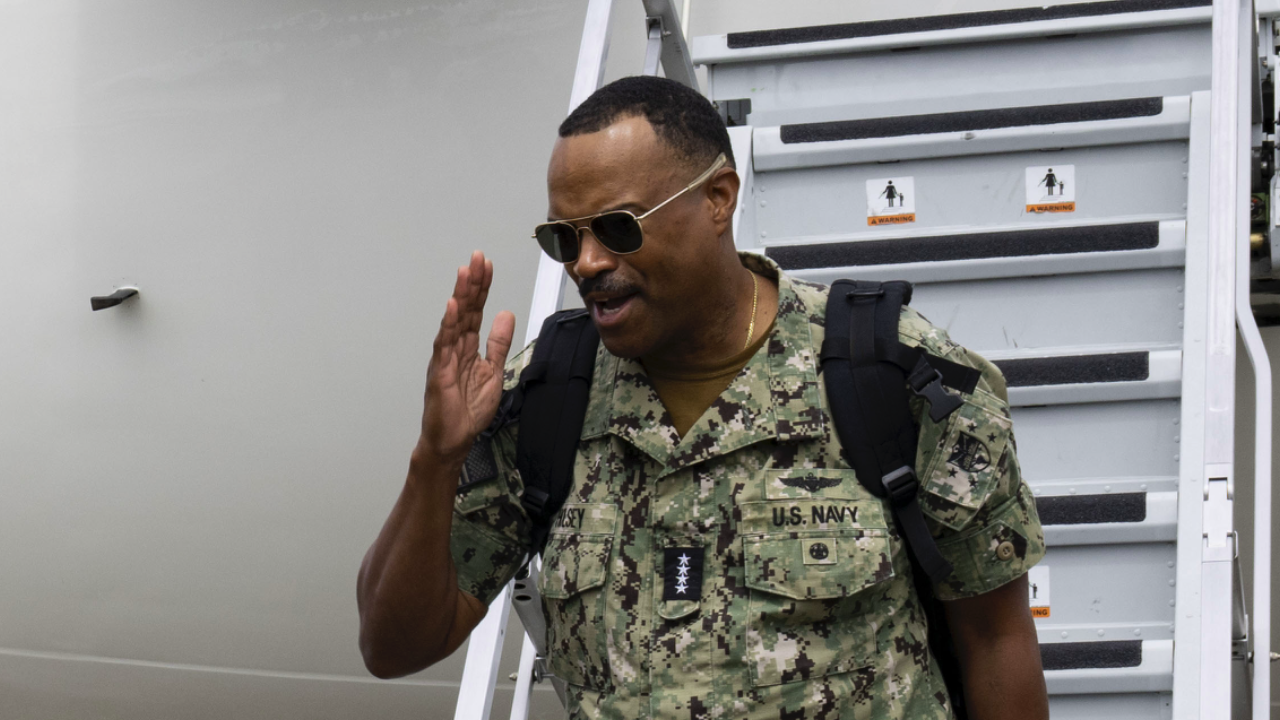
Admiral Alvin Holsey’s departure follows tensions with Defense Secretary over legal concerns surrounding naval operations
Admiral Alvin Holsey retired Friday as commander of U.S. Southern Command after less than a year in the post, concluding a tenure marked by tension with Defense Secretary Pete Hegseth over military strikes against alleged drug-trafficking vessels in the Caribbean.
Holsey, 60, handed command to Air Force Lt. Gen. Evan Pettus during a ceremony in Florida, ending a 37-year Navy career that included leadership of carrier strike groups and major naval vessels. His departure comes as the Trump administration’s Caribbean strike campaign faces mounting congressional scrutiny over its legal basis and operational conduct.
The retirement announcement in October came just days after the fifth U.S. strike on suspected narcotics vessels, and followed disagreements between Holsey and Hegseth over the pace and legality of operations in Southern Command’s area of responsibility, which encompasses most of Latin America and the Caribbean Sea.
Tensions Over Legal Authority
The conflict between the defense secretary and theater commander centered on differing views about operational tempo. Hegseth pressed for more aggressive action against suspected traffickers, while Southern Command officials raised concerns about the legal framework for the strikes, according to sources familiar with internal deliberations.
The issue reached a critical point during an October 6 Pentagon meeting that included Holsey, Hegseth, and Chairman of the Joint Chiefs of Staff Gen. Dan Caine. Holsey offered to resign during that meeting, though the offer was initially deferred, according to officials with knowledge of the discussion.
Congressional scrutiny has intensified following revelations about a September 2 incident in which U.S. forces conducted a follow-on strike that killed two survivors from an initial attack on a vessel in the Caribbean. Lawmakers have demanded detailed briefings on the strike, with military officials showing key legislators video footage of the operation.
Legal scholars have questioned whether the strikes comply with international law governing the use of force. The administration has cited presidential authority and counternarcotics provisions, but experts note significant gaps in the legal rationale for lethal action against civilian vessels in international waters.
Since September, the U.S. has conducted at least 20 strikes on suspected drug vessels, killing more than 70 people, according to Defense Department announcements. Recent operations have shifted toward the eastern Pacific Ocean, where officials believe they have stronger intelligence linking cocaine shipments to U.S. markets.
Command Transition
Lt. Gen. Pettus, who assumes command, is a 1994 Air Force Academy graduate with more than 2,700 flight hours in F-15E and A-10 aircraft. He previously commanded 12th Air Force (Air Forces Southern) at Davis-Monthan Air Force Base, Arizona, which provides air, space and cyberspace capabilities for Latin America and the Caribbean.
Pettus has served as Holsey’s deputy throughout the strike campaign, which has coincided with a significant U.S. military buildup in the region. The Pentagon has deployed approximately 15,000 personnel to the Caribbean theater, including the Gerald R. Ford Carrier Strike Group, Iwo Jima Amphibious Ready Group, and 22nd Marine Expeditionary Unit, along with guided-missile destroyers, an attack submarine and fighter aircraft.
At Friday’s ceremony, Gen. Caine praised Holsey’s leadership and character. “You’ve made an incredible difference to our joint force,” Caine said. “The impact that you’ve had will last for a long, long time.”
In remarks during the ceremony, Holsey reflected on leadership principles. “Those we lead don’t follow titles, they follow courage, and they remember the moments and how you made them feel,” he said. “They remember those who listen and treated them with dignity and respect.”
The command change comes days after U.S. authorities seized a Venezuela-flagged oil tanker that Attorney General Pam Bondi said had been sanctioned for years “due to its involvement in an illicit oil shipping network supporting foreign terrorist organizations.”
Hegseth has defended the strike campaign publicly, arguing that President Trump has constitutional authority to take military action against transnational criminal organizations. However, the administration has faced bipartisan pressure to provide more detailed legal justification and operational parameters for the ongoing operations.


