
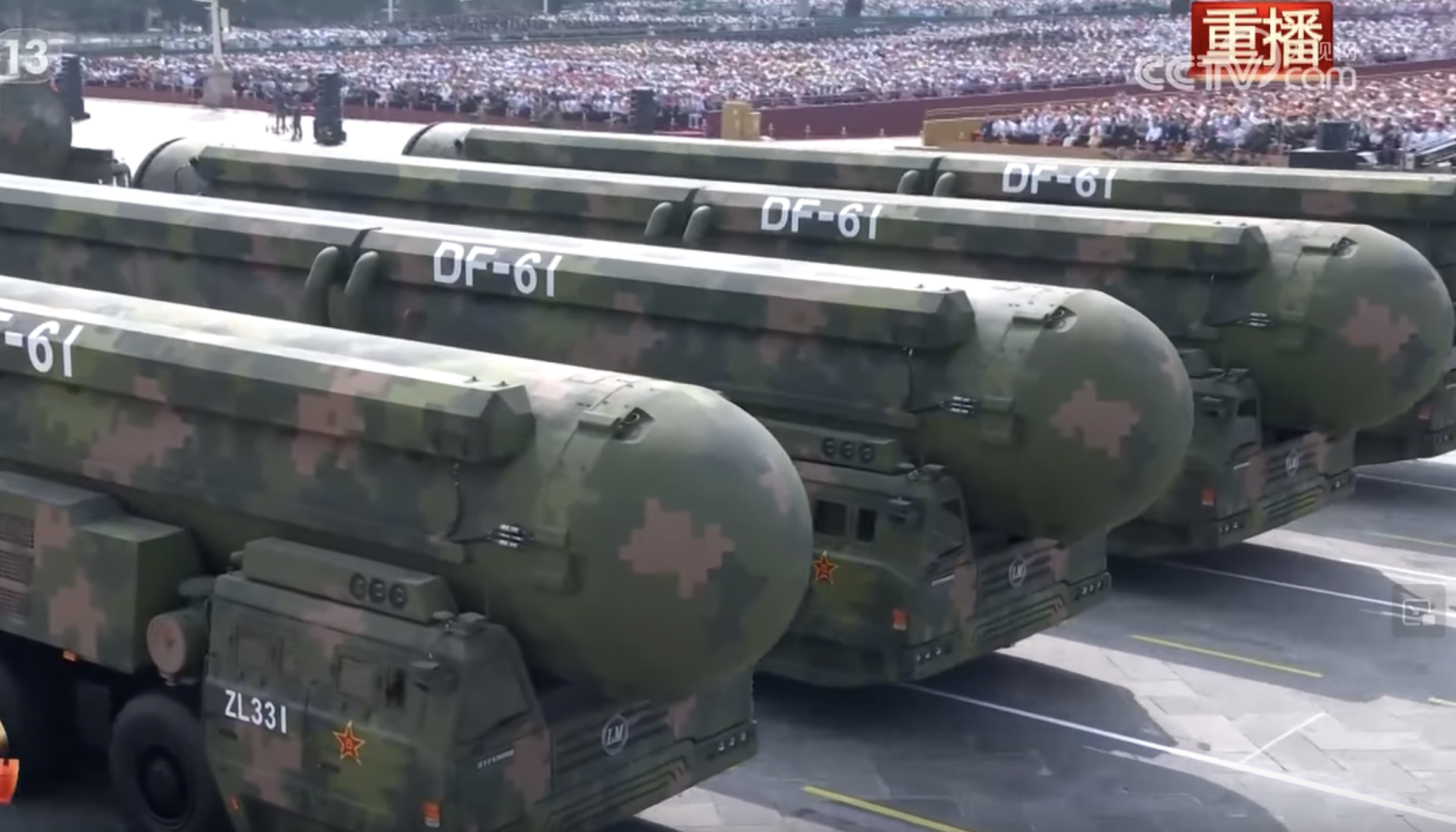
China has likely loaded more than 100 intercontinental ballistic missiles (ICBMs) into its newest silo fields and shows no interest in engaging in arms control talks, according to a draft Pentagon report reviewed by Reuters.
Why it Matters
The revelation highlights the rapid pace of Beijing’s military modernization, which is expanding faster than any other nuclear-armed power. While the existence of these silo fields near the Mongolian border was previously known, the specific assessment that they are now loaded with missiles marks a significant escalation in capability. This comes at a fragile moment for global nuclear stability, with the New START treaty between the U.S. and Russia set to expire in less than two months, raising fears among experts of an unrestricted three-way arms race.
What to Know
The draft report indicates that China has likely installed over 100 solid-fueled DF-31 ICBMs into silo fields. While the Pentagon had previously identified the construction of these sites, this is the first indication regarding the number of missiles actually deployed within them.
Despite the buildup, the report notes that China’s total nuclear warhead stockpile remained in the “low 600s” in 2024, reflecting a slower production rate than in previous years. However, the trajectory remains upward, with projections that Beijing is on track to possess over 1,000 warheads by 2030.
The report also touches on geopolitical tensions involving Taiwan. It states that Beijing is refining military options to potentially take the island by “brute force,” with expectations that the Chinese military aims to be capable of fighting and winning a war over Taiwan by the end of 2027. This could include long-range strikes designed to disrupt U.S. presence in the Asia-Pacific region.
Domestically, the report highlights the impact of President Xi Jinping’s anti-corruption purges within the People’s Liberation Army (PLA). Investigations have expanded beyond rocket procurement to include the nuclear and shipbuilding industries. While this may impact short-term readiness, the Pentagon assessment suggests it could set the stage for “long-term PLA improvements overall.”
What People Are Saying
The diplomatic outlook appears grim. Although U.S. President Donald Trump recently suggested he may work on a denuclearization plan involving China and Russia, the Pentagon draft states explicitly: “We continue to see no appetite from Beijing for pursuing such measures or more comprehensive arms control discussions.”
China has consistently defended its posture. Beijing maintains a “no-first-use” policy and has previously described reports of its military buildup as attempts to “smear and defame China and deliberately mislead the international community.”
Arms control advocates are voicing concern over the lack of dialogue. Daryl Kimball, executive director of the Arms Control Association, warned, “More nuclear weapons and an absence of diplomacy will not make anyone safer, neither China, Russia, or the United States.”
What Happens Next
The Pentagon report is currently a draft and U.S. officials noted that details could change before it is formally sent to lawmakers. Neither the Pentagon nor the Chinese embassy in Washington immediately commented on the draft’s findings.
The immediate focus for international observers is the expiration of the 2010 New START treaty in February. With no mechanism for a formal extension and China’s apparent refusal to join a new three-way strategic framework, the global nuclear landscape faces a period of uncertainty. Meanwhile, the U.S. will continue to monitor the impact of Beijing’s internal corruption investigations on its military readiness.


