
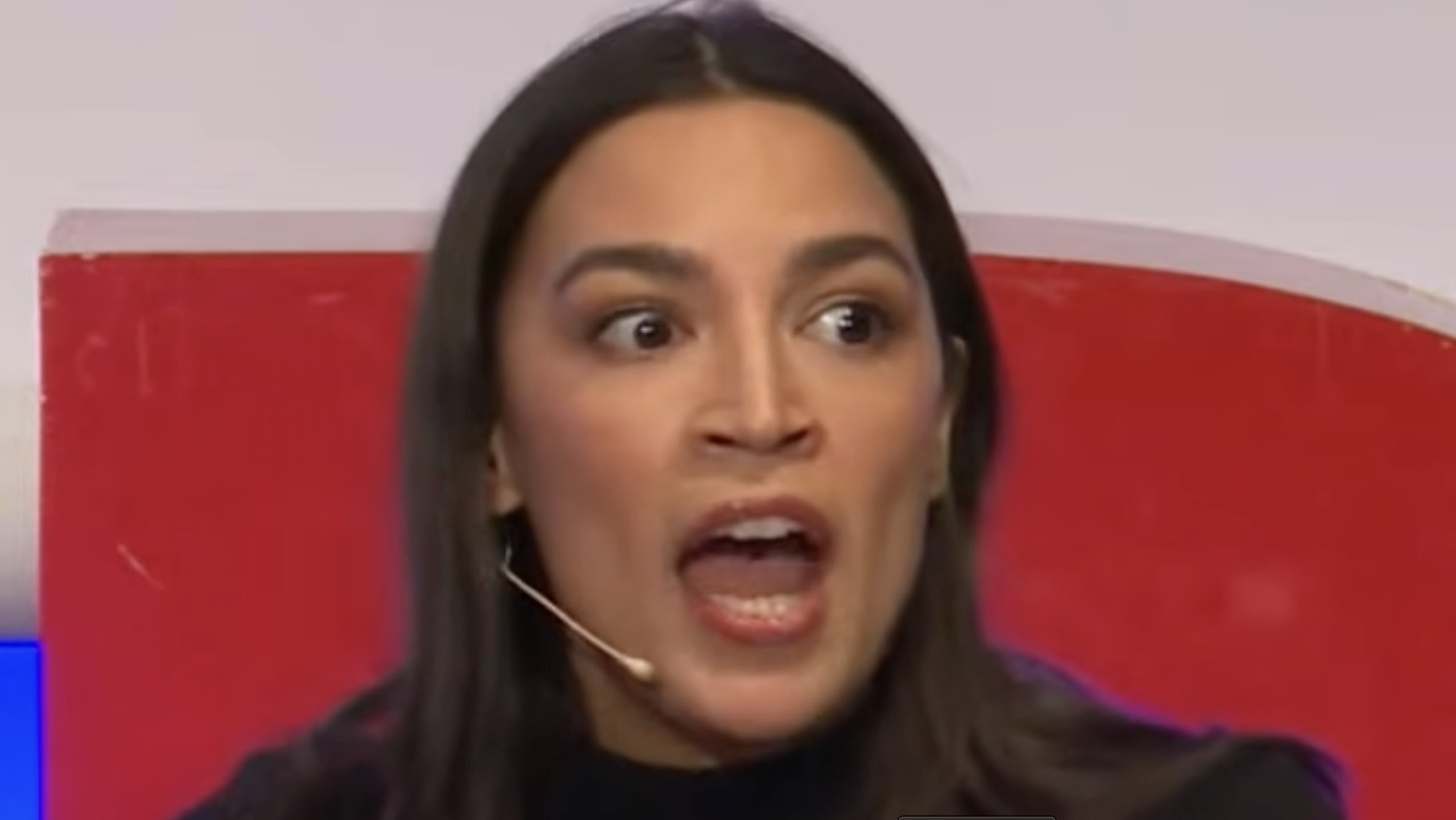
Rep. Alexandria Ocasio-Cortez criticized remarks made by Secretary of State Marco Rubio during a conversation in Germany, saying his comments about the origins of American cowboy culture overlooked the roles of Mexicans and enslaved Africans and rested on what she described as a weak cultural argument.
Ocasio-Cortez made the comments while speaking at Technical University of Berlin on Feb. 15 during an event focused on U.S. politics and economic inequality.
“I was on the populist panel, which was very funny,” Ocasio-Cortez said, referring to a speech at the Munich Security Conference. “My favorite part was when he said that American cowboys came from Spain. I believe the Mexicans and descendants of African enslaved peoples would like to have a word on that.”
AOC mocks Rubio: "My favorite part is he said cowboys are rooted in Spain. Uhhh, speak to Mexicans & African slaves!"
— End Wokeness (@EndWokeness) February 15, 2026
Spain introduced horses to Mexico pic.twitter.com/xHt1jZCoSi
Her remarks referred to Rubio’s Feb. 14 conference speech, in which he said, “Our horses, our ranches, our rodeos — the entire romance of the cowboy archetype that became synonymous with the American West — these were born in Spain,” a speech on American and European culture and alliance that received a standing ovation.
I don't think people understand how unprecedented it is for an American Secretary of State to receive a standing ovation from the European political class.
— Shabbos Kestenbaum (@ShabbosK) February 14, 2026
Let's all state the obvious:
President Marco Rubio 2028. pic.twitter.com/6wEQtApyPY
Ocasio-Cortez said Rubio’s broader appeal to Western culture relied on what she called a fragile premise. “They want to take this mantle of culture,” she said. “At the end of the day, though, it is very thin.”
She added that culture has always evolved in response to social and economic conditions. “For the entire history of human civilization, culture has been a fluid, evolving thing that is a response to the conditions that we live in,” she said.
Some online buzz criticized her, saying, “The whole world is laughing at AOC.”
Mexican cowboys were called vaqueros. This is where we get the term buckaroo from. She isn’t wrong to say that the American cowboy was directly influenced by Mexico just as it’s correct to say the Mexican vaquero was influenced by Spain.
— Vonshitzinpants (@vonshitzinpants) February 15, 2026
Rubio’s Munich speech emphasized shared Western heritage and called for a renewed transatlantic alliance centered on national sovereignty, cultural identity, and industrial renewal. He warned against mass migration, global institutions that override national interests, and what he described as cultural decline in the West.
We do not want allies shackled by guilt and shame.
— Secretary Marco Rubio (@SecRubio) February 14, 2026
We want allies who are proud of their culture and heritage and are willing to help us defend it. pic.twitter.com/IOKg9n1UNM
The exchange underscores broader partisan disagreements over how American history and identity are framed in international settings, as U.S. officials and lawmakers deliver competing messages to foreign audiences.


