
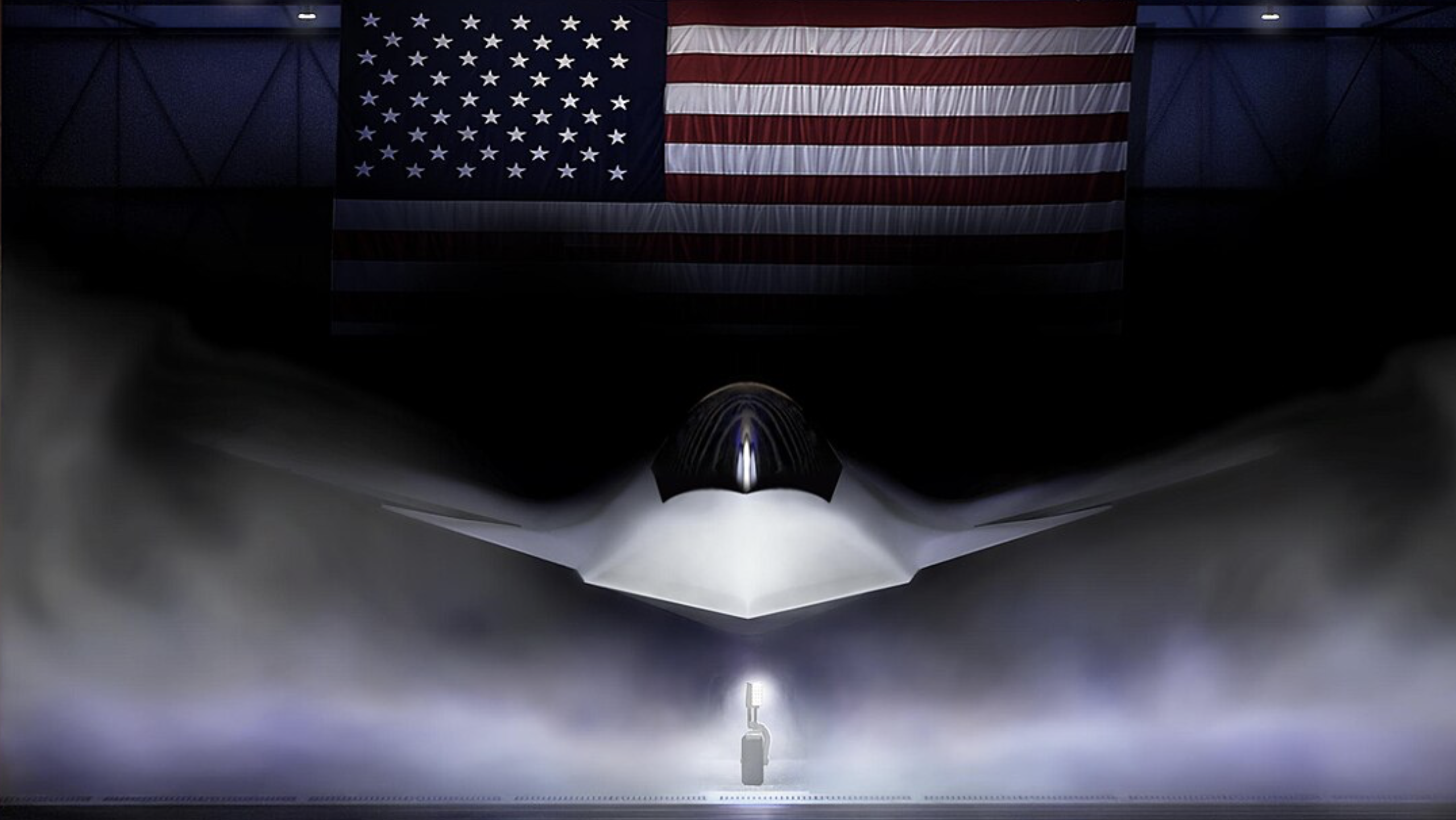
Boeing is manufacturing the world’s first sixth-generation fighter jet right now, with the F-47 expected to take its maiden flight in 2028—marking a major leap in air superiority technology that China cannot match.
Air Force Chief of Staff Gen. David Allvin confirmed in September 2025 that Boeing’s team is already building the first F-47 aircraft, just months after winning the highly classified Next Generation Air Dominance (NGAD) contract in March.
“In the few short months since we made the announcement, they are already beginning to manufacture the first article,” Allvin said at the Air and Space Forces’ Air, Space and Cyber Conference. “We’re ready to go fast. We have to go fast.”
The Contract Award
The Department of the Air Force announced in March 2025 that Boeing had won the contract for Engineering and Manufacturing Development of the NGAD Platform, beating out competitor Lockheed Martin in one of the most significant defense competitions in decades.
“I’m thrilled to announce that, at my direction, the United States Air Force is moving forward with the world’s first sixth-generation fighter jet,” President Donald Trump said during a White House press briefing. “Nothing in the world comes even close to it, and it’ll be known as the F-47.”
The F-47 designation marks a return to historic Air Force numbering, though details about why this specific number was chosen remain classified.
What Makes It Sixth-Generation
The F-47 represents a technological leap beyond fifth-generation fighters like the F-22 Raptor and F-35 Lightning II. While exact capabilities remain highly classified, the aircraft is designed as part of a “family of systems” approach that includes AI-enabled drone wingmen known as Collaborative Combat Aircraft (CCA).
Key capabilities expected to define the F-47 as sixth-generation include:
Advanced Stealth: The F-47 will feature stealth capabilities that surpass current fifth-generation aircraft, with next-generation radar-absorbent materials and shaping designed to defeat increasingly sophisticated air defense systems.
Extended Range: Designed specifically for Pacific operations, the F-47 is expected to have a combat radius exceeding 1,000 nautical miles—allowing it to operate from bases farther from contested areas while pushing aerial refueling tankers back to safer distances.
Mach 2+ Speed: The fighter is designed to sustain high-speed flight, with capabilities exceeding Mach 2.
Manned-Unmanned Teaming: Perhaps most revolutionary, the F-47 will serve as a “quarterback” commanding swarms of AI-enabled drones for sensing, jamming, decoy operations, and strikes—multiplying the combat power of a single pilot.
Advanced Sensors and Networking: Next-generation sensors and open-system architecture will allow the F-47 to integrate with other platforms and rapidly incorporate new technologies as they become available.
The Timeline
Boeing’s rapid manufacturing start puts the F-47 on track for its first flight in 2028, with operational capability expected in the 2030s.
“It’s the platform that, along with the rest of the [accompanying family of] systems, is going to ensure [air] dominance into the future,” Gen. Allvin said.
The aggressive timeline reflects both the urgency of maintaining air superiority and Boeing’s confidence in the maturity of the underlying technologies. Unlike traditional fighter development programs that have stretched over decades, the Air Force is pushing for faster fielding to counter evolving threats.
The China Factor
The F-47 program is driven largely by competition with China, which is developing its own sixth-generation fighter capabilities. However, the U.S. program appears to be years ahead.
China has announced ambitions to field a sixth-generation fighter, but public evidence suggests Chinese programs remain in earlier development stages. The F-47’s 2028 first flight and 2030s operational capability would make it the first sixth-generation fighter to enter service globally.
The aircraft is specifically designed to operate in contested environments like the Indo-Pacific, where long distances and sophisticated air defenses pose the greatest challenges to air superiority.
Replacing the F-22
The F-47 is being developed to eventually replace the F-22 Raptor, which entered service in 2005 and represented a revolutionary leap at the time. However, the F-22 fleet is relatively small (just 186 aircraft were built before production ended in 2011) and is beginning to show its age as potential adversaries develop countermeasures.
The NGAD program, which began with DARPA’s Air Dominance Initiative in 2014, represents the Air Force’s answer to maintaining overwhelming air superiority through the mid-21st century.
The Cost Question
While exact program costs remain classified, industry estimates suggest each F-47 airframe will cost “multiple hundreds of millions” of dollars—significantly more expensive than current fighters but justified by the quantum leap in capabilities.
The broader NGAD program, including the F-47 and its associated systems, is estimated to require approximately $28.5 billion from 2025 through 2029.
What Comes Next
With manufacturing already underway, the next major milestone will be the first flight in 2028. Following initial flight testing, the aircraft will undergo an extensive development and testing program before reaching initial operational capability in the 2030s.
Boeing’s rapid start on manufacturing suggests the company has high confidence in the design, which likely benefited from years of classified prototype testing and digital engineering that preceded the formal contract award.
As Gen. Allvin emphasized, the urgency is clear: “We have to go fast.”
With China and Russia both pursuing their own advanced fighter programs, the F-47 represents America’s bet on maintaining air dominance for decades to come—and it’s already taking shape on Boeing’s production floor.


