
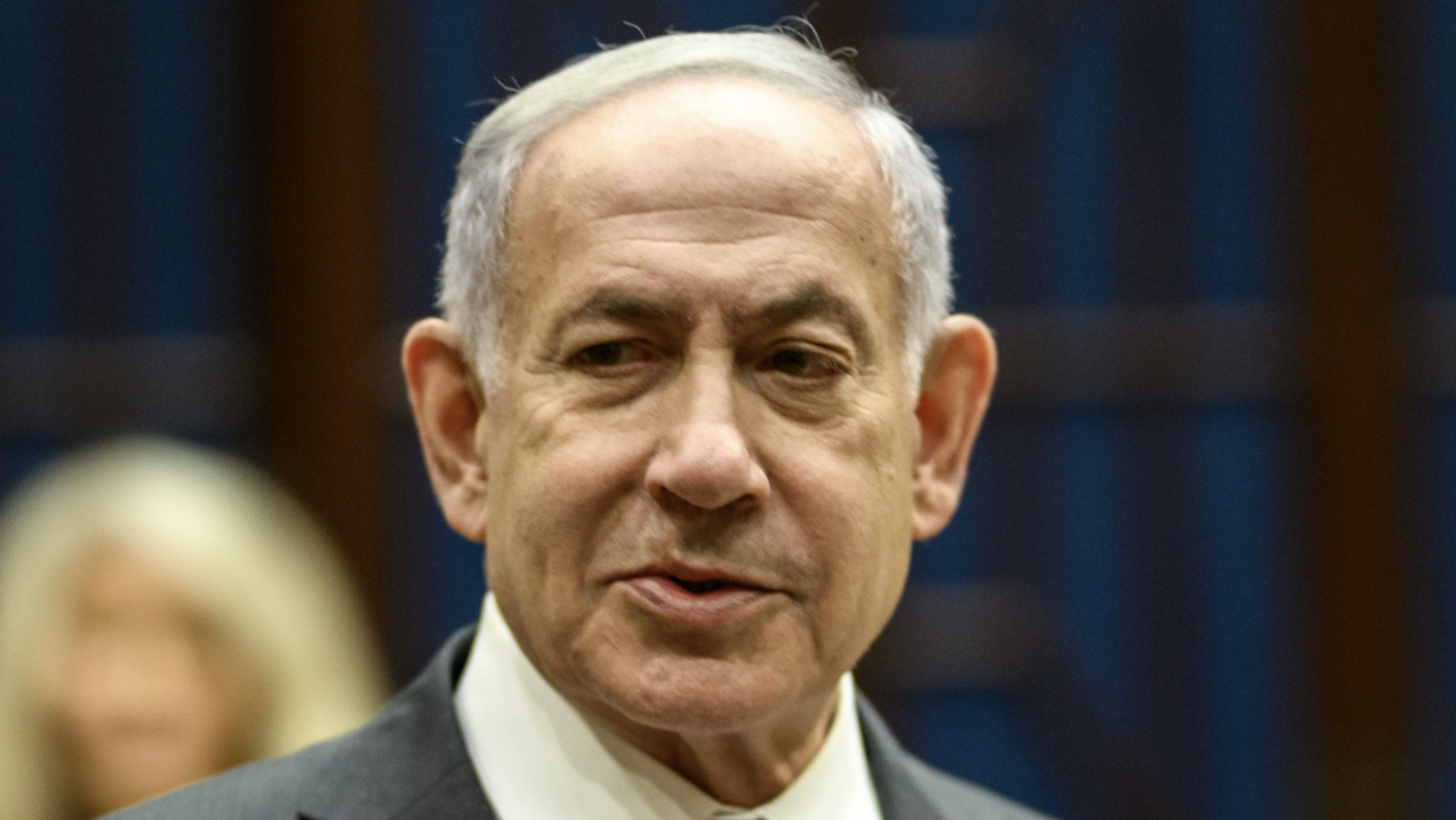
Israeli Prime Minister Benjamin Netanyahu addressed the AIPAC Congressional Summit from Jerusalem, emphasizing the outsized impact of the Jewish people and the strategic value of Israel’s alliance with the United States. He highlighted how a small population has made profound contributions to humanity across numerous fields, while positioning Israel as an indispensable partner rather than a dependent.
Netanyahu:
— Clash Report (@clashreport) February 24, 2026
Although we represent only 0.2 percent of the world’s population, the Jewish contribution to humanity in every field, in medicine, in science, in physics, in so many areas, has been unmatched. pic.twitter.com/Q4OEh9x5FZ
Netanyahu stated, “Although we represent only 0.2 percent of the world’s population, the Jewish contribution to humanity in every field, in medicine, in science, in physics, in so many areas, has been unmatched.” This observation underscores a remarkable statistical reality: Jews, comprising roughly 0.2 percent of the global population, have accounted for about 22 percent of all Nobel Prize recipients since the awards began in 1901. In scientific categories, the figures are even more pronounced, with Jewish laureates representing around 24 percent in physics, 26 percent in physiology or medicine, and similar shares in chemistry and economics.
In physics, Jewish scientists have earned more than one in four Nobel Prizes awarded worldwide. Notable examples include Albert Einstein’s work on the photoelectric effect and relativity, which transformed modern understanding of the universe, and contributions from laureates like Niels Bohr on atomic structure and Richard Feynman on quantum electrodynamics. Israeli physicists have also advanced the field, such as through discoveries like the Aharonov-Bohm effect, which revealed quantum phenomena in electromagnetic fields.
The field of medicine shows comparable achievements, with Jewish scientists securing about 26 percent of Nobel Prizes in physiology or medicine. Breakthroughs range from early discoveries on immunity and blood groups to modern advances in genetics and treatments for diseases. Israeli innovations have built on this legacy, including the development of Copaxone for multiple sclerosis, the PillCam for noninvasive gastrointestinal imaging, and mRNA-related research that supported COVID-19 vaccine technology. Other Israeli medical technologies, such as cartilage regeneration implants and exoskeletons for mobility, continue to address critical health challenges globally.
Netanyahu:
— Clash Report (@clashreport) February 24, 2026
Israel is not a burden to America.
Israel is a strategic asset to America. pic.twitter.com/wleuVXpt2D
Netanyahu extended this theme to the bilateral relationship, arguing, “The truth is that Israel is not a burden to America. Israel is a strategic asset to America… We are partners and no one can appreciate America more than Israel and I believe that many Americans understand that America has no better ally than Israel.” He pointed to deepening cooperation in intelligence, technology, and security, where Israeli developments in areas like missile defense, cybersecurity, and medical innovation directly benefit American interests and allies. Recent U.S. government assessments have described Israel as a model ally in these domains, reflecting shared priorities in countering threats and advancing technological progress.
The prime minister’s remarks come amid ongoing regional challenges and efforts to strengthen ties between the two nations. By focusing on historical contributions and mutual benefits, he sought to reinforce the enduring partnership, portraying it as one rooted in shared values, innovation, and strategic alignment that yields advantages for both countries and the broader world.


