
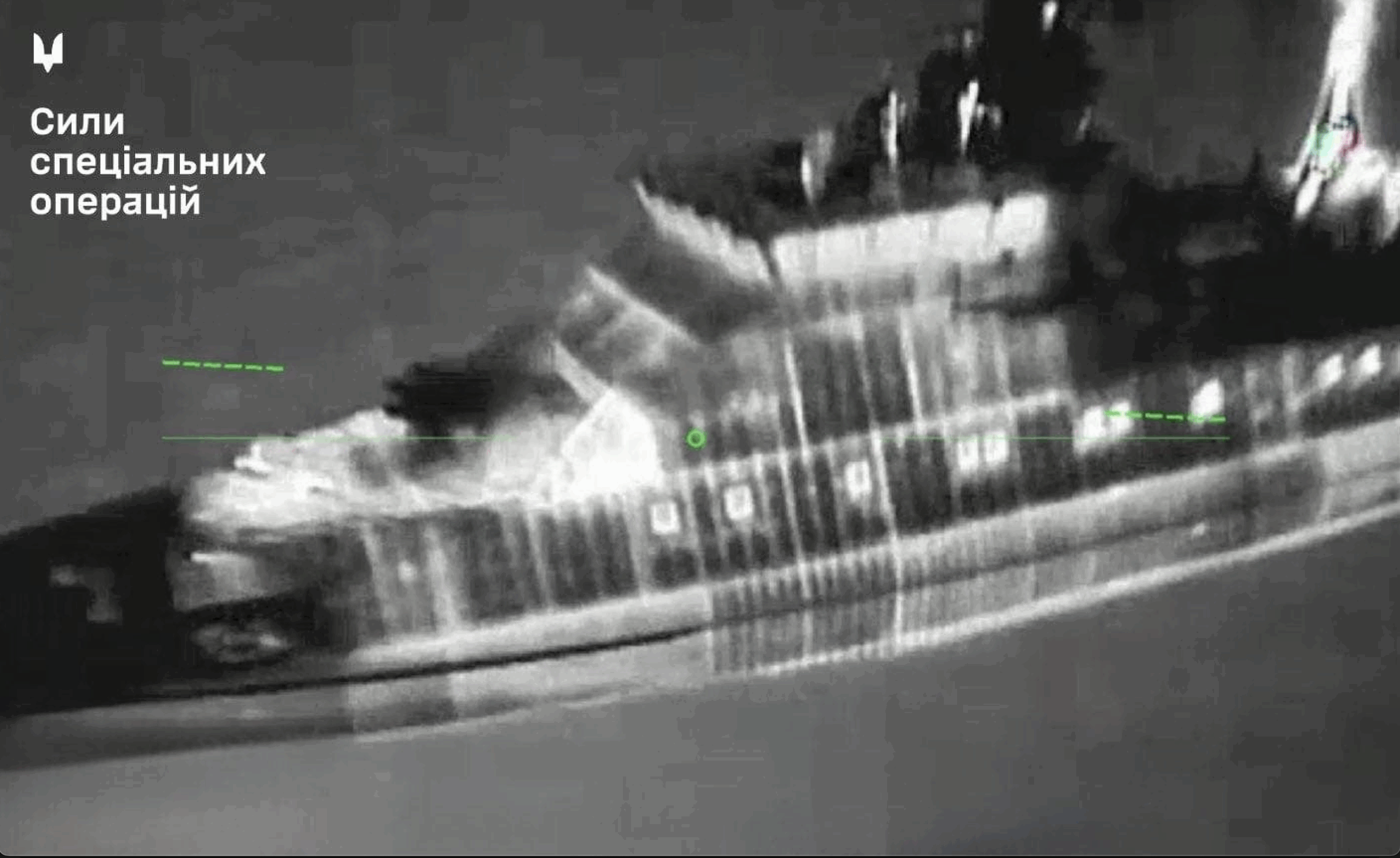
In a significant expansion of its long-range asymmetric capabilities, the Special Operations Forces of Ukraine (SSO) confirmed a dual-tier strike on December 19, 2025, targeting high-value Russian assets in the Caspian Sea. The operation successfully engaged a Project 22460 “Hunter” patrol ship and a primary extraction platform at the Filanovsky oil and gas field. This development represents a critical shift in the geography of the conflict, demonstrating Kyiv’s ability to project force more than 1,000 kilometers from its borders into a maritime theater previously considered a secure “rear” zone for the Russian Federation.
Technical Specifications and Economic Impact
The December 19 operation utilized advanced kamikaze unmanned aerial vehicles (UAVs) to achieve precision effects on two distinct categories of Russian infrastructure:
- Project 22460 “Hunter” (Rubin-class) Patrol Ship: These vessels are high-speed, 630-ton displacement ships designed for the Russian Coast Guard. They are equipped with automated 30mm AK-630M cannons and 12.7mm machine guns, intended for counter-terrorism and maritime security. The SSO reports multiple drone impacts, significantly degrading the vessel’s operational readiness.
- Filanovsky Oil and Gas Field: Operated by Lukoil, this is the largest oil field in the Russian sector of the Caspian Sea.
- Estimated Reserves: 129 million tons of oil and 30 billion cubic meters of gas.
- Strategic Value: The field is a cornerstone of the Ministry of Energy of the Russian Federation’s Caspian strategy, providing significant revenue to the federal budget.
- Operational Scope: The strike coincides with a reported Security Service of Ukraine (SBU)operation against a “shadow fleet” tanker in the Mediterranean, marking a simultaneous multi-theater engagement of Russian maritime logistics.
Shifting Naval Dynamics and the Economic Attrition of Russian Energy Assets
The targeting of the Caspian Sea assets signals a pivot in Ukrainian military strategy from local maritime denial to a broader campaign of economic and logistical attrition. Historically, the Russian Black Sea Fleet has faced the brunt of Ukrainian innovation, with approximately one-third of its vessels currently rendered non-operational. By striking the Caspian, Ukraine is forcing a redistribution of Russian air defense and maritime security resources away from the primary front lines.
Furthermore, the focus on the Filanovsky platform aligns with a broader objective to disrupt the Russian Federation’s energy export infrastructure. According to reports from the International Energy Agency (IEA), revenue from hydrocarbon exports remains the primary driver of the Russian war economy. Targeting the extraction points in the Caspian—a region shared with Kazakhstan, Turkmenistan, Iran, and Azerbaijan—introduces new geopolitical variables, as any environmental or collateral damage could complicate Russia’s diplomatic standing with other Caspian littoral states.
Assessing Operational Reach and the Risks of Global Maritime Escalation
Professional analysis of these events suggests a refined maturation of the SSO’s long-range strike doctrine. The ability to coordinate strikes across the Caspian and the Mediterranean suggests an integrated intelligence-sharing and operational framework capable of identifying vulnerabilities in the “shadow fleet” and deep-water energy sectors.
However, several expert perspectives highlight the inherent risks and limitations of this strategy:
- Technical Limitations: While UAV strikes cause significant damage to electronics and superstructures, sinking large vessels or permanently disabling heavy oil platforms requires sustained kinetic pressure or larger payloads than those typically carried by long-range kamikaze drones.
- Environmental Risks: Kinetic actions against offshore oil infrastructure carry the risk of major spills. Organizations such as Greenpeace and the United Nations Environment Programme (UNEP) have previously cautioned that conflict-driven environmental disasters in closed basins like the Caspian could have multi-decadal consequences for regional biodiversity.
- Escalation Logic: The move into the Mediterranean specifically targets the “shadow fleet”—vessels operating outside standard insurance and regulatory frameworks to bypass sanctions. This action puts Ukraine in direct confrontation with the logistical web supporting the Russian Ministry of Defense, potentially prompting Russian retaliatory measures against international shipping lanes or energy corridors in the Black Sea and beyond.
The SSO remains in the process of clarifying the final damage assessment of the Filanovsky platform, while the International Maritime Organization (IMO) continues to monitor the safety of navigation in the impacted regions.


