
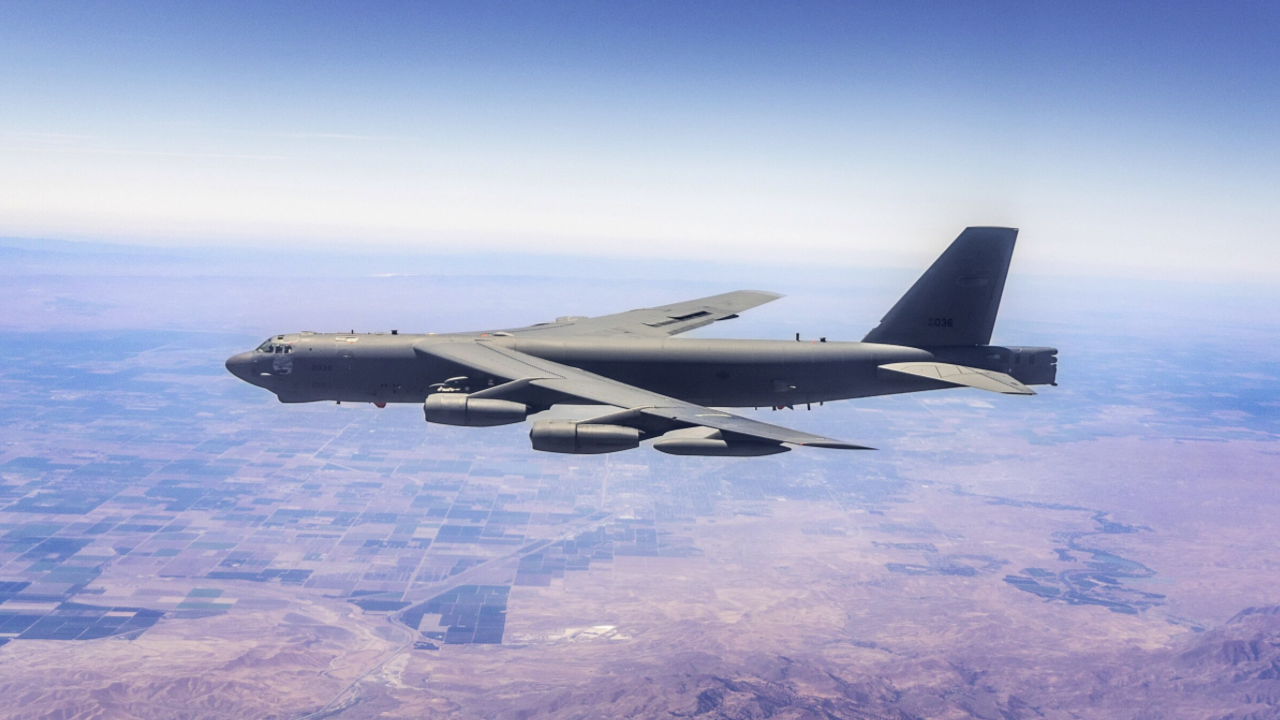
The United States Air Force has reached a critical milestone in modernizing its aging B-52 Stratofortress bomber fleet, with the first aircraft equipped with an advanced active electronically scanned array (AESA) radar arriving at Edwards Air Force Base for testing on December 8, 2025.
The AN/APQ-188 Radar System
The B-52 is receiving the AN/APQ-188 Bomber Modernized Radar System, a modified variant of the radar currently used on F/A-18 and F-15E/EX fighter jets. This represents a significant technological leap from the legacy APQ-166 radar that has been in service for decades.
The new AESA radar will provide the B-52 with:
- High-resolution ground mapping capabilities
- Improved target location accuracy
- Enhanced ability to track moving surface and air targets
- Increased system reliability
- Reduced sustainment costs
Testing and Development Timeline
According to official Defense Department documentation, the B-52 Radar Modernization Program (RMP) completed its Milestone B decision in June 2021, when the Air Force awarded Boeing a five-year engineering and manufacturing development contract.
The first test aircraft arrived at Edwards AFB after completing modifications in San Antonio, where Raytheon installed the new radar system. Flight Global reports that developmental and integrated flight testing are planned to begin in 2026.
However, the program has faced delays. A Government Accountability Office report from June 2025 indicates that the radar’s initial operational capability has been pushed to mid-2030, roughly three years later than originally planned. The delays stem from technical challenges related to electromagnetic interference, integration, and software development.
Production Plans
The Air Force plans a two-stage production approach:
- Low-Rate Initial Production: 28 aircraft, with milestone decisions planned for the fourth quarter of FY26 and second quarter of FY27
- Full-Rate Production: The remaining 46 B-52s in the fleet, following completion of operational testing
According to the DOT&E FY2024 Annual Report, full-rate production will follow completion of system development, though exact dates remain uncertain due to technical and schedule risks.
Strategic Importance
The radar upgrade is a cornerstone of the Air Force’s plan to keep the B-52 fleet operational through 2050. The Stratofortress, which first entered service in the 1950s, is receiving multiple upgrades to extend its service life, including new engines and modern avionics.
Interesting Engineering notes that replacement of the aging legacy radar is critical not only for capability enhancement but also for addressing reliability and maintenance issues. The current APQ-166 radar is increasingly difficult and expensive to maintain due to obsolete components.
Fighter-Derived Technology
The decision to adapt fighter jet radar technology for the B-52 represents a cost-effective approach to modernization. Rather than developing an entirely new radar system from scratch, the Air Force is leveraging proven technology from the F/A-18 and F-15E/EX platforms, reducing development risk and potentially lowering costs.
The War Zone’s coverage includes images showing the new radar installed in the B-52’s distinctive nose profile, marking what they describe as a transformation of the B-52H into the “significantly modernized B-52J” designation.
Mission Capabilities
Once the radar upgrade is complete across the fleet, B-52s equipped with the new system will be able to conduct:
- Long-range, all-weather conventional and nuclear strike operations
- Strategic attack missions
- Time-sensitive targeting
- Air interdiction
- Close air support
- Suppression and destruction of enemy air defenses
- Maritime mining operations
- Nuclear deterrence missions
The enhanced radar capabilities will be particularly valuable in contested environments where improved target detection and tracking are essential for mission success.
Looking Ahead
Despite the delays, the B-52 Radar Modernization Program represents a significant investment in keeping the venerable bomber relevant for decades to come. Combined with other planned upgrades, including the re-engining program, the B-52 is positioned to remain a critical component of American strategic airpower well into the middle of the 21st century.
The Aviationist reports that the arrival of the first AESA-equipped B-52 at Edwards AFB marks “a significant step in the ongoing B-52 Radar Modernization Program,” bringing the Air Force closer to fielding a fully modernized bomber fleet capable of meeting future threats.


