
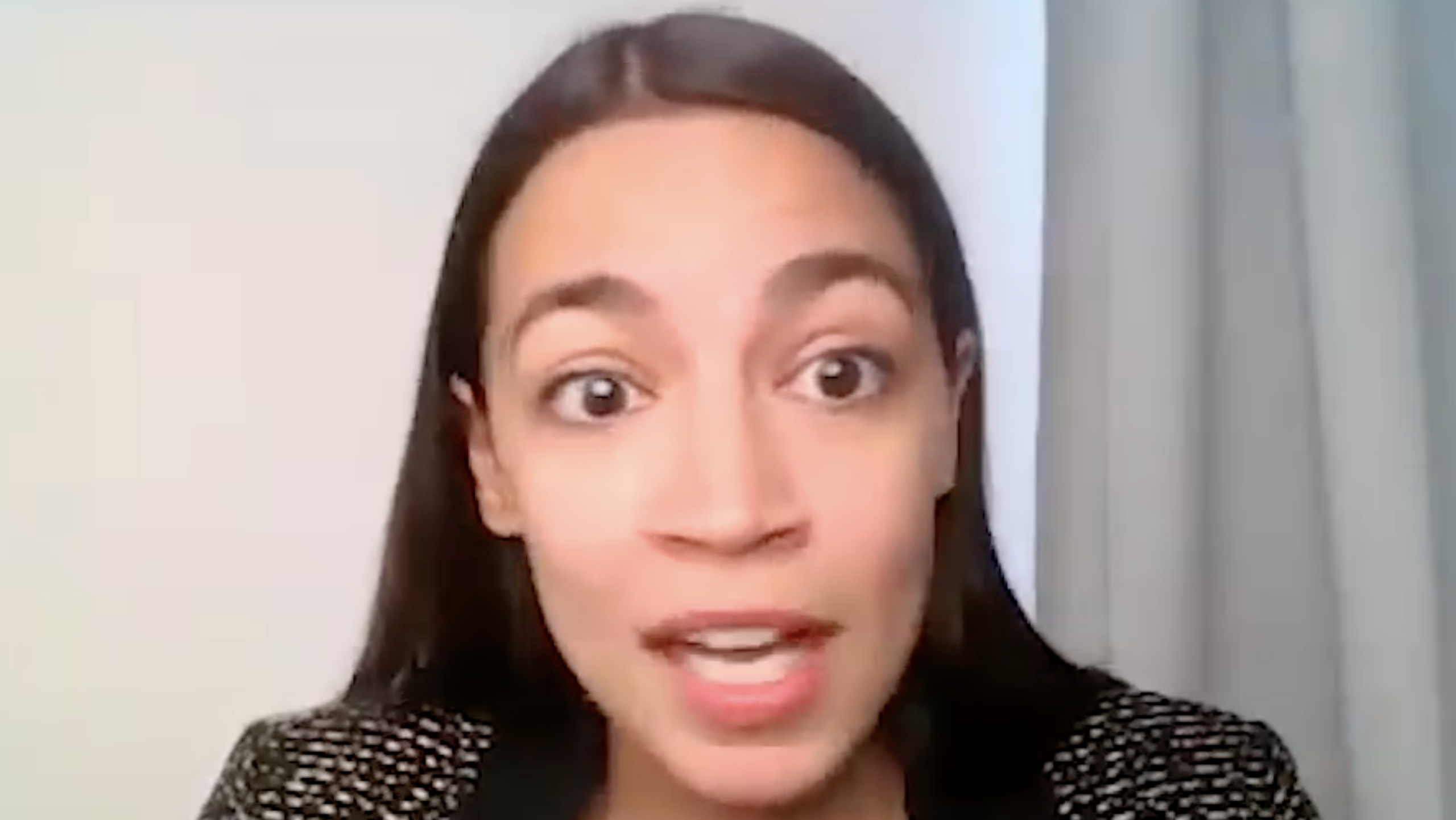
A resurfaced 2020 interview featuring Rep. Alexandria Ocasio-Cortez has reignited debate over race, privilege and systemic inequality, as the New York Democrat’s past remarks circulate widely online. In the clip, Ocasio-Cortez argues that systemic advantages extend beyond individual intent, declaring, “If you are in this country and you are not Black, you benefit from a system of white supremacy. It’s not about your character. It’s the conditions into which you were born.”
AOC: "If you're in this country and you aren't black, you benefit from white supremacy" pic.twitter.com/JA0lug1IZo
— End Wokeness (@EndWokeness) February 16, 2026
“People get defensive and say, I’m not racist, but… This isn’t about the hate in your heart. It’s about the water we’re swimming in.”
“You don’t have to have hate in your heart to be born into a white family, only get a high school degree, and still get paid more than a Black man with a college degree. That has nothing to do with your personal hate,” she said. Ocasio-Cortez emphasized that benefiting from systemic inequality does not require conscious participation. “A lot of white people get defensive because they see aggressively racist white people online and say, well that’s not me. But we are beneficiaries. If you’re unaware of it and not working against it, then you’re part of the problem.”
She also noted that racial hierarchy and colorism operate across communities. “You don’t have to be white to benefit from that system. I benefit from that system because I’m a lighter-skinned Latina. My family is Afro-Latino. We run the whole spectrum of skin tone. This is about racism, colorism, confronting anti-Blackness,” she said. “Within the Black community there’s colorism. Within the Latino community — skin tone, heritage, hair texture — all of it.” Her main point, she said, was not to assign moral condemnation to individuals but to call attention to inherited social conditions. “People say, I don’t consciously do anything. You don’t have to consciously do anything — we’re in it. You do have to consciously work to unravel it. If you’re impeding progress, you are complicit.”
The resurfaced comments coincide with recent international remarks by Ocasio-Cortez that touched on culture and identity. Speaking on Feb. 15 at the Technical University of Berlin, she criticized comments made by Secretary of State Marco Rubio during a speech at the Munich Security Conference a day earlier.
We do not want allies shackled by guilt and shame.
— Secretary Marco Rubio (@SecRubio) February 14, 2026
We want allies who are proud of their culture and heritage and are willing to help us defend it. pic.twitter.com/IOKg9n1UNM
Rubio had said, “Our horses, our ranches, our rodeos — the entire romance of the cowboy archetype that became synonymous with the American West — these were born in Spain,” as part of a broader argument emphasizing shared Western heritage and cultural ties between the United States and Europe. His speech received a standing ovation and focused on national sovereignty, cultural identity and industrial renewal.
AOC mocks Rubio: "My favorite part is he said cowboys are rooted in Spain. Uhhh, speak to Mexicans & African slaves!"
— End Wokeness (@EndWokeness) February 15, 2026
Spain introduced horses to Mexico pic.twitter.com/xHt1jZCoSi
Ocasio-Cortez took issue with what she characterized as an incomplete historical framing. “My favorite part was when he said that American cowboys came from Spain. I believe the Mexicans and descendants of African enslaved peoples would like to have a word on that,” she said, adding that culture has historically been “a fluid, evolving thing that is a response to the conditions that we live in.”
The exchange reflects ongoing partisan disagreements over how American history and identity are described both domestically and abroad. As debates over systemic inequality, national heritage and cultural narratives continue to shape political discourse, Ocasio-Cortez’s 2020 remarks have again become a flashpoint in broader conversations about race and responsibility in the United States.


