
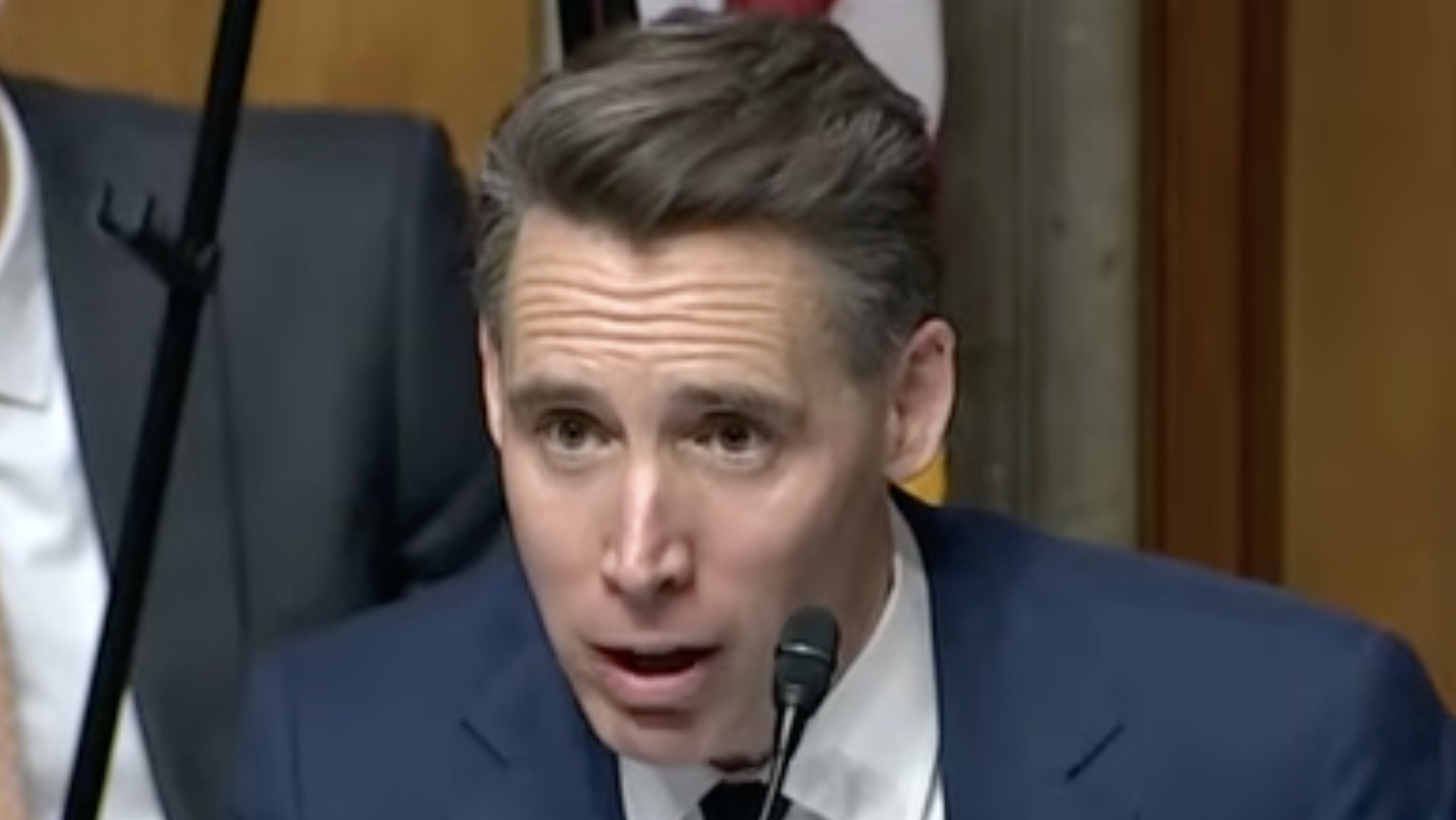
Sen. Josh Hawley said during a Senate hearing that an estimated $1 trillion in taxpayer money is lost to fraud each year, pressing witnesses on where that money is going and warning that the scale of abuse amounts to roughly $115 million every hour. The Missouri Republican argued that systemic weaknesses in government oversight have allowed vast sums of public funds to be siphoned off domestically and overseas, calling the losses “absolutely unbelievable.”
The exchange unfolded as Hawley questioned Minnesota state Sen. Mark Koran, a member of the state’s Legislative Audit Commission, about the scope of fraud within Minnesota’s public agencies. Hawley sought to quantify the extent of misuse across roughly 20 primary state agencies and the nonprofits that receive grant funding from them.
Josh Hawley pic.twitter.com/zYdEQG4NyM
— American Gazzete (@AmericanGazzete) February 11, 2026
Koran testified that “all of them are wrapped up in some sort of issue,” referring to the state’s primary agencies. Of the 10 largest agencies, he said, many nonprofits receive grants and funding from all 10. Asked to estimate total losses to Minnesotans, Koran pointed to findings from federal investigators examining Medicaid programs. “The conservative number is what our federal investigators have determined,” he said, estimating that of 14 Medicaid programs, roughly half — about $9 billion — could be affected. He added that in audits conducted by the Office of the Legislative Auditor, between 20 percent and 80 percent of sampled expenditures could not be verified as having gone to their intended purposes.
Hawley then turned to whether fraudulent funds had left the country. Koran described a child care assistance program with a budget of approximately $130 million, in which whistleblowers alleged that about $100 million was fraudulent. Around the same time, he said, roughly $100 million in cash moved out through the Minneapolis–St. Paul airport. In the preceding year, that figure was approximately $74 million, and in each of the last two years it reached $340 million, totaling about $1.8 billion over several years. Koran said he had sought data on the volume of cash leaving through the airport for more than two years in an effort to understand how much excess funding was being sent abroad.
Hawley characterized the movement of large sums of cash in suitcases through an airport as deeply troubling. “What every American taxpayer absolutely understands is their federal tax money being taken in suitcases out of this country to go… heaven knows where,” he said. He suggested the problem in Minnesota reflected a broader national issue.
The hearing widened to the national level when Hawley questioned Haywood Talcove, CEO of LexisNexis Special Services and LexisNexis Risk Solutions Government, about estimates that fraud across federal programs totals roughly $1 trillion annually. Hawley emphasized the magnitude of that figure, breaking it down to “$115 million an hour,” and asked where the money ultimately ends up.
$1 TRILLION in taxpayer money is lost to fraud every year.
— Josh Hawley (@HawleyMO) February 11, 2026
That’s $115 million an hour.
And where is the rampant fraud money going? To terrorism and child trafficking
This is madness and it must end pic.twitter.com/j53itZ0Zzl
Talcove responded that fraudulent funds are directed toward criminal enterprises and personal enrichment, saying they go “to terrorism,” “to child trafficking,” “to drugs,” and toward the purchase of “luxury items—cars, purses, homes.” Hawley pressed the point, framing the issue in terms of working taxpayers whose earnings are diverted into illicit networks and high-end purchases.
The Missouri senator also questioned how transnational criminal organizations are able to access such large sums. Talcove said they exploit “antiquated government systems and processes” and target programs that are politically sensitive or unlikely to face aggressive oversight. He argued that during the COVID-19 pandemic, fraudsters learned that government relief programs could be exploited at scale through measures such as Paycheck Protection Program loans and expanded unemployment insurance benefits. According to Talcove, the lesson absorbed by criminal networks was that “government never runs out of money, and the probability of getting caught is virtually zero,” which he estimated at one-tenth of 1 percent.
Hawley’s remarks placed the focus squarely on the scale of the losses and the question he said most taxpayers are asking: where the money is going, and why it has been so difficult to stop.


