
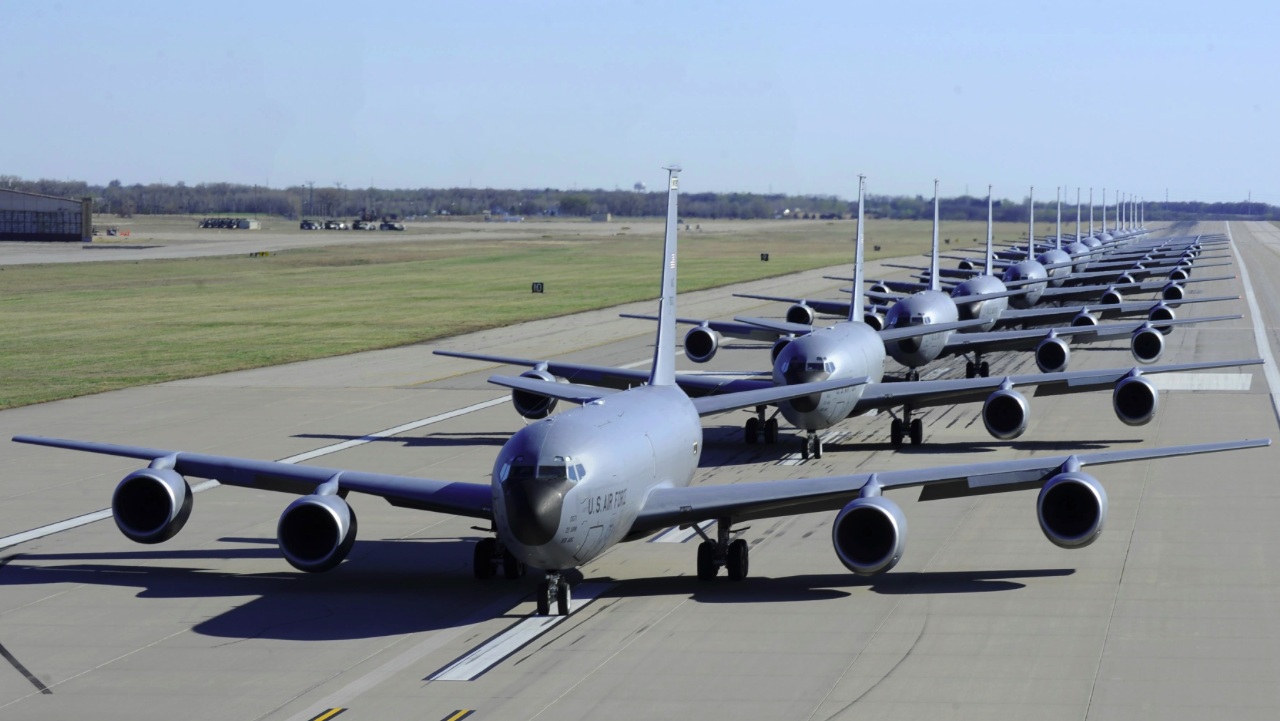
The US Air Force faces a growing problem that could undermine its ability to fight China: its aircraft are old, its fleet is shrinking, and the planes needed to keep operations running are under strain.
The Aging Fleet
The Air Force’s aircraft fleet now averages 29.1 years old. Eight different aircraft types exceed an average age of 50 years, with the KC-135 tanker leading at over 60 years old.
This isn’t just about numbers. After 30 years of chronic underfunding, the Air Force now operates “the oldest, smallest, and least ready force in its history,” according to a Mitchell Institute for Aerospace Studies report.
The C-130 Problem
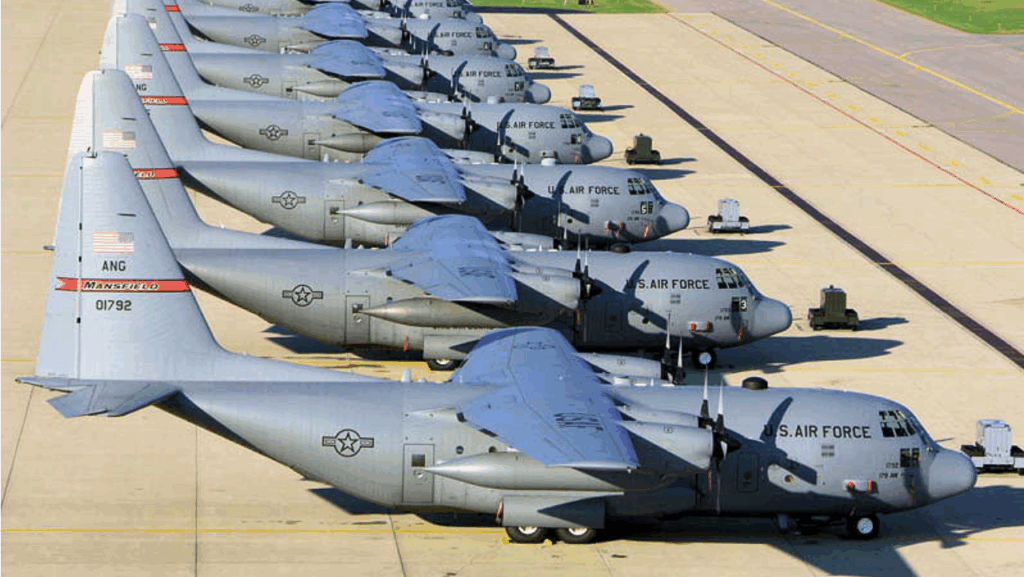
The workhorse C-130 transport fleet illustrates the challenge. In August 2019, the Air Force temporarily grounded 123 of its 450 C-130 aircraft—22% of the fleet—after inspectors found structural cracks in the lower center wing joint.
The Air Force has since planned to cut 45 planes from the C-130 fleet while trying to modernize others with digital avionics to replace aging analog gauges.
Why This Matters for China
The Air Force’s strategy for surviving a conflict with China depends on dispersal. Rather than concentrating aircraft at large, vulnerable airbases, the service plans to spread operations across dozens of smaller locations throughout the Indo-Pacific under a concept called Agile Combat Employment (ACE).
This strategy requires constant airlift. Aircraft, fuel, munitions, parts, and personnel must move quickly between dispersed locations. As retired Air Force Col. Robert Owen argues in a Mitchell Institute paper, “the airlift fleet may not be sufficient to meet the movement, supply, and other logistical demands” in a peer conflict.
The Strategic Gap
China could target US airbases with barrages of missiles. The Air Force’s dispersal strategy is designed to counter this threat, but it only works if aircraft can be moved and supplied across vast distances.
An aging, shrinking airlift fleet creates a gap between strategy and capability. The Air Force needs more transport aircraft at precisely the moment its fleet is getting smaller and older.
What’s Being Done
The Air Force is working to modernize what it has. C-130H aircraft in the Air National Guard and Air Force Reserve are receiving avionics upgrades, and some units are transitioning from older C-130H models to newer C-130J variants.
But these efforts take time and money. Meanwhile, the aircraft age another year, maintenance costs rise, and availability decreases.
The Bottom Line
The Air Force has developed a survival strategy for fighting China that relies on mobility and dispersal. But that strategy depends on an airlift fleet that is shrinking, aging, and already stretched thin.
Without sufficient transport aircraft to move forces quickly across the Pacific, the Air Force’s plan for surviving a fight with China faces a fundamental challenge: it may not have the planes to execute it.


