
Louisiana Gov. Jeff Landry, serving as special envoy to Greenland, warned in a Fox & Friends interview today that everyone on the U.S. East Coast “should be concerned” about the security of the Arctic region due to China’s rapid buildup of icebreakers.
In the interview, Landry highlighted China’s aggressive expansion in polar capabilities, stating: “The Chinese have built more icebreakers in one year than the United States has built in the history of the country, they’re not building those icebreakers for fun, they’re building them in order to gain control in the Arctic.”
Landry’s comments underscore a growing “icebreaker gap” that has alarmed U.S. officials, as China’s fleet has expanded significantly in recent years while the U.S. has struggled with delays in new construction.
The U.S. has not built a new heavy polar icebreaker since the 1970s, with its aging fleet relying on vessels like the Polar Star and Healy. The current operational polar fleet remains small—around three as of 2025–2026—with major expansion planned through the Polar Security Cutters program, where the first vessel is expected around 2030. Recent additions have focused on acquisitions and modifications rather than new domestic heavy builds.
A key step forward came with the acquisition of the former commercial vessel Aiviq, renamed USCGC Storis (WAGB-21). Acquired in December 2024, modified, and commissioned into the U.S. Coast Guard on August 10, 2025, Storis serves as a medium polar icebreaker to bridge gaps until the new Polar Security Cutters arrive. This marks the first polar icebreaker addition in over 25 years (since Healy in 2000), though no major new heavy polar icebreakers have been commissioned domestically in this period.
In contrast, China has rapidly expanded its polar and research fleet since the 2010s, now operating around 5–7 total polar-capable vessels, with five deployed to the Arctic in 2025. These are primarily research-oriented but dual-use for Arctic and Antarctic operations.
Over the past 10 years (2016–2026), China has commissioned at least four new polar or research icebreakers with strong icebreaking capabilities:
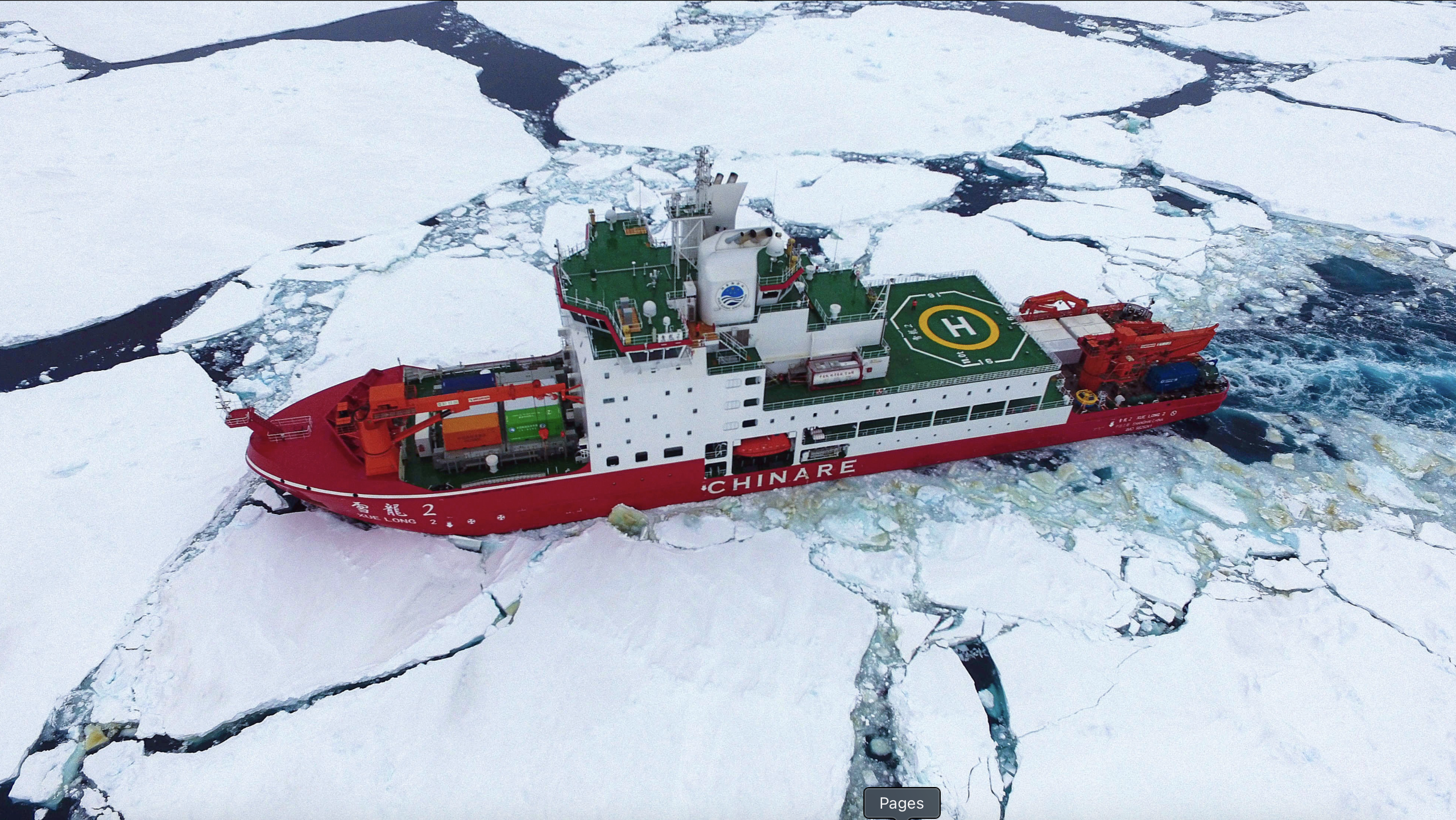
- Xue Long 2 (Snow Dragon 2): China’s first domestically built polar research icebreaker, commissioned in 2019.
- Zhong Shan Da Xue Ji Di (Sun Yat-sen University Polar, ex-Ikaluk/Beijing Ocean Leader): Acquired and upgraded for polar use, entering service around 2021.
- Ji Di (Polar): New-generation polar research icebreaker, construction started around 2022, commissioned in July 2024.
- Tan Suo San Hao: Deep-sea and polar research vessel with strong icebreaking capability (Polar Class 4), launched in 2024, delivered and commissioned in December 2024.
These vessels have contributed to China’s frequent Arctic expeditions and increased presence, including unprecedented deployments near U.S. waters in 2025 that drew U.S. Coast Guard monitoring.
This recent disparity—four new Chinese polar/research icebreakers versus the U.S.’s one (or two at most, including operational integrations)—fuels concerns about Arctic strategy. China has outpaced the U.S. through focused domestic builds and investments in polar research and presence, while the U.S. has faced delays in heavy construction and relied on acquisitions like Storis as a stopgap.
The U.S. is now accelerating efforts via major funding and international partnerships (such as with Finland) for future vessels, but Landry’s warning emphasizes that China’s icebreaker buildup is not recreational—it is aimed at securing influence and control in the strategically vital Arctic region.


