
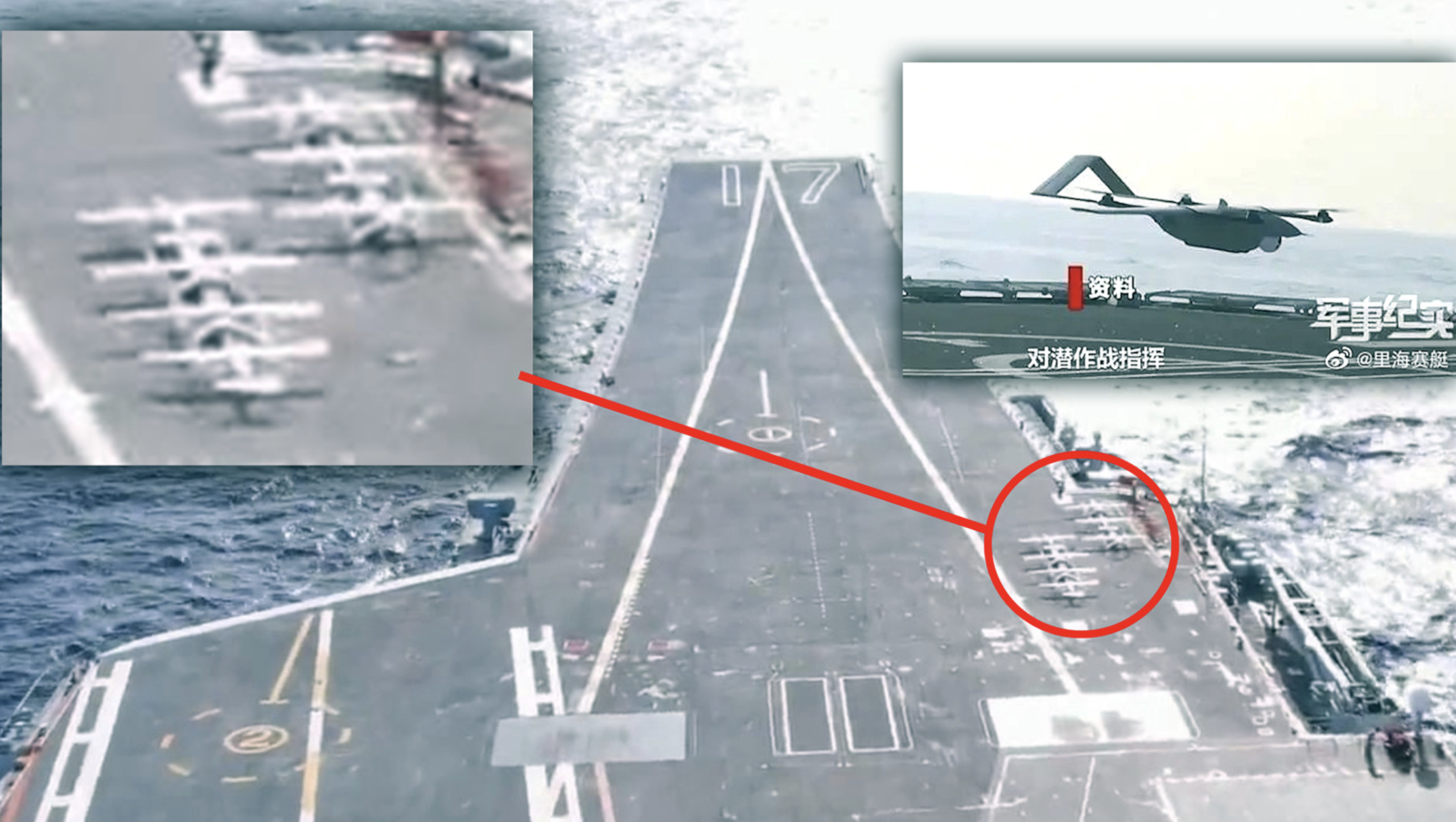
China is rapidly transforming civilian cargo vessels into improvised warships capable of launching advanced combat drones, a move that could reshape naval warfare in the Indo-Pacific. A converted container ship, spotted at a Shanghai shipyard, has been fitted with a modular electromagnetic catapult system designed to launch large, unmanned Collaborative Combat Aircraft (CCA) directly from its deck.
Why It Matters
This development represents a significant shift in military logistics and force projection. By converting readily available commercial vessels into mobile drone carriers, China can rapidly and cost-effectively expand its naval aviation reach without building traditional aircraft carriers from scratch. This “instant airbase” capability allows for greater operational flexibility and presents a complex new challenge for regional security architectures, blurring the lines between civilian and military maritime assets.
What To Know
- Rapid Conversion: The vessel, previously configured as an arsenal ship with containerized weapons, was reconfigured in just a few days at the Hudong-Zhonghua shipyard in Shanghai. It retains 24 vertical launch cells, a Type 1130 close-in weapon system, a large phased array radar, and advanced sensors.
- Modular Catapult: The key feature is a truck-transportable, electromagnetic catapult system built from connectable segments. This scalable track can be quickly deployed or reconfigured for different missions, offering remarkable adaptability.
- Systematic Approach: The conversion is not an isolated experiment. The ship was observed near the Chinese Navy’s new Type 076 “Sichuan” landing ship, which has a built-in Electromagnetic Aircraft Launch System (EMALS) for drones, indicating a coordinated push into naval unmanned aviation.
- Strategic Implications: This tactic enables China to potentially surge drone carrier capacity during a crisis by mobilizing segments of its massive merchant fleet, complicating an adversary’s ability to track and counter maritime threats.
What People Are Saying
Analysts note that this innovation leverages commercial technology and platforms for military gain. The use of a modular catapult that can be installed on various hull types demonstrates a focus on flexibility and rapid deployment. Military observers point out that while these converted ships lack the protection and sustainability of a dedicated carrier, their low cost and numbers could overwhelm traditional defenses, representing an asymmetric warfare strategy at sea. The presence of large CCA drones suggests these platforms are intended for high-end, networked combat operations rather than simple reconnaissance.
What Happens Next
The strategic impact of this program will depend on its scale and integration. Experts anticipate further conversions and refinements to the concept. The international community, particularly nations bordering the South China Sea and Western Pacific, will likely scrutinize the legal and operational implications of civilian vessels being used as launch platforms for military drones. This development is poised to accelerate discussions and investments in counter-drone technologies and tactics among other naval powers, potentially sparking a new phase of naval innovation focused on unmanned systems and hybrid platforms.


