
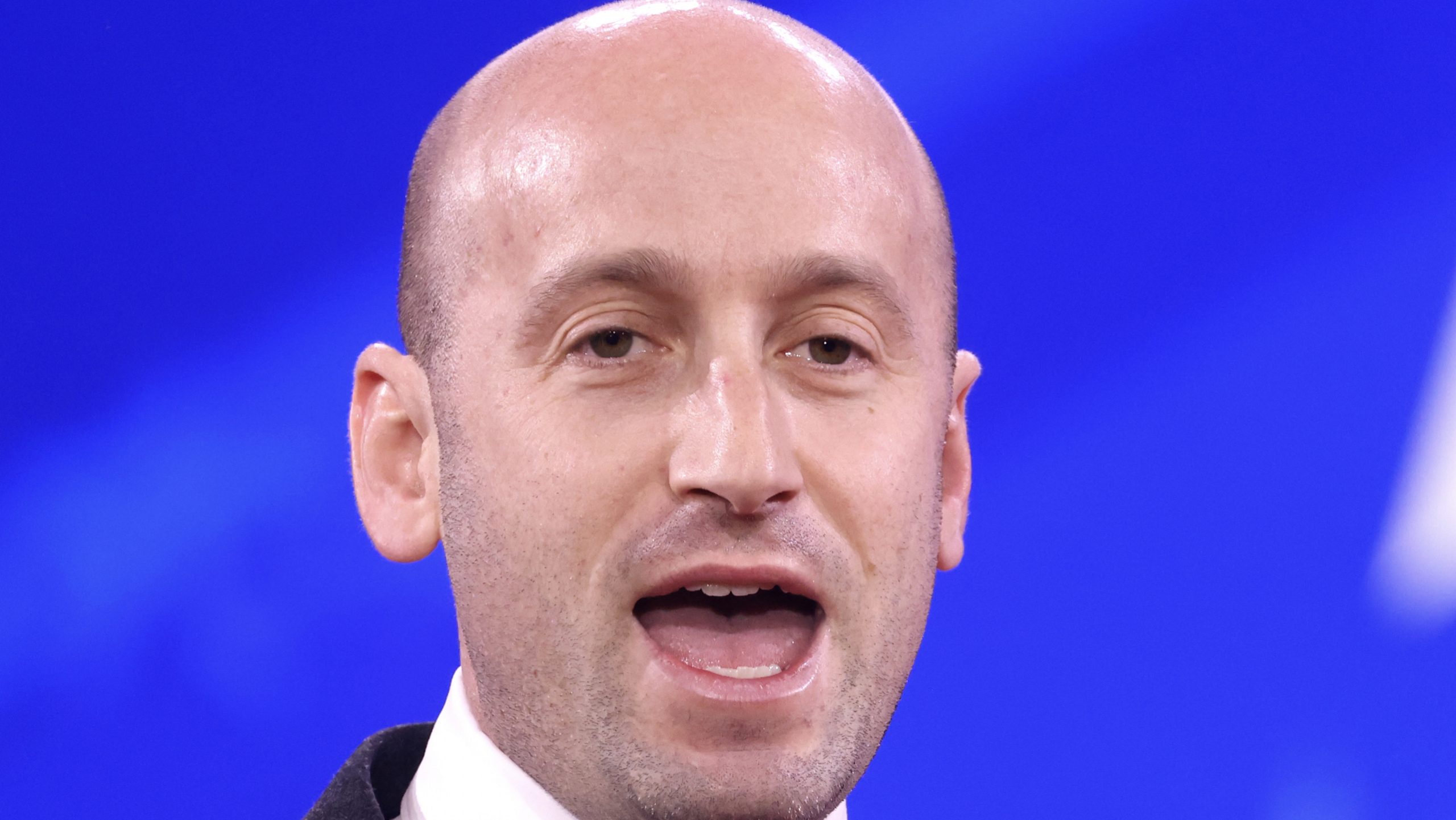
Stephen Miller, ‘the architect of Donald Trump’s toxic immigration policies,’ expressed sharp criticism of Democratic lawmakers in a post following President Donald Trump’s first State of the Union address of his second term, calling their refusal to stand in support of prioritizing American citizens over undocumented immigrants “a degree of nihilism, anarchism and extremism that defies categorization.” Miller’s remarks underscored the administration’s focus on immigration and border security, and highlighted a politically charged moment during a speech that mixed traditional policy discussion with theatrical displays.
An entire American political party refusing to stand for the principle that actual American citizens matter more than illegal alien invaders is a degree of nihilism, anarchism and extremism that defies categorization.
— Stephen Miller (@StephenM) February 25, 2026
Trump’s address, delivered Tuesday night in the House chamber, combined standard State of the Union elements with what democrats characterize as staged moments designed to emphasize loyalty and political division. Early in the speech, the president recognized war veterans, ice hockey players, and other special guests. Roughly an hour in, Trump pivoted to what became the central moment of the night.
“One of the great things about the State of the Union is how it gives Americans the chance to see clearly what their representatives really believe,” Trump said. He then invited lawmakers to affirm a principle central to his administration’s approach to immigration: “The first duty of the American government is to protect American citizens, not illegal aliens.”
POTUS laid out clearly and deliberately: show Americans if you agree with this statement by standing. And 0 democrats stood for the foundational principle of all government that leaders must serve citizens before invaders. Never has there been a more stunning moment in Congress. https://t.co/KpMBchLfc4
— Stephen Miller (@StephenM) February 25, 2026
Democratic lawmakers remained seated, refusing to stand in agreement. Trump highlighted their inaction, declaring, “You should be ashamed of yourself, not standing up,” while the Republican side of the chamber erupted in applause. Miller later posted describing the moment as “never has there been a more stunning moment in Congress,” framing the event as a demonstration of Democrats’ unwillingness to prioritize citizens.
Miller’s characterization referenced three terms that carry specific political and philosophical connotations. Nihilism denotes a rejection of moral and societal norms, anarchism refers to the rejection of established authority or government structures, and extremism describes actions or beliefs that fall outside conventional political or social limits. By using these descriptors, Miller framed the Democratic response as not merely opposition, but a fundamental defiance of what he described as core responsibilities of governance.
Trump’s approach differed from his first State of the Union in his last term, compared to this terms. Last year’s address emphasized foreign policy ambitions, economic overhaul, and sweeping government reforms. This year, the focus shifted to domestic issues and symbolic moments designed to cast the political opposition as unpatriotic or negligent. Foreign policy received limited attention, with vague references to Venezuela and Iran, while economic policy was largely absent from the discussion.
Observers noted the performative aspects of the event, describing it as part game show, part political spectacle. The deliberate contrast between Republican and Democratic responses reinforced the administration’s narrative of a government divided between those who prioritize American citizens and those who, in the president’s and Miller’s framing, do not.
By centering the address on loyalty and citizenship, the administration highlighted the ongoing political battles over immigration and national security. Miller’s post and Trump’s orchestrated moment served to amplify those themes, casting Democrats as opposing a principle that the current administration defines as foundational to governance.


