
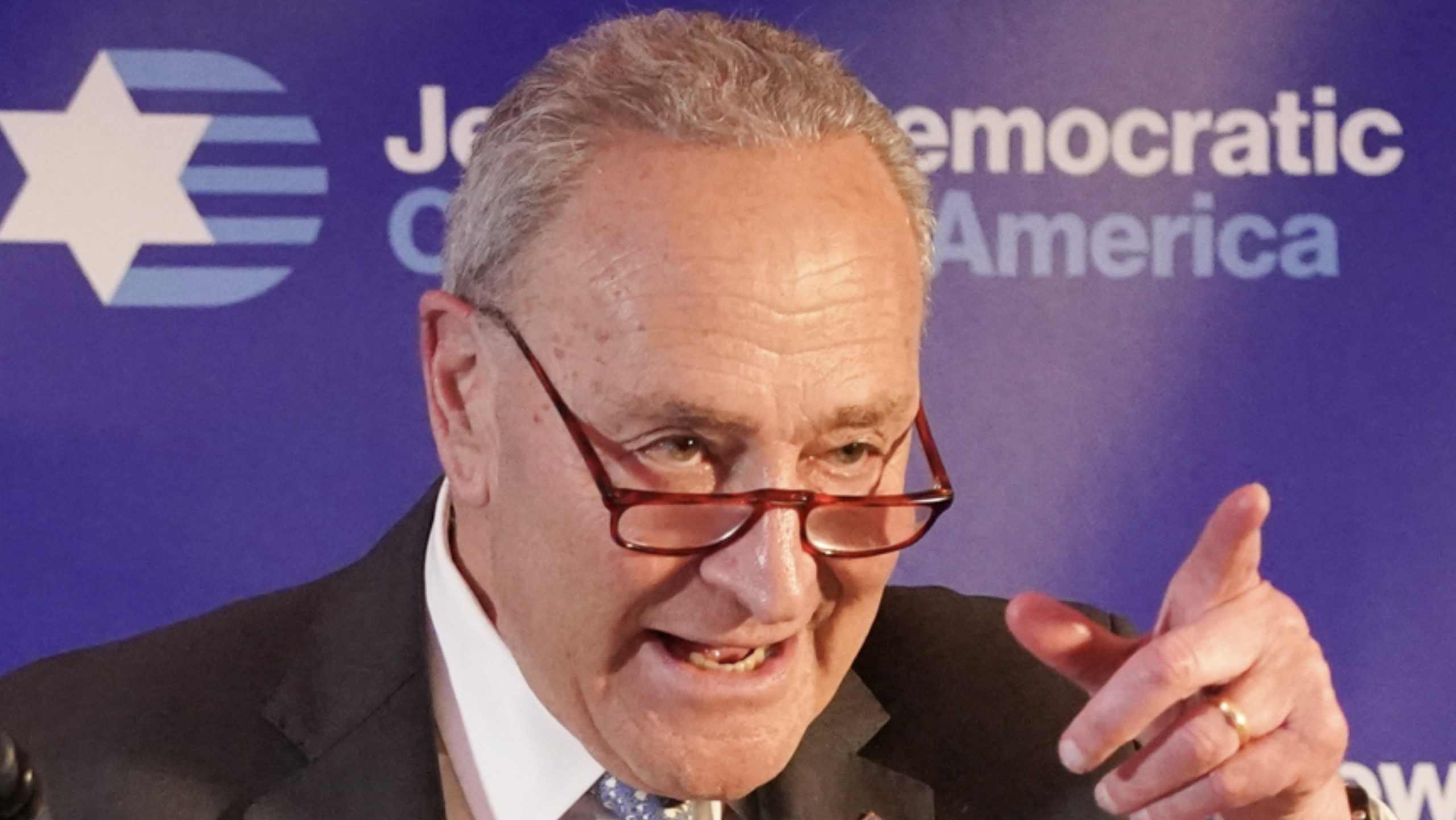
Senate Minority Leader Chuck Schumer warned that more than 21 million Americans could be disenfranchised if a federal voter identification law is enacted, calling out what he described as misleading claims by the White House. Schumer’s statement came in response to remarks by White House Press Secretary Karoline Leavitt promoting stricter voter ID requirements in federal elections. The exchange highlights the growing tension over election access and voting regulations ahead of upcoming midterm elections.
All @PressSec does is lie and gaslight.
— Chuck Schumer (@SenSchumer) February 18, 2026
The SAVE Act requires a paper birth certificate or passport to register to vote. Almost 50% of Americans don’t have a passport. Millions more don’t have their paper birth certificate. All told, more than 21 million Americans could be… https://t.co/x2CYbXPokf
Schumer focused his criticism on the SAVE Act, legislation passed by the Republican-controlled House that would require voters to provide a paper birth certificate or a passport to register in federal elections. In a post, Schumer wrote, “All @PressSec does is lie and gaslight. The SAVE Act requires a paper birth certificate or passport to register to vote. Almost 50% of Americans don’t have a passport. Millions more don’t have their paper birth certificate. All told, more than 21 million Americans could be disenfranchised.” He emphasized that the legislation is “dead on arrival in the Senate” and pledged that Senate Democrats will continue to fight to protect voting rights for all eligible citizens.
Leavitt: "You need an ID to go and purchase alcohol. You need an ID to go to the library and check out a book. So the president thinks you should have an ID to vote in our nation's elections." pic.twitter.com/afzQGwBIqx
— Aaron Rupar (@atrupar) February 18, 2026
The comments came after Leavitt outlined the administration’s push for voter identification requirements, framing them as a common-sense policy already reflected in everyday life. “You need an ID to go and purchase alcohol. You need an ID to go to the library and check out a book,” she said. “The president thinks you should have an ID to vote in our nation’s elections. And I know the vast majority of Americans agree with him on that. He wants Congress to move and move quickly to get it done.”
Leavitt also addressed the potential for a presidential executive order on voter ID, noting that President Donald Trump is exploring legal options but continues to view congressional action as the preferred approach. She pointed to the recently passed House legislation, the SAVE America Act, as a framework for implementing voter ID and proof of U.S. citizenship in federal elections. Trump himself has reinforced this stance, asserting in a post that voter ID rules would be in place for the midterms “whether approved by Congress or not,” and called for restrictions on mail-in ballots except for military personnel, those with disabilities, illness, or travel obligations.
— Rapid Response 47 (@RapidResponse47) February 13, 2026
The SAVE America Act passed the House on a largely partisan vote of 218–213, with only one Democrat supporting the measure. Republican lawmakers have argued that the bill is necessary to protect election integrity, while Democrats warn that stricter voter ID rules could disenfranchise millions of eligible voters. Legal precedent on voter identification is mixed. Courts have upheld some state-level requirements but struck down others when judges found they imposed undue burdens. States currently vary widely in how they verify voters, with some requiring photo ID and others allowing alternative forms or no identification at all. Any executive attempt to impose national voter ID rules without congressional approval would almost certainly face immediate legal challenges.
Schumer’s warning underscores the stakes in the ongoing debate over voter access. By highlighting the number of Americans without passports or paper birth certificates, he framed the legislation as a potential barrier to participation for a significant portion of the electorate. With Republicans pushing for tighter voter ID requirements and Democrats emphasizing voting rights protections, the battle over the SAVE Act is likely to remain a focal point of political conflict in the Senate in the coming weeks.


