
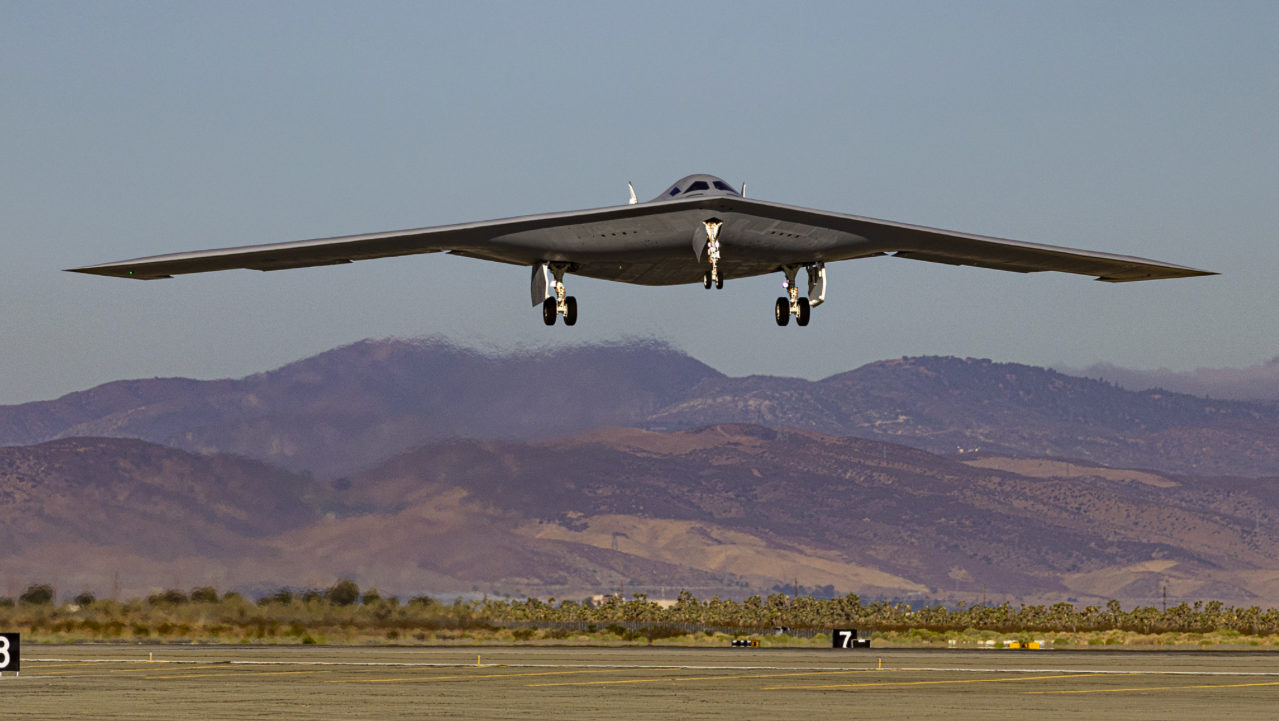
The US Air Force is accelerating production of the B-21 Raider, a sixth-generation stealth bomber that represents a generational leap beyond the legendary B-2 Spirit. With Congress committing $4.5 billion to speed up manufacturing and multiple aircraft already in flight testing, the B-21 is poised to become the backbone of America’s strategic bomber fleet.
Production Acceleration
Northrop Grumman expects to receive new Air Force contracts for the B-21 by the end of 2025, and is currently in discussions on a deal to accelerate production of the stealth bomber. Congress passed a budget reconciliation bill in July 2025 that provides $4.5 billion to speed up B-21 production.
The B-21 entered low-rate initial production in January 2024, with six bombers in various stages of final assembly and testing at Northrop’s Palmdale, California facility as of early 2025. The aircraft is “continuing to make progress” in flight testing at Edwards Air Force Base.
Advanced Stealth Technology
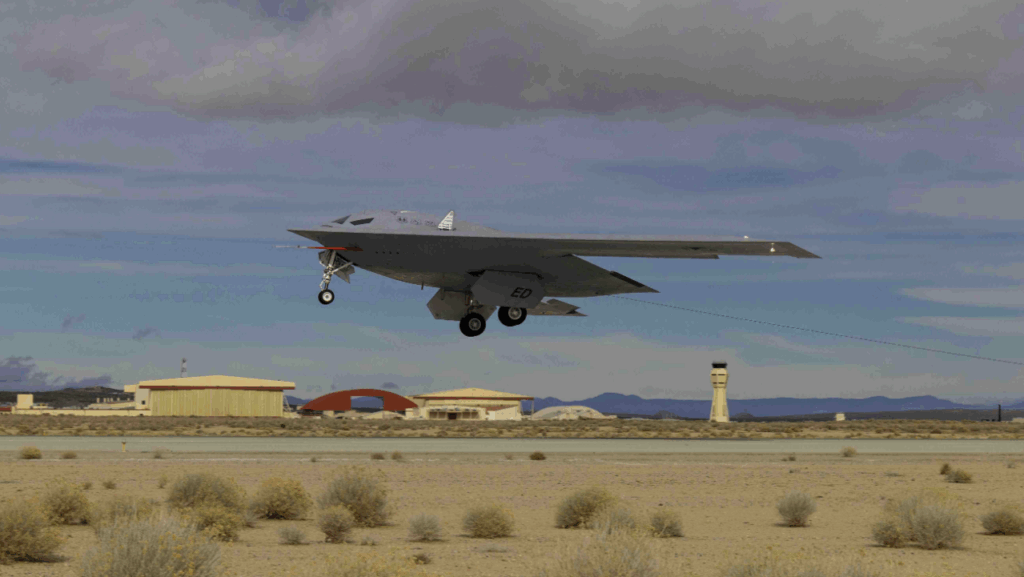
The B-21’s most significant advantage is its stealth capability. While the B-2 Spirit features first-generation stealth technology from the 1980s-90s that is still effective, the B-21 incorporates far more advanced Gen-5+ stealth technology—representing at least two generations of advancement in low-observable design.
The B-2 first flew in 1989, over 35 years ago. The B-21 benefits from decades of technological progress in materials science, sensor technology, computing power, and stealth design that simply didn’t exist when the B-2 was developed.
Size and Efficiency
The B-21 is significantly smaller and more efficient than its predecessor:
B-21 Raider:
- Wingspan: ~140 feet
- Maximum takeoff weight: 225,000-260,000 lbs
- Payload: 30,000+ lbs
B-2 Spirit:
- Wingspan: 172 feet
- Maximum takeoff weight: 336,500 lbs
- Payload: 60,000 lbs
While the B-2 carries a larger payload, the B-21’s smaller size translates to lower operational costs, reduced maintenance requirements, and better fuel efficiency—making it more practical for sustained operations.
Cost Advantage
The cost difference between the two bombers is staggering:
- B-21 Raider: $553 million per aircraft (2019 dollars, not-to-exceed contract)
- B-2 Spirit: $2.1 billion per aircraft (final cost including development)
This dramatic cost reduction means the Air Force can afford to build a much larger fleet. The service plans to acquire at least 100 B-21s, compared to just 21 B-2s ever built.
Open Systems Architecture
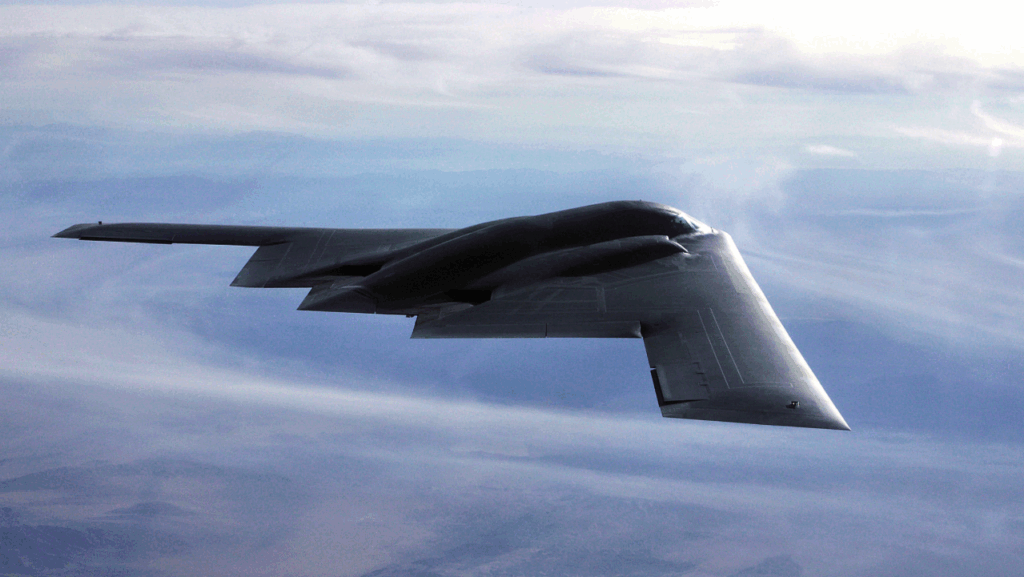
Unlike the B-2, which was designed using 1980s technology and methods, the B-21 was developed using digital design techniques and open systems architecture. This approach allows for:
- Rapid technology updates and modernization
- Fast incorporation of new sensors and weapons
- Easy integration of future electronic warfare systems
- Continuous upgrades throughout the aircraft’s service life
The B-2 requires extensive modifications to integrate new technology, while the B-21 was designed from the ground up to accommodate rapid upgrades.
Sixth-Generation Capabilities
The B-21 isn’t just a bomber—it’s positioned as a “family of systems” that integrates intelligence, surveillance, reconnaissance, command and control, and electronic warfare capabilities. This makes the Raider a multi-role platform designed to operate in high-end threat environments against peer adversaries like China and Russia.
The bomber can potentially operate with a two-crew configuration including a Weapons System Officer to manage complex targeting and strike coordination, particularly for missions involving hypersonic weapons.
Engine Technology
While specific engine details remain classified, the B-21 features more advanced, fuel-efficient engines compared to the B-2’s four General Electric F118 turbofans. The new engines provide:
- Better heat signature management
- Improved fuel efficiency and range
- Lower maintenance costs
- Reduced infrared signature for enhanced survivability
Fleet Size and Strategic Impact
The B-2 fleet consists of just 21 aircraft—a number constrained by the bomber’s extraordinary cost. The Air Force plans to build at least 100 B-21s, with some analysts arguing for 200-300 aircraft to provide adequate surge capacity and sustain operations against multiple peer adversaries simultaneously.
This larger fleet will allow the Air Force to:
- Maintain continuous bomber presence in multiple theaters
- Absorb combat losses and still sustain operations
- Conduct simultaneous strike campaigns if needed
- Provide a credible deterrent against both China and Russia
The B-21 Raider doesn’t just improve on the B-2 Spirit—it fundamentally transforms what a strategic bomber can do. With cutting-edge stealth technology, open architecture for continuous upgrades, dramatically lower costs, and a planned fleet five times larger than the B-2, the Raider represents America’s commitment to maintaining air superiority well into the 21st century. As production accelerates with billions in new funding, the B-21 is rapidly moving from development to operational reality, ready to become the backbone of US strategic airpower.


