
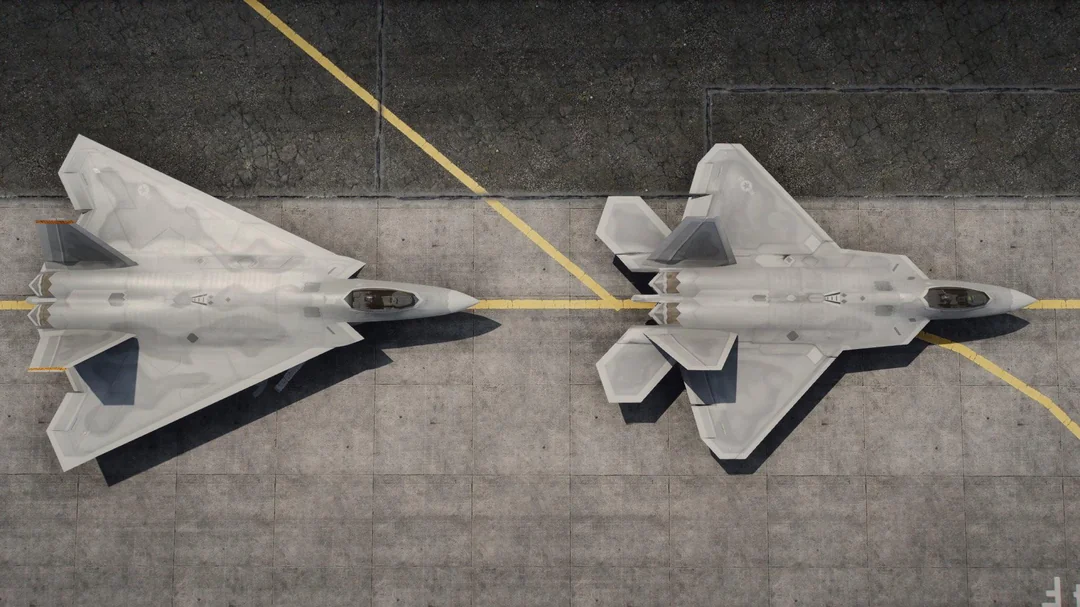
In the early 2000s, the U.S. Air Force faced a problem: its bomber fleet was aging, and the next-generation bomber wasn’t planned until after 2037. Lockheed Martin proposed a solution—convert the F-22 Raptor fighter into a regional stealth bomber called the FB-22.
The concept was never built, but it revealed how close the Air Force came to fielding a supersonic stealth strike aircraft decades before the B-21 Raider.
What the FB-22 Was
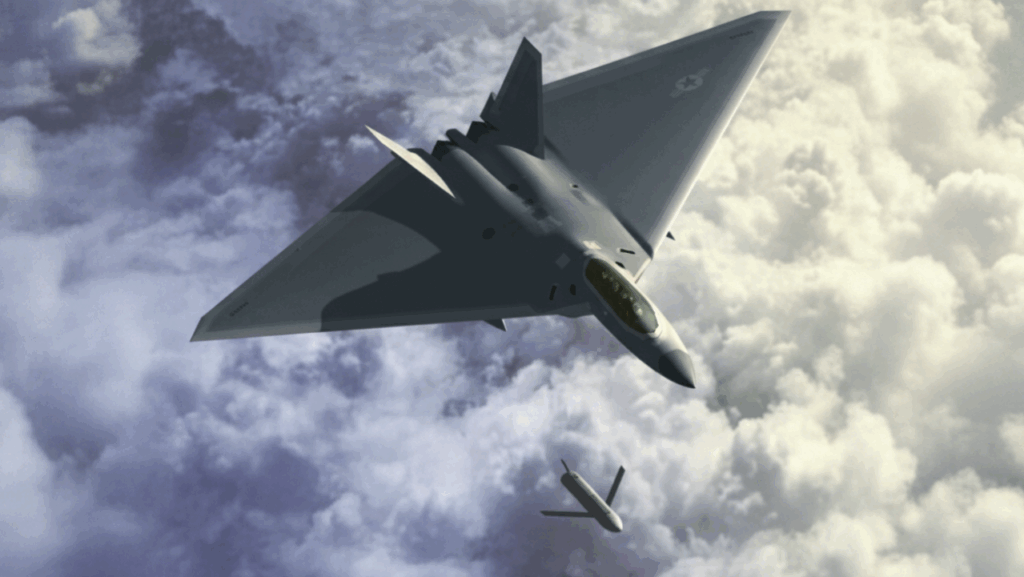
The FB-22 was a proposed bomber variant of the F-22 Raptor that Lockheed Martin unveiled in 2002. It was designed as a “regional bomber” to fill the gap between existing bombers and a future long-range strike platform.
The design retained the F-22’s stealth characteristics but extended the fuselage and added larger delta-shaped wings to increase fuel capacity and payload. The aircraft would have carried up to 30 Small Diameter Bombs—250-pound GPS-guided munitions designed for precision strikes.
Unlike the single-seat F-22 fighter, the FB-22 would have been a two-seat aircraft with a pilot and a weapons systems officer to manage targeting and strike coordination.
Range and Performance
The FB-22’s extended wings and fuel capacity would have roughly doubled the F-22’s combat radius of 600 miles. This meant the aircraft could strike targets over 1,000 miles away without refueling.
It would have maintained the F-22’s supersonic cruise capability—the ability to fly faster than the speed of sound without using afterburners. This allowed the aircraft to reach targets quickly while conserving fuel.
The stealth design would have enabled the FB-22 to penetrate advanced air defenses, strike high-value targets, and exit hostile airspace before enemy forces could respond.
Why the Air Force Wanted It
In the early 2000s, Air Force Secretary James Roche strongly supported the FB-22 concept. He argued that the Air Force needed a near-term solution to replace aging F-15E Strike Eagles and supplement the B-2 Spirit stealth bomber fleet.
Lockheed Martin positioned the FB-22 as a lower-risk, best-value option because it leveraged the existing F-22 design and production line. The target in-service date was 2015 if the program received approval by the end of 2005.
Congress pushed back on the Air Force’s plan to wait until the late 2030s for a new bomber. The FB-22 offered a way to field a modern strike platform decades earlier.
Why It Was Canceled
Despite support from senior leadership, the FB-22 was never built. Several factors killed the program:
Range Limitations: The FB-22’s 1,000-mile combat radius was sufficient for regional conflicts but inadequate for long-range strikes deep into peer adversary territory. Critics argued the Air Force needed a true strategic bomber, not a tactical strike aircraft.
Shifting Priorities: The Global War on Terror consumed defense resources. The Air Force prioritized counterinsurgency capabilities and immediate operational needs over long-term bomber development.
F-35 Program: The F-35 Joint Strike Fighter program was underway and promised multi-role strike capabilities across all services. Budget constraints made it difficult to justify both programs.
Cost and Maintenance: The F-22 was extremely expensive to operate, and the FB-22 would have inherited many of the same maintenance challenges. Stealth coatings required extensive upkeep, and operational costs would have been high.
By the mid-2000s, the Air Force shifted focus toward developing what would eventually become the B-21 Raider—a true long-range stealth bomber designed to strike anywhere on the planet.
Legacy
The FB-22 concept influenced Air Force thinking about future strike aircraft. Some believe the FB-22 development work laid groundwork for the B-21 Raider, particularly in systems integration and stealth bomber design.
The program also highlighted a recurring tension in Air Force procurement: the trade-off between near-term capabilities and long-term strategic platforms. The FB-22 would have been operational by 2015, but it would have been a compromise—fast and stealthy, but limited in range.
The B-21 Raider, expected to enter service in the mid-2020s, represents the Air Force’s bet on a more capable but more expensive solution. Time will tell whether waiting an extra decade for the B-21 was the right call.
Bottom Line
The FB-22 was a practical solution to a real problem: the Air Force needed a modern strike aircraft and didn’t want to wait until 2037. Lockheed Martin offered a supersonic, stealthy, bomb-carrying variant of the F-22 that could have been operational by 2015. But the Air Force ultimately decided that regional reach wasn’t enough. The future threat environment demanded global strike capability, and the FB-22 couldn’t deliver that. The concept died, and the Air Force committed to the long wait for the B-21 Raider instead.


